
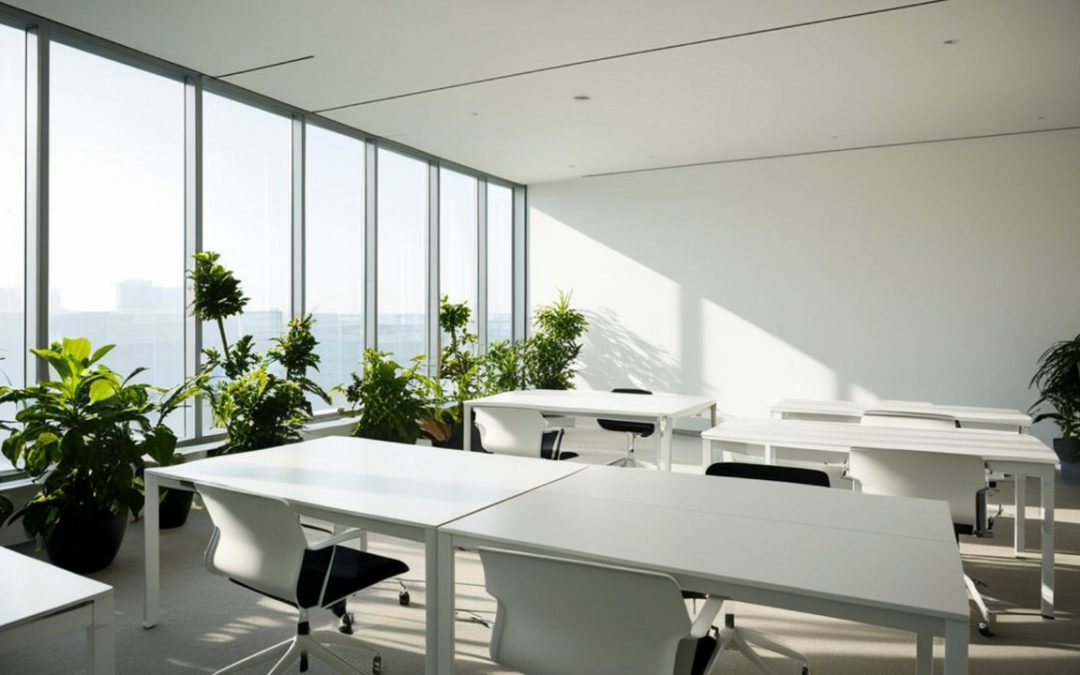
Commercial plant design transforms business environments through the strategic integration of natural elements. Professional services address lighting conditions, HVAC systems, and foot traffic patterns while maintaining corporate aesthetics.
Selecting the right provider requires understanding design expertise, maintenance capabilities, and pricing models. Evaluating these factors ensures installations remain healthy and deliver measurable business benefits.
Key Takeaways
- Commercial plant design integrates biophilic elements while prioritizing scale, durability, and brand alignment over residential personalization
- Businesses experience measurable ROI through 6% productivity gains and 15% wellness improvements with professional installations
- Service tiers range from $200-$1,000 budget installations to $10,000+ premium projects with corresponding maintenance structures
- Maintenance costs typically range $30-$60 per hour, with replacement guarantees built into monthly fees
- Orange County providers emphasize sustainable design and premium installations, including living walls and preserved moss features
What Defines Commercial Plant Design Services?
Commercial plant design services combine consultation, installation, and ongoing care for business environments. These services address environmental factors, including natural light availability and climate control systems.
What Are the Core Components and Features?
Biophilic design integrates natural elements into architectural spaces to improve occupant wellness and productivity. Interior planting design incorporates hardy varieties like Pothos and Snake plants alongside specialty options.
Air-purifying plants such as snake plants and peace lilies address indoor air quality concerns. Exotic installations, including Living Walls and Moss Walls, create statement features in corporate lobbies and hospitality venues.
How Does Commercial Plant Design Differ from Residential?
Commercial projects prioritize scale, durability, and brand alignment over individual aesthetic preferences. Professional maintenance contracts ensure consistent plant health without burdening internal facilities teams.
Residential design focuses on personalization and individual comfort with hands-on care approaches. Commercial installations require professional service agreements to maintain appearance standards and replace declining specimens systematically.
What Are the Primary Objectives of Commercial Plant Design?
Primary objectives include enhancing workplace wellness, improving air quality, and strengthening brand image. Strategic placement creates visual interest while supporting wayfinding and space delineation in open floor plans.
Design strategies align with corporate sustainability goals and employee retention initiatives. Installations serve functional purposes beyond aesthetics by reducing ambient noise and moderating indoor humidity levels.
Why Is Commercial Plant Design Important for Businesses?
Commercial plant design delivers measurable improvements in employee performance and workplace satisfaction. Natural elements address psychological needs while creating welcoming environments for clients and visitors.
Professional installations demonstrate organizational commitment to employee wellness and environmental responsibility. These investments support talent attraction efforts in competitive markets where workplace quality influences hiring decisions.
How Does It Enhance Employee Wellness and Productivity?
Employees report 6% increase in productivity when working in environments enriched with natural elements. Research demonstrates 15% improvement in overall well-being with trends in commercial indoor plant design for 2025, incorporating biophilic principles.
Field studies show reduced complaints about dry air and increased workspace attractiveness perceptions. Natural elements provide psychological restoration during demanding work periods, supporting sustained focus and reduced stress responses.
What Role Does Biophilic Design Play in Commercial Spaces?
Biophilic design connects building occupants with natural elements through intentional architectural integration. This approach supports human evolutionary preferences for natural environments, improving psychological comfort and cognitive function.
Commercial applications include strategic plant placement, natural material finishes, and access to natural light. These elements work synergistically to create environments that support both individual well-being and collaborative productivity.
How Does Plant Design Influence Brand Image and Customer Experience?
Well-executed plant installations communicate organizational values, including sustainability commitment and employee care. Visual impact creates memorable first impressions that differentiate businesses from competitors in the hospitality and retail sectors.
Strategic design enhances customer dwell time by creating comfortable, inviting atmospheres. Plant terrariums create peaceful, productive workspaces while reinforcing brand positioning through design consistency.
Who Are the Main Users and Markets for Commercial Plant Design?
Commercial office plants represent 35% market share, with hospitality and retail installations comprising 25%. Healthcare and wellness facilities account for 20% of professional plant design services demand.
Market growth varies by segment, with office spaces expanding at 4.5% CAGR annually. Hospitality and retail segments grow at 5.0% CAGR, driven by experiential design trends.
What Are the Key Commercial Segments Served?
Commercial clients include tech companies, financial institutions, corporate headquarters, and co-working spaces requiring professional installations. Hospitality clients encompass hotels, resorts, shopping malls, boutique retail stores, and restaurants seeking immersive environments.
Healthcare clients include hospitals, outpatient clinics, mental health facilities, and wellness centers, prioritizing therapeutic benefits. High foot traffic environments require durable plants and frequent maintenance to sustain visual standards.
How Do Client Needs Vary Across Office, Hospitality, and Healthcare?
Office environments prioritize employee wellness, space delineation, and brand expression through plant selections. Hospitality venues emphasize exotic specimens and dramatic installations that create memorable guest experiences and photo opportunities.
Healthcare settings require strict compliance with health and safety regulations, including non-toxic, low-allergen species. Professional indoor plant services for Newport Beach businesses address these varied requirements through customized maintenance protocols.
What Are Regional Trends Impacting Commercial Plant Design?
66% of US consumers own at least one houseplant, demonstrating broad market acceptance. 21% of Gen Z and Millennials consider themselves ‘plant parents,’ influencing workplace design expectations.
50% of plant owners identify watering and maintenance as primary challenges, creating demand for professional services. Gen Z is driven by nurturing desires, while other age groups focus on aesthetics and air quality improvements.
How Should Businesses Evaluate Commercial Plant Design Providers?
Evaluating providers requires assessing design expertise, plant quality standards, and maintenance reliability. Prospective clients should request case studies demonstrating experience with similar environments and project scales.
Professional credentials, technician training programs, and replacement guarantee structures indicate provider commitment to quality. References from comparable clients provide insight into service consistency and responsiveness.
What Criteria Define Design Expertise and Plant Quality?
Design expertise encompasses environmental assessment skills, including lighting analysis and HVAC system evaluation. Qualified providers match plant species to specific conditions rather than prioritizing aesthetics alone.
Plant quality depends on root system health, acclimatization protocols, and source nursery relationships. The best hanging plants for open office spaces require selection based on vertical space constraints and maintenance access.
How Is Maintenance Support Structured and Delivered?
Hourly rates typically range $30-$60 per hour for plant maintenance services, including watering, pruning, and pest inspection. Labor costs are calculated by the average time per visit multiplied by the hourly rate and the monthly visit frequency.
Maintenance contracts specify service frequency, replacement protocols, and emergency response procedures. Professional providers employ trained horticultural technicians who identify plant stress indicators before visible decline occurs.
What Questions Should Clients Ask Before Hiring a Provider?
Ask about the approach to plant selection, considering lighting, HVAC systems, and foot traffic patterns. Clarify the replacement guarantee structure within the monthly maintenance fee to avoid unexpected invoicing.
Inquire about horticultural technician training programs and certification requirements for service personnel. Request case studies or references for similar spaces to verify relevant experience and installation longevity.
What Are the Typical Costs and Service Tiers in Commercial Plant Design?
Budget tier installations range $200-$1,000 with $50-$150 monthly maintenance for basic species. Mid-range services cost $1,500-$3,000 installation with $100-$250 monthly maintenance, including specialty plants.
Premium installations exceed $3,000-$10,000+ with $250-$600+ monthly maintenance for exotic specimens and living walls. Design consultation fees range from free (budget) to $100-$200 (mid-range) to $200-$500+ (premium).
How Are Budget, Mid-Range, and Premium Services Different?
Budget tier offers a limited replacement guarantee with common hardy varieties and monthly maintenance visits. Mid-range includes partial replacement allowances, specialty plants, and bi-weekly service schedules.
The premium tier provides comprehensive replacement guarantees, exotic installations, and weekly maintenance with full biophilic design services. Service scope expands from basic watering to complete climate control and seasonal rotation programs.
What Factors Determine Total Cost of Ownership?
Total Cost of Ownership (TCO) includes initial installation expenses and ongoing maintenance contracts combined. Labor costs reflect average service time multiplied by hourly rates and monthly visit frequency.
Replacement allowances apply a 30-50% markup to retail plant prices, divided over 12-month periods. Why every modern office in Irvine needs a green wall depends partly on TCO versus employee retention ROI.
How Do Replacement Guarantees Affect Pricing?
Replacement allowances build plant replacement costs into monthly maintenance fees through retail price markups. Budget tier offers limited or no replacement guarantee, requiring separate purchase orders for declining specimens.
Mid-range and premium tiers include systematic replacement within monthly fees, eliminating unexpected invoicing. This structure ensures consistent appearance standards without facilities manager’s involvement in procurement decisions.
How Can Commercial Plant Design Services Maximize ROI?
The global indoor plant market is valued at $21.40 billion to $22.6 billion as of 2025. The market is expected to reach $27.4 billion to $32.78 billion by 2032-2034, demonstrating sustained demand.
A Compound Annual Growth Rate (CAGR) of 4.6% to 5.4% indicates a stable investment environment. The US specialized plant services market is valued at $6.76 billion in 2025 with a projected 15.85% CAGR through 2033.
What Are the Measurable Benefits for Businesses?
Measurable benefits include documented productivity improvements and reduced employee absenteeism through improved air quality. Installations support talent retention by creating differentiated workplace environments that reduce turnover costs.
Customer experience improvements in hospitality and retail translate to increased dwell time and purchase conversion. How to choose the right indoor plant vendor in Irvine affects these outcomes through service reliability and design quality.
How Does Plant Design Impact Air Quality and Work Environment?
Indoor plants reduce airborne particulates and moderate humidity levels, addressing dry air complaints. Certain species actively filter volatile organic compounds from office environments, improving respiratory comfort.
Strategic placement creates acoustic benefits by absorbing ambient noise in open office layouts. Visual access to natural elements provides psychological restoration during demanding work periods, supporting sustained cognitive performance.
What Case Examples Demonstrate Successful Commercial Installations?
Corporate lobby transformations demonstrate plant design’s impact on visitor first impressions and employee pride. Tech company installations integrate living walls with branded color schemes to reinforce organizational identity.
Healthcare facility projects show measurable anxiety reduction in patient waiting areas through biophilic elements. Boutique retail environments use exotic specimens to create Instagram-worthy backdrops that drive social media engagement.
How Does Location Influence Commercial Plant Design Choices?
Orange County, California, features established providers serving diverse commercial sectors with regional expertise. Local climate conditions and market dynamics influence plant selection, maintenance requirements, and design trends.
Regional preferences emphasize sustainable practices and drought-tolerant species even for indoor applications. Premium installation demand concentrates in corporate centers, including Irvine and Newport Beach.
What Are Unique Considerations in Orange County, California?
Mr. Plant established in 1997 serves Orange County with comprehensive design and maintenance services. Instant Jungle, operating since 1980, provides expert installation across Southern California commercial markets.
Pacific Interior Plants serves Irvine, Newport, and Costa Mesa with professional plantscaping expertise. San Clemente Plants offers Orange County maintenance services with weekly or bi-weekly scheduling options.
How Do Regional Climate and Market Dynamics Affect Plant Selection?
Southern California’s mild climate supports diverse plant species while reducing heating-related stress concerns. HVAC systems in modern buildings create consistent indoor environments that expand viable plant selections.
Coastal proximity influences humidity levels, affecting watering schedules and species performance in Newport Beach locations. Creeper plants transform Orange County office interiors through vertical design applications suited to regional aesthetic preferences.
What Are Popular Trends and Features in Local Commercial Projects?
Living green walls and preserved moss installations dominate premium Orange County corporate lobbies. Sustainable design emphasis drives selection of locally sourced plants and organic treatment protocols.
Drought-tolerant species gain preference despite indoor applications, reflecting regional environmental values. Why Croton plants are trending in Orange County workspaces demonstrates how local preferences influence commercial selections.
Factors for Selecting the Right Commercial Plant Design Services
Selecting commercial plant design services requires evaluating multiple factors, including design expertise and maintenance reliability. Provider experience with similar environments, technician training programs, and replacement guarantee structures indicates service quality.
Cost comparisons should emphasize Total Cost of Ownership rather than installation prices alone. Regional expertise matters particularly in markets like Orange County, where climate conditions and aesthetic preferences influence plant performance and design trends.
Successful commercial installations deliver measurable business benefits through improved employee wellness and enhanced brand image. Professional providers combine horticultural knowledge with maintenance infrastructure to ensure long-term installation health and visual consistency.
Mr. Plant SoCal brings nearly four decades of commercial plant design experience to Orange County businesses. Their comprehensive approach addresses environmental factors, maintenance requirements, and corporate aesthetic goals through proven installation and service protocols.
Ready to Work with an Orange County Commercial Plant Design Expert?
Mr. Plant SoCal has served over 1,200 businesses across Southern California for 38 years. Our uniformed technicians handle every step — from the initial site assessment and plant selection to weekly or bi-weekly maintenance and guaranteed replacements.
You’ve read what separates a quality provider from a low-performing one. Mr. Plant SoCal meets every standard: documented design expertise, proven maintenance reliability, and a full plant replacement guarantee built into every service agreement.
If you manage a commercial space in Orange County and want plants that stay healthy year-round without adding to your workload, contact us today for a free consultation.

