
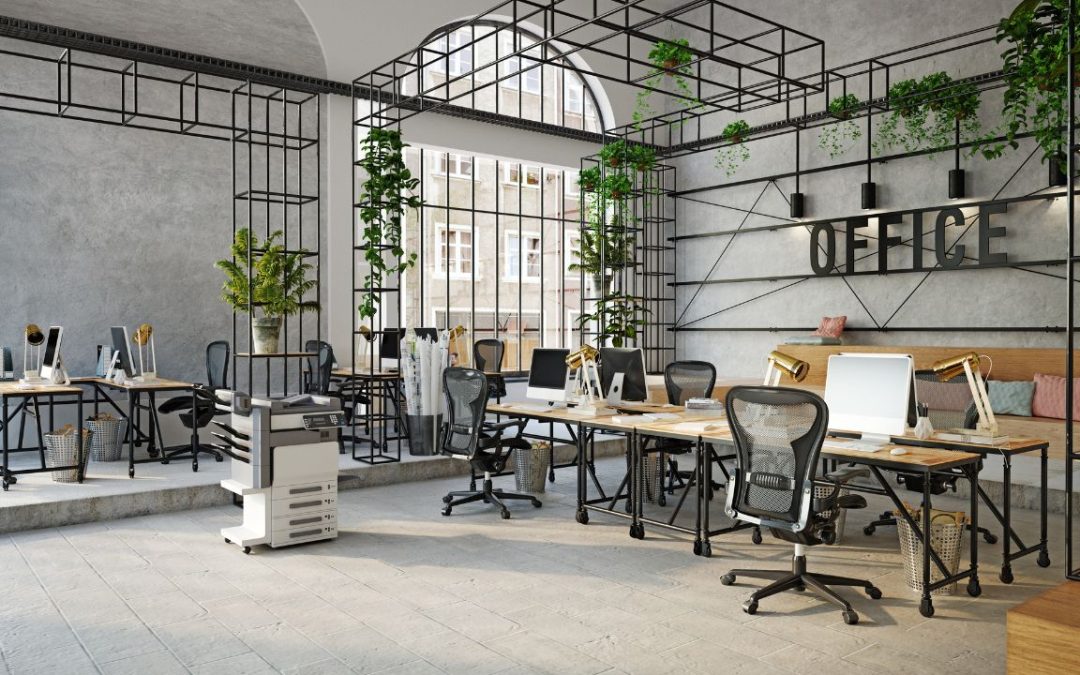
Biophilic office design integrates natural elements into commercial workspaces to improve employee wellbeing and organizational performance. Orange County occupiers increasingly adopt these strategies as leasing activity concentrates in Class A environments that combine natural light, sustainable materials, and carefully curated greenery with suburban accessibility and premium amenities.
The wellness real estate market reached USD 438.2 billion in 2023, growing 18.1% annually since 2019. Orange County office environments reflect this trend, with 60% of new leasing activity occurring in Class A space and trophy assets commanding premium rents between USD 4.65 and USD 5.95 per square foot.
Key Takeaways
- Class A office space captured 60% of new Orange County leasing activity in recent quarters
- 44% of workers prioritize natural light, while 36% prefer greenery-enhanced workspaces
- Living walls typically cost USD 175-250 per square foot for professional installation
- 65% of workers now rank work-life balance as their top priority, up from 59% in 2022
- Trophy Orange County assets command USD 4.65 to USD 5.95 per square foot in asking rents
What Is Biophilic Office Design and Why Does It Matter?
Biophilic design connects people with nature through workplace features, including living walls, daylight maximization, and natural materials. These elements address employee preferences while supporting competitive positioning in selective office markets where environmental quality influences leasing outcomes and employer brand perception.
Workplace design now affects recruitment, with 33% of workers reporting that office design influences their employer choice. Employees who like their workspace show 90% pride in their company, compared with 47% among those disconnected from the environment.
Key Elements of Biophilic Design in Workplaces
Office plant design includes potted arrangements, planter clusters, reception greenery, and vertical installations requiring specialized maintenance protocols. Living walls demand irrigation systems, waterproofing, horticultural care, and dedicated lighting to sustain plant health across multiple years of operation.
Technology integration supports hybrid work patterns through Teams rooms, smart AV systems, and occupancy sensors that optimize space use. Sustainable materials specification includes low-VOC finishes, certified materials, and energy-efficient mechanical systems aligned with ESG reporting requirements.
How Biophilic Design Differs From Traditional Office Layouts
Traditional layouts emphasize assigned seating, enclosed offices, and predictable circulation patterns that prioritize acoustic privacy over environmental connection. Research indicates 39% report greatest productivity at private office desks, while 36% perform best in open-plan settings.
Biophilic environments shift this balance by integrating daylight access, outdoor workspace options, and interior planting design that supports wellness goals. These features help occupiers justify premium rent positioning in markets where conventional layouts no longer differentiate Class A product.
The Role of Interior Plant Design in Biophilic Environments
Twenty percent of workers explicitly want indoor plants, while 36% prefer greenery-enhanced workspaces in current workplace surveys. Yet 58% report having no greenery, and 47% lack natural light in their current office environment.
This gap creates opportunities for facilities managers to address environmental deficits through professional plant programs, including trends in commercial indoor plant design for 2025. Properly maintained installations signal organizational investment in employee experience and strengthen brand perception during client visits.
How Do Employee Preferences Shape Biophilic Office Demand?
Employee priorities increasingly favor quality-of-life factors over proximity alone when evaluating workplace environments and return-to-office compliance. Facilities managers must balance these evolving expectations with budget constraints while competing for talent in Southern California’s competitive labor market.
Work-life balance now ranks as the top priority for 65% of workers, up from 59% in 2022. Natural light, greenery, and air quality have emerged as measurable decision factors rather than secondary amenities.
Prioritizing Natural Light, Air Quality, and Greenery
Forty-four percent of workers identify natural light as the most important workplace element in recent industry surveys. Yet 64% of U.S. employees lack adequate natural light, creating dissatisfaction that affects retention and daily performance.
Forty percent prioritize access to natural light and operable windows, while 35% require MERV-13 air quality equipment. Features like plant terrariums to create peaceful, productive workspaces address multiple preferences simultaneously by improving air quality perception and adding visible greenery.
The Importance of Work-Life Balance and Flexible Work Support
Fifty-seven percent say flexible hours would improve their quality of life, shifting facilities strategy toward hybrid-ready environments. Fifty percent believe office presence improves teamwork, while 43% still prefer working from the office when conditions support productivity.
These findings require space planning that accommodates variable occupancy without sacrificing environmental quality or collaborative functionality. Biophilic elements help justify in-person attendance by creating differentiated environments that remote settings cannot replicate.
Demographic Trends Influencing Biophilic Office Expectations
Seventy-eight percent of Gen Z workers say bonding with colleagues is easier in office environments. Eighty-one percent feel disconnected from peers when working remotely, demonstrating a stronger preference for physical presence than older cohorts.
Seventy-nine percent of Gen Z employees feel more active in the office versus 66% of older workers. Only 11% express satisfaction with current office setups, indicating demand for upgraded environments that support training access and professional development.
What Market Factors Are Driving Biophilic Office Design in Orange County?
Orange County office dynamics reflect selective demand for upgraded environments rather than broad-based market recovery across all asset classes. Premium positioning through wellness features, sustainable materials, and professional indoor plant services for Newport Beach businesses drives leasing concentration in top-tier product.
CBRE reported 336 lease deals in Q4 2025, up from 303 in Q3 2025. Average asking rent reached USD 2.83 full-service gross per square foot per month, indicating stable pricing for quality assets.
The Selective Demand for Class A and Trophy Office Spaces
Class A space captured 60% of new leasing activity despite representing a smaller share of total inventory. Class A asking rent averaged USD 3.12 per square foot compared with USD 2.50 for Class B product.
Trophy assets commanded USD 4.65 to USD 5.95 per square foot in asking rents during the same period. This premium reflects tenant willingness to pay for differentiated environments, including natural light, outdoor access, and curated amenity packages.
The Premium Value Proposition of Biophilic Features
The wellness real estate market grew at 18.1% annually from 2019 to 2023, far exceeding the 5.1% rate for overall construction. Commercial interior design accounted for 54.99% of the broader interior design market in 2023, indicating sustained professional demand.
Sixty percent of global markets saw increased sustainable fit-out enquiries in the last 12 months, according to industry surveys. Features like the best hanging plants for open office spaces and cubicles help occupiers meet sustainability goals while addressing employee preferences for visible greenery.
Accessibility and Suburban Amenity Preferences in Orange County
Fifty-two percent of occupiers would reject buildings without parking, rising to 65% among mostly suburban portfolios. Seventy-two percent of suburban portfolios prefer in-building parking versus 60% of urban portfolios, making vehicular access essential.
Fifty-three percent would reject buildings without transit access, while 39% require food and beverage options on-site. Orange County biophilic strategies must therefore integrate wellness features with practical site characteristics that support suburban work patterns.
How Do Sustainable Materials and Technology Integration Complement Biophilic Design?
Sustainable materials specification and technology infrastructure work alongside biophilic elements to create holistic workplace environments that support hybrid work patterns. These systems justify premium positioning by addressing multiple tenant priorities, including ESG reporting, collaboration effectiveness, and employee health outcomes.
Sixty percent of markets reported increased client enquiries for sustainable fit-outs in the past year. Twenty-six percent now require sustainable building features as baseline selection criteria rather than optional upgrades.
Eco-Forward Fit-Outs and Their Growing Market Significance
Low-VOC finishes, certified materials, and furniture reuse strategies reduce environmental impact while supporting wellness narratives that attract talent. Energy-efficient mechanical systems lower operating costs and meet corporate sustainability targets increasingly tied to executive compensation metrics.
The interior design market reached USD 137.93 billion in 2024, projected to grow to USD 175.74 billion by 2030. Commercial applications account for the majority share, indicating sustained investment in upgraded workplace environments across multiple markets.
Technology-Enabled Collaboration Spaces in Wellness Offices
Teams rooms, smart AV systems, and occupancy sensors support hybrid scheduling while reducing friction in daily workflows. Conference room technology typically costs USD 15,000 to USD 35,000, while executive boardrooms range from USD 40,000 to USD 100,000+.
Ninety percent of employees who like their workspace feel proud to work for their company, demonstrating a connection between environmental quality and organizational identification. Technology investments amplify this effect by enabling seamless collaboration that justifies in-person attendance.
Cost Considerations for Sustainable and Tech-Enhanced Biophilic Design
Installation labor represents 20-25% of technology budgets in new construction but rises to 35-40% in retrofit projects. Annual service plans cost USD 2,000 to USD 5,000 per room, requiring facilities managers to budget for ongoing support.
Moderate U.S. office fit-outs average USD 280 per square foot, while global benchmarks span USD 770 to USD 3,790 per square meter. Premium North American markets exceed USD 5,000 per square meter, positioning biophilic features as value-amplifiers rather than standalone investments.
What Are Common Pitfalls in Interior Plant Design That Can Harm Office Image?
Poor plant execution signals neglect and undermines the professional image that occupiers seek to project to employees and clients. Facilities managers must avoid visibility mistakes, maintenance failures, and superficial implementations that contradict broader wellness positioning.
Plant maintenance services require consistent protocols to prevent dead or declining specimens that create negative impressions. Professional programs address these risks through guaranteed plant health, scheduled visits, and species selection matched to light conditions.
Visibility and Placement Mistakes
Insufficient visibility of plant installations wastes investment by failing to create the desired environmental impact in high-traffic areas. Poor placement relative to available light sources leads to plant decline that signals carelessness rather than organizational care.
Ignoring reception and shared zones concentrates greenery in private spaces that contribute little to employer brand perception. Strategic placement ensures visible benefit across employee populations and visitor experiences that shape reputation.
Neglected Maintenance and Tokenism
Neglected maintenance programs allow plants to decline, creating stronger negative impressions than having no plants at all. Token greenery without strategic integration fails to satisfy employee preferences for meaningful environmental connection documented in workplace surveys.
Inconsistent service intervals and reactive problem-solving undermine wellness narratives that occupiers use to justify premium rent positioning. Proactive care protocols prevent visible failures that contradict organizational messaging around employee investment.
Brand Misalignment and Failure to Integrate With Wellness Narratives
Mismatch between plant style and brand image creates dissonance that weakens rather than strengthens workplace identity. Failure to integrate plants into a broader wellness narrative leaves isolated interventions that employees perceive as decorative afterthoughts.
Signaling inauthenticity through superficial implementation damages trust and reduces the effectiveness of other workplace investments designed to improve retention. Comprehensive programs demonstrate a genuine commitment that employees recognize and value when evaluating employer quality.
How Can Biophilic Design Strategies Be Effectively Implemented in Orange County Offices?
Effective implementation requires balancing aesthetic goals with practical site constraints including parking access, existing mechanical systems, and budget realities. Facilities managers must prioritize interventions that address multiple employee preferences while supporting competitive lease positioning in selective markets.
Natural light optimization, outdoor workspace integration, and professional why every modern office in Irvine needs a green wall create layered environmental improvements that justify investment. These strategies work best when coordinated rather than implemented as isolated upgrades.
Integrating Natural Light and Outdoor Access
Daylight maximization through window placement, interior glass partitions, and reflective surfaces addresses the 44% of workers prioritizing natural light. Outdoor workspace options, including patios, terraces, and landscape connections, extend usable square footage while differentiating Class A positioning.
Operable windows support the 40% who prioritize natural ventilation alongside daylight access in workplace preference surveys. These features cost less than mechanical system upgrades while delivering measurable satisfaction gains among occupants.
Curating Amenity-Rich, Campus-Like Environments
Food and beverage options, fitness facilities, and outdoor gathering spaces address the 39% requiring on-site dining as baseline amenities. Campus-style planning creates destination environments that justify commutes and support hybrid attendance patterns.
Hospitality-inspired common areas and collaboration zones reduce reliance on individual workspace quality by providing alternative settings. This approach helps occupiers optimize space efficiency while maintaining the environmental quality that employees expect in premium buildings.
Balancing Aesthetics, Wellness, and Practical Site Features Like Parking
Sixty-five percent of mostly suburban occupiers reject buildings without parking, making vehicular access non-negotiable in Orange County contexts. Surface lot landscaping and structured parking amenities balance practical requirements with environmental aspirations.
Transit access requirements affect 53% of occupiers, though suburban markets prioritize personal vehicle convenience over public transportation proximity. Successful Orange County implementations recognize these regional patterns rather than importing urban workplace strategies that conflict with commute realities.
What Are the Budget Ranges and Cost Drivers for Biophilic Office Elements?
Budget planning requires understanding cost hierarchies across plant programs, sustainable materials, living walls, and technology infrastructure that collectively support biophilic positioning. Facilities managers must allocate resources to interventions delivering measurable returns through retention, leasing velocity, or rent premium justification.
Professional how to choose the right indoor plant vendor in Irvine: 7 red flags to avoid guidance helps prevent costly mistakes that undermine investment returns. Cost transparency supports business case development required to secure executive approval for wellness-oriented upgrades.
Interior Plant Programs Versus Living Walls
Interior plant maintenance costs USD 100 to USD 600 per month, depending on space size and service frequency. Living walls require USD 175 to USD 250 per square foot for installation, including irrigation, waterproofing, and structural support.
Monthly maintenance visits ensure plant health and prevent failures that harm office image more than initial installation costs. Guaranteed plant health programs transfer risk from facilities managers to specialist providers with horticultural expertise and replacement protocols.
Sustainable Materials and High-End Finishes
Moderate U.S. office fit-outs average USD 280 per square foot across standard specifications and baseline finish quality. Global fit-out costs range from USD 770 to USD 3,790 per square meter, depending on market and specification level.
Premium North American fit-outs exceed USD 3,351 per square meter in Vancouver and surpass USD 5,000 per square meter in New York. Orange County positioning falls between these extremes, requiring strategic material selection that supports Class A positioning without unnecessary cost escalation.
Technology Investment Tiers for Collaborative Workspaces
Conference room technology costs USD 15,000 to USD 35,000 for typical installations supporting hybrid meetings and screen sharing. Training rooms require USD 20,000 to USD 50,000 for larger displays, advanced audio, and control system integration.
Executive boardrooms demand USD 40,000 to USD 100,000+ for premium AV systems that project organizational sophistication during leadership meetings. Annual service plans add USD 2,000 to USD 5,000 per room for ongoing support and software licensing.
The Evolving Role of Biophilic Office Design in Orange County’s Premium Workspace Market
Biophilic office design in Orange County functions as a value amplifier within selective Class A and trophy positioning strategies. Natural light optimization, professional plant programs, sustainable materials, and outdoor workspace integration collectively address employee preferences while justifying premium rents between USD 3.12 and USD 5.95 per square foot.
The evidence demonstrates that Orange County occupiers reward quality environments combining wellness features with suburban accessibility, including parking and campus amenities. Interior plant design, when properly maintained through programs incorporating croton plants trending in Orange County workspaces, helps facilities managers meet employee expectations for environmental quality without adding internal workload.
Successful implementations balance aesthetic aspirations with practical site constraints and budget realities that shape decision-making in competitive office markets. Facilities managers who prioritize natural light, strategic greenery placement, and guaranteed maintenance protocols position their organizations to capture talent and justify workplace investments through measurable satisfaction gains.
Mr. Plant SoCal has supported Orange County workplace environments for 38 years through professional interior plant services designed to eliminate maintenance hassles for facilities managers. Our guaranteed plant health programs and uniform technician visits ensure consistent environmental quality that strengthens rather than undermines office image.
Ready to Bring Biophilic Design to Your Orange County Office?
Mr. Plant SoCal designs and maintains commercial plant programs for Orange County businesses. With 38+ years of experience and 1,200+ commercial clients served, we handle everything — selection, installation, and ongoing maintenance — so your team never has to. Our uniformed technicians visit weekly or bi-weekly to keep every plant healthy and looking its best, guaranteed.
If you’re planning a refresh, preparing for a return-to-office push, or just want employees to actually look forward to coming in, we’re ready to help. Get a Free Plant Design Consultation, and see what a professional interior plant program can do for your workspace.

