
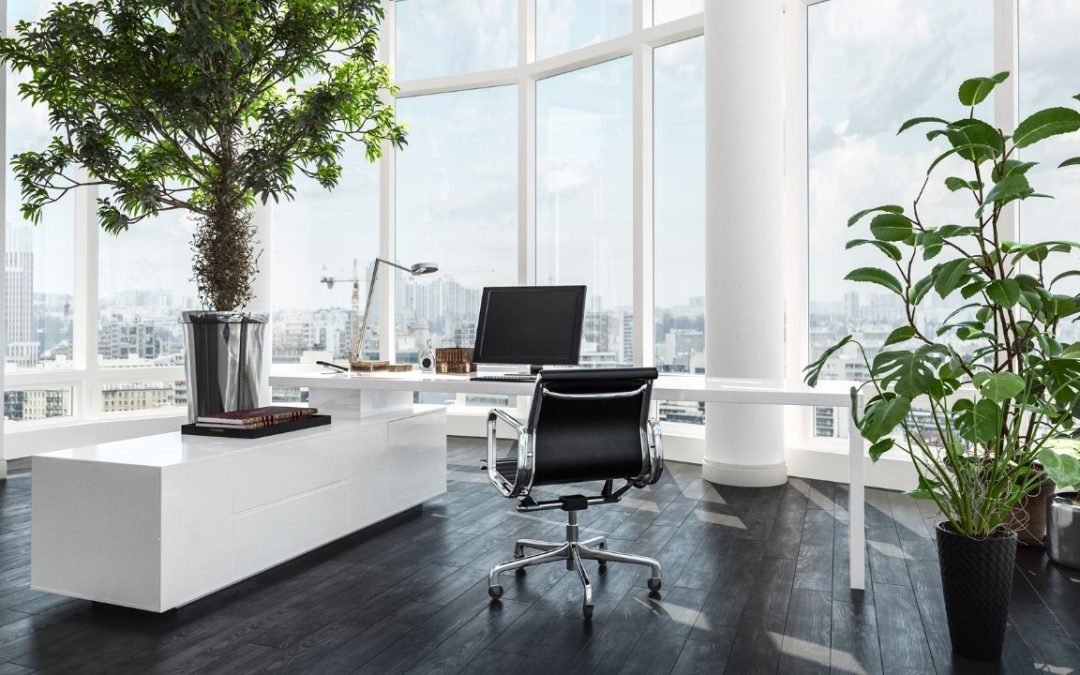
Professional interior plant design creates measurable financial returns through improved employee productivity and reduced operational costs. Companies investing in expertly designed plantscapes report quantifiable improvements in workplace wellness metrics and employee retention rates.
The global professional plant design service sector is projected to reach $6.97 billion by 2035. This growth reflects increasing corporate recognition that office plant design, balancing aesthetics and functionality, drives tangible business outcomes.
Key Takeaways
- Professional plant design services deliver a 15% productivity increase and 30% stress reduction in workplace environments.
- Full-service maintenance costs $200-$600 monthly but eliminates employee time burden and guarantees plant health.
- DIY plant approaches experience 33% overwatering deaths and 32% underwatering deaths due to inconsistent care.
- Design sophistication accounts for 42% of perceived value in professional plantscapes, outranking plant size or diversity.
- The professional plant design service sector is projected to reach $6.97 billion by 2035 with 3.1% annual growth.
What Is Professional Interior Plant Design?
Professional interior plant design encompasses complete spatial planning, species selection, and installation by trained specialists. These services integrate biophilic elements strategically throughout office environments to maximize employee wellness and aesthetic impact.
Design firms analyze lighting conditions, humidity levels, and traffic patterns before recommending plant placements. This systematic approach ensures long-term plant health and sustained visual appeal across all business spaces.
Components of Full-Service Plant Design
Full-service professional design includes complete design, installation, and ongoing maintenance in one comprehensive package. Trained technicians visit facilities weekly or bi-weekly to water, prune, and replace plants as needed.
This model eliminates all employee responsibility for plant care while guaranteeing consistent aesthetic quality. Companies like Ambius and Natura HQ dominate this segment with nationwide service networks and plant health guarantees.
Differences Between Professional and DIY Plant Design
Full-service professional design costs $200-$600 monthly for maintenance versus DIY plant kits at $69-$229 per plant. Professional services guarantee plant health, while DIY approaches experience high mortality rates requiring constant replacement purchases.
Professional design has zero employee time burden, while DIY requires ongoing employee attention and care. Partial consultation costs $500-$2,000 as a one-time fee and provides professional design plans with customer-managed installation and care.
Key Features of Maintenance-Only Services
Maintenance-only services provide professional care for existing, customer-purchased plants without redesigning the overall spatial arrangement. These programs cost $100-$400 monthly and protect existing plant investments from neglect and mortality.
Maintenance-only services do not optimize spatial design or initial plant selection for specific environmental conditions. This approach works best when companies already own quality plants but lack staff expertise for consistent care.
Why Do Businesses Invest in Interior Plant Design?
Businesses invest in interior plant design to improve employee wellness and create competitive workplace environments. Quantifiable returns include reduced sick days, increased productivity, and improved talent retention in competitive hiring markets.
Strategic plant placement also elevates brand perception among clients and visitors entering corporate spaces. Why every modern office needs an expert interior plant design becomes clear when comparing employee satisfaction scores before and after implementation.
Purpose of Interior Plants in Workspaces
Biophilic design refers to integrating plants and nature into workplace environments to support human psychological needs. This design philosophy recognizes that humans evolved in natural settings and experience measurable stress when isolated from greenery.
Strategic plant placement reduces noise levels, improves air quality, and creates visual privacy without architectural barriers. These environmental improvements directly impact employee concentration, comfort, and overall job satisfaction throughout the workday.
How Plants Enhance Employee Wellness and Productivity
Enriching work environments with plants leads to a 15% increase in productivity, according to workplace performance studies. Plants naturally filter airborne pollutants and release oxygen, creating healthier indoor environments that reduce respiratory complaints.
Biophilic design reduces workplace stress by 30% and decreases health complaints by 21% in commercial settings. These wellness improvements translate directly into reduced absenteeism and higher-quality work output from employees.
Impact on Brand Image and Client Impressions
Professional plantscapes create immediate positive impressions on clients, investors, and potential recruits visiting corporate offices. Living greenery signals investment in employee wellbeing and attention to environmental quality throughout the organization.
Aesthetic decline of dying plants creates negative impressions on clients and employees, undermining corporate credibility. Poorly maintained plantscapes suggest operational neglect and can damage brand perception more severely than having no plants at all.
Who Benefits Most from Professional Plant Design?
Corporate facilities managers and office decision-makers benefit most from professional plant design through simplified vendor management. These services eliminate administrative burden while delivering consistent aesthetic results that satisfy executive leadership and employees.
Companies competing for talent in tight labor markets gain measurable advantages through enhanced workplace environments. The wellness investment in professional plantscapes demonstrates organizational commitment to employee experience and retention.
Consumer Demographics and Buying Patterns
Millennials ages 26-42 are the most active purchasing demographic versus Gen Z ages 18-24, which has the highest failure rates. Research shows 93% of Millennials believe houseplants make them happier, driving demand in both residential and commercial sectors.
A 33% surge in demand for low-maintenance varieties among urban Millennials reflects time constraints in professional populations. Corporate purchasers increasingly specify drought-tolerant species that maintain visual appeal despite inconsistent building climate controls.
Regional and Urban Adoption in Business Settings
North America leads with 37% market share in the global indoor plant market for commercial installations. Europe holds 31% market share, while Asia-Pacific is experiencing 6.65% CAGR through 2031 in professional design services.
Urban areas show significantly higher adoption rates due to dense office environments and competitive corporate cultures. Metropolitan facilities managers prioritize green space as a differentiator when competing for professional talent against rival employers.
Generational Preferences and Plant Maintenance Challenges
Research shows 69% of Gen Z plant owners had at least one plant die during pandemic-era plant purchasing trends. Shockingly, 33% of Gen Z have quit the plant hobby entirely after experiencing repeated failures with purchased plants.
Lack of time for proper care represents 32% of the reasons cited for abandoning plant ownership among younger demographics. An alarming 10% of Gen Z plant owners lost 10 or more plants, demonstrating the expertise gap in DIY approaches.
How Does Professional Plant Design Deliver ROI?
Professional plant design delivers plant design ROI through measurable productivity gains and reduced healthcare costs for employers. How to justify the budget for office plants, ROI, and wellbeing metrics explained provides frameworks for calculating business green space return on corporate investments.
Companies track improvements in employee satisfaction scores, sick day reductions, and retention rates after implementation. These metrics translate monthly service fees into quantifiable financial returns that satisfy budget scrutiny from executive leadership.
Measurable Increases in Productivity and Wellness
Enriching work environments with plants leads to a 15% increase in productivity, according to workplace performance research. Employees demonstrate improved concentration, faster task completion, and higher quality output in biophilically designed spaces.
Biophilic design reduces workplace stress by 30% while decreasing health complaints by 21% in commercial office environments. These improvements create compounding returns as healthier, more focused employees deliver consistently better performance over time.
Cost Savings Through Reduced Sick Days and Retention
Indoor plants naturally filter pollutants, leading to fewer sick days and direct cost savings for employers. Improved indoor air quality ROI becomes evident when tracking absenteeism rates before and after professional plantscape installation.
Employee retention improvements reduce recruiting and training costs that typically equal 50-200% of annual salary for replaced positions. Professional plantscapes contribute to workplace satisfaction scores that influence retention decisions in competitive employment markets.
Benefits of Expert Design Versus Ongoing DIY Costs
DIY approaches often prove more expensive in the long run than professional maintenance contracts due to replacement costs. The hidden costs of constantly replacing dead plants in DIY scenarios accumulate rapidly when mortality rates exceed 50%.
Lost productivity of employees spending time on plant care in DIY situations represents an untracked operational expense. The benefits of professional indoor plant maintenance services for Orange County businesses include eliminating this time burden entirely while guaranteeing aesthetic consistency.
What Causes DIY Office Plant Design to Fail?
DIY office plant design fails primarily due to inconsistent care from untrained employees managing facilities responsibilities. Interior plant design vs DIY office plants: ROI analysis reveals that mortality rates exceed 60% in self-managed corporate plantscapes.
Responsibility often falls on administrative staff without horticultural training or adequate time for proper care protocols. This structural weakness guarantees eventual plant death regardless of initial purchase quality or the employee’s good intentions.
Common Plant Care Mistakes and Plant Mortality Rates
Research shows 33% of plant deaths are attributed to overwatering, while 32% result from underwatering. An additional 28% of plant deaths are attributed to improper lighting when species requirements mismatch actual office conditions.
Inconsistent care in DIY approaches leads to high mortality rates that undermine the intended wellness benefits. The DIY plant sector experiences higher customer churn due to plant mortality rates exceeding 50% annually.
Hidden Costs of DIY Plant Maintenance for Businesses
The hidden costs of constantly replacing dead plants in DIY scenarios accumulate to hundreds or thousands annually. Lost productivity of employees spending time on plant care in DIY situations represents an untracked operational expense.
DIY responsibility often falls on untrained employees who lack expertise in species-specific watering and light requirements. This knowledge gap creates inevitable failures regardless of employee effort or initial plant quality at purchase.
Negative Consequences of Poorly Maintained Plantscapes
Dying plants counteract the intended benefits of biophilic design by creating visual blight and operational embarrassment. The aesthetic decline sends negative signals to employees about organizational attention to environmental quality and detail.
Poorly maintained plantscapes damage brand perception among visiting clients who interpret dead plants as operational neglect. Five signs your office needs a professional plant design upgrade include visible plant decline and accumulated dead foliage in public spaces.
How Do Market Leaders Compete in Professional Plant Design?
Market leaders compete through service reliability, design sophistication, and guaranteed plant health across large commercial portfolios. Professional firms differentiate on maintenance consistency, while DIY services compete on initial convenience and lower entry costs.
The global indoor plant market was valued at $11.28 billion in 2026 and is projected to reach $15.29 billion by 2035. This growth reflects increasing corporate adoption of professional services over failed DIY attempts in workplace environments.
Overview of Major Industry Players and Services
Ambius is a full-service professional design company and a Rentokil Initial subsidiary with nationwide commercial service networks. Natura HQ is a full-service professional design company specializing in corporate plantscape installation and guaranteed maintenance programs.
Bloomscape is a DIY plant delivery service, while The Sill is a DIY plant delivery service targeting residential consumers. Kelly Mac Interiorscapes provides professional plantscape services with emphasis on spatial design integration and ongoing horticultural expertise.
Competitive Strategies and Market Segmentation
Professional firms emphasize design sophistication versus DIY services that compete on convenience and accessibility for budget-conscious buyers. The global indoor plant market is valued at $11.28 billion in 2026 and projected to reach $15.29 billion by 2035.
The professional plant design service sector is expected to grow to $6.97 billion by 2035 at 3.1% CAGR. This segment growth outpaces DIY sectors due to corporate recognition of superior outcomes from expertly managed installations.
The Role of Design Sophistication in Perceived Value
Design sophistication accounts for 42% of the perceived value of landscaping, according to Virginia Tech research studies. This factor outranks plant size, species diversity, and container quality in client satisfaction and perceived return.
Professional designers leverage spatial planning expertise to create cohesive visual experiences that DIY approaches cannot replicate. Wellness at work, the importance of office plant design emphasizes how strategic placement maximizes both aesthetic and functional benefits simultaneously.
How Have Businesses Successfully Implemented Professional Plant Design?
Successful implementations require collaboration between plant designers and architects during space planning phases for optimal results. A step-by-step guide to successful office plant design implementation outlines critical coordination points that prevent common installation failures.
Case studies demonstrate how professional expertise transforms sterile corporate environments into engaging spaces that support employee wellbeing. These real-world examples provide concrete evidence of achievable outcomes when businesses partner with experienced design firms.
Case Study: Simon Kucher Office Planting by Meristem Design
Meristem Design transformed the Simon Kucher Central London office with living picture frames, green space dividers, and desk enhancements. The installation used Ficus Lyrata and Monstera Deliciosa species selected for their visual impact and adaptability to office conditions.
The project created spatial division without harsh barriers while maintaining collaborative flow in the open-plan layout. Results included enhanced employee wellbeing, improved air quality, and reinforced brand image focused on corporate sustainability initiatives.
Case Study: North Loop Green by Plants By Design
Plants By Design outfitted the 14-story North Loop Green office building in Minneapolis with comprehensive plantscape installations. The firm worked alongside architects during construction to implement complex renderings and coordinate infrastructure requirements for irrigation.
This collaboration created visual continuity from the lobby to individual office floors with seamless aesthetic integration. The project demonstrates how early involvement in construction planning enables sophisticated installations that exceed standard post-construction retrofits.
Lessons Learned from Real-World Implementations
Successful implementations prioritize early designer involvement during architectural planning rather than treating plants as afterthought décor. This approach ensures proper lighting, irrigation infrastructure, and species selection aligned with actual environmental conditions.
Ongoing professional maintenance proves essential for sustaining initial design quality and preventing the aesthetic decline that undermines investment. Real-world results confirm that guaranteed maintenance contracts deliver superior long-term outcomes compared to customer-managed care protocols.
The Comprehensive ROI of Professional Interior Plant Design for Businesses
Professional interior plant design delivers quantifiable returns through improved productivity, reduced absenteeism, and enhanced employee retention rates. The measurable wellness investment creates compounding benefits that justify monthly service fees through tracked operational improvements.
Companies implementing professional plantscapes report sustained improvements in workplace satisfaction surveys and reduced recruitment costs. These outcomes position plant design as a strategic operational investment rather than discretionary aesthetic spending.
Facilities managers in Orange County and nationwide increasingly recognize that guaranteed professional maintenance eliminates the hidden costs plaguing DIY approaches. Partnering with established providers ensures consistent results that satisfy both employee expectations and executive budget scrutiny. Mr. Plant SoCal has delivered reliable plantscape solutions for 38 years, serving over 1,200 satisfied customers with guaranteed plant health and professional maintenance programs.
Put These Numbers to Work in Your Office
The data is clear: professional interior plant design pays for itself in productivity, retention, and fewer dead plants. Mr. Plant SoCal has designed, installed, and maintained thriving plantscapes for Orange County businesses since 1980, and we back every plant and service with a full guarantee. Skip the DIY mortality rates and let our designers build a space that works as hard as your team does. Schedule your free design consultation with Mr. Plant SoCal today, and we’ll handle everything from the first sketch to ongoing care.

