
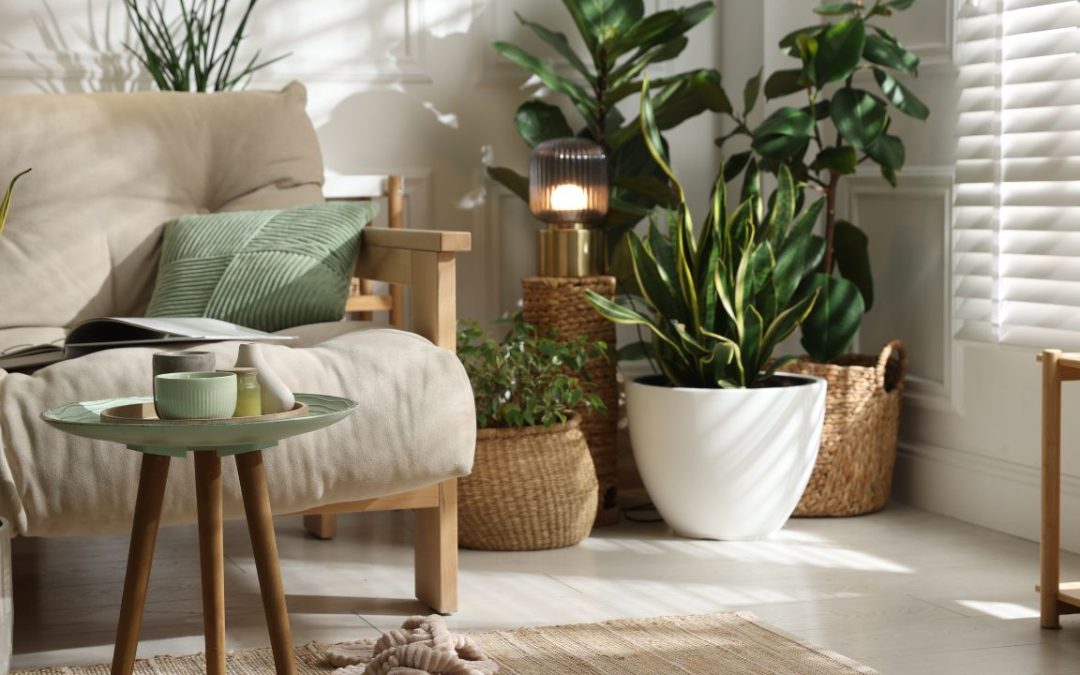
Interior plant design pricing in Orange County reflects a dense, affluent market where residential and commercial buyers prioritize wellness, branding, and turnkey care. Costs typically start around USD 149 per month for small office packages and rise to USD 250 per square foot for premium living walls, with final quotes shaped by plant selection, container quality, maintenance frequency, and sustainability requirements.
Orange County’s median household income of USD 116,289 and nearly fully urbanized environment support stronger-than-average demand for interior plant design services that bring greenery into spaces with limited outdoor access.
Key Takeaways
- Basic office plant packages in Southern California start at USD 149-249/month with separate installation fees of USD 150-250.
- Plant type accounts for 36.4% of purchase decisions, followed closely by price at 35.1% and availability at 28.4%.
- Living walls in Orange County typically cost USD 130-250/SF installed, with annual maintenance adding USD 6-18/SF and replacement rates of 5-15%.
- Residential maintenance plans usually run USD 50-150/month for monthly visits, while commercial programs range from USD 100-600+/month depending on scope.
- Orange County’s median household income of USD 116,289 and 99.9% non-rural context support above-average demand for professionally designed interior greenery.
What Is Interior Plant Design and Why Is It Important?
Interior plant design combines horticulture, spatial styling, and facilities management to introduce live greenery into residential and commercial environments. This service sits at the intersection of the global landscaping services market, valued at USD 330.58 billion in 2024, and the indoor plants market, valued at USD 20.68 billion in 2024. Professionally designed plant installations improve air quality, reduce workplace stress, and enhance the visual appeal of offices, hotels, and homes. The category is supported by both lifestyle-driven residential buyers, who represent 71.1% of indoor plant demand, and commercial clients in offices, healthcare, and hospitality settings seeking wellness and branding value.
What Services Are Included in Interior Plant Design?
Interior planting design services typically include plant selection, container specification, installation, and ongoing maintenance tailored to light and climate conditions. Living walls are live vertical systems with integrated irrigation, structural support, waterproofing, lighting, and sensor monitoring. Preserved moss walls offer low-water decorative wall features using preserved material that requires minimal upkeep. Plant type corresponds directly to design fit, visual style, and suitability for available light, making professional consultation essential for long-term success.
What Market Trends Influence Interior Plant Design Demand?
The global landscaping services market is projected to grow at 6.7% CAGR through 2030, reaching approximately USD 484.79 billion. The indoor plants market is forecast to expand from USD 20.68 billion in 2024 to USD 30.25 billion by 2032 at 4.87% CAGR. Residential buyers account for 71.1% of current indoor plant demand, while the commercial segment is growing faster at 6.05% CAGR. Office, healthcare, retail, and hospitality environments are adopting commercial indoor plant design to support wellness initiatives, improve employee retention, and enhance guest experiences.
What Factors Affect Interior Plant Design Pricing in Orange County?
Interior plant design quotes in Orange County are determined by plant type, container quality, maintenance frequency, site logistics, and customization level rather than a universal per-plant rate. Survey evidence shows that plant type accounts for 36.4% of purchase decisions, price accounts for 35.1%, and availability accounts for 28.4%. These priorities reflect the fact that buyers value design fit and budget constraints nearly equally. Premium container finishes, climate-appropriate plant palettes, and weekly versus monthly maintenance cadences can shift quotes by hundreds of dollars per month or tens of thousands of dollars for permanent installations.
How Does Plant Type and Design Fit Influence Cost?
Plant type drives 36.4% of purchase decisions because species selection determines visual impact, care requirements, and suitability for specific light and temperature conditions. Price follows closely at 35.1%, while availability accounts for 28.4%, meaning sourcing challenges and lead times can materially affect final quotes. Specialty plants, rare species, or those requiring off-site pre-growing add procurement complexity and cost. Climate-appropriate selections reduce long-term maintenance but may narrow supplier options, especially during periods of constrained inventory.
What Role Do Containers and Customization Play in Pricing?
Container choice is a key value-engineering lever that affects both aesthetics and final pricing. Commercial-grade plastic containers cost significantly less than designer ceramic, rattan, or custom-fabricated planters but may not meet the visual standards of luxury offices or hospitality environments. Customization includes planter finishes, plant grouping strategies, architectural integration, and coordination with building systems. Premium residential and hospitality projects often require containers that support specific brand standards, adding both material and design coordination costs.
How Do Maintenance Frequency and Service Models Impact Quotes?
Maintenance frequency directly shapes monthly or annual service costs and influences plant health outcomes. Weekly visits support higher plant survival and more consistent aesthetics but cost more than bi-weekly or monthly schedules. Plant replacement assumptions must be built into quotes to ensure accuracy, as some environments experience higher turnover due to light, temperature, or humidity challenges. Performance-based irrigation contracts and sensor-enabled monitoring systems are recommended for sustainability, but add upfront infrastructure investment.
How Do Residential and Commercial Client Needs Differ Locally?
Residential buyers represent 71.1% of indoor plant demand overall but typically seek smaller-scale styling, container plants, and flexible monthly care plans. Commercial clients drive faster growth at 6.05% CAGR and often require larger installations, guaranteed maintenance, replacement policies, and compliance with corporate wellness or sustainability goals. Hospitality and Class A office projects in Orange County frequently demand statement features like living walls, which involve architectural coordination and ongoing service agreements. These differences explain why residential maintenance plans start around USD 50-150 per month while commercial programs often exceed USD 600 per month.
What Are the Typical Price Ranges for Interior Plant Design Services?
Interior plant design pricing in Orange County generally follows a three-tier structure, with entry-level recurring office packages starting around USD 149-249 per month, mid-range residential and commercial maintenance programs ranging from USD 50-600 per month, and premium living walls costing USD 130-250 per square foot installed. Installation fees for smaller packages typically equal approximately one month of service, while larger custom projects require separate design, fabrication, and installation quotes. These ranges reflect published Southern California provider pricing and should be treated as benchmarks rather than universal rates, as actual quotes depend on plant count, container quality, site access, and service intensity.
What Is the Cost of Basic Recurring Office Plant Packages?
Basic office packages in Southern California typically cost USD 149-249 per month and include plants, planters, and routine maintenance under a service agreement. Installation fees usually run USD 150-250 one time, roughly equal to one month of service. Plantopia offers office packages at USD 149, USD 199, and USD 249 per month in Southern California, targeting small offices and reception areas. Plantman’s Bay Area pricing of USD 140-250 per month for a 4,000-square-foot office suggests similar baseline costs across California markets.
How Much Do Residential Maintenance Plans Usually Cost?
Residential plant maintenance services typically cost USD 50-150 per month for monthly care visits that include watering, pruning, fertilizing, and troubleshooting. Bi-weekly service generally ranges from USD 100-250 per month, while weekly care can reach USD 200-400 per month for larger collections or more intensive styling needs. These programs appeal to affluent homeowners, luxury condo residents, and second-home owners who lack time or expertise for ongoing plant care. Monthly costs rise with plant count, visit frequency, and the complexity of container arrangements or specialty species.
What Are the Price Ranges for Living Walls and Premium Features?
Living walls in Orange County typically cost USD 130-250 per square foot installed, depending on system quality, plant palette, and installer approach. Preserved moss walls offer a lower-maintenance alternative at approximately USD 90-120 per square foot installed. Living wall annual maintenance adds USD 6-18 per square foot to support irrigation, fertilization, monitoring, and plant health. Plant replacement rates for living walls typically range from 5-15% annually, depending on light conditions, climate control, and maintenance intensity.
How Do Sustainability and Technology Influence Interior Plant Design Quotes?
Sustainability practices and smart technology integration increasingly shape interior plant design quotes by adding upfront infrastructure costs while improving long-term efficiency and plant survival. Climate-appropriate plant selection, drip irrigation, organic fertilizers, and sensor-based monitoring systems support environmental goals but require more careful sourcing, higher-grade materials, and ongoing performance management. Survey evidence shows that 46% of consumers view an environmentally lighter home as important to wellness, yet 80% cite high cost as a barrier to sustainable products. This tension explains why sustainability features are often positioned as optional upgrades or tiered service levels rather than standard inclusions.
What Sustainable Practices Affect Project Cost and Value?
Sustainable practices such as climate-appropriate plant selection, healthy soils, efficient irrigation, and reduced pesticide use can lower long-term maintenance costs while raising initial design and installation expenses. MWELO efficiency assumptions of 0.75 for spray irrigation and 0.81 for drip irrigation help explain why drip systems and smart controllers add upfront cost but reduce water waste. Organic fertilizers and pesticide-free maintenance programs support health and wellness messaging but may require more frequent monitoring and intervention. Performance-based maintenance plans and irrigation contracts are recommended to ensure accountability and long-term sustainability outcomes.
How Is Smart Irrigation and Sensor Technology Integrated?
Smart irrigation systems use moisture sensors to monitor soil conditions and adjust watering schedules automatically based on real-time data. Sensor systems send alerts to plant maintenance services technicians when inconsistencies arise, enabling preventative care and reducing plant loss. These technologies are increasingly common in premium living wall installations and large commercial programs where consistent aesthetics and plant survival are critical. Infrastructure costs for sensor-based systems add to initial quotes but support lower water use, fewer plant replacements, and stronger long-term performance.
What Impact Does Plant Sourcing and Off-site Pre-growing Have on Pricing?
Off-site pre-growing of living wall panels for months before installation improves establishment success but adds nursery, logistics, and holding costs. SemperGreen pre-grows panels using 72-cell plugs or 2-inch pots planted into vertical modules, then ships them to job sites only after root development. For one Los Angeles project, approximately 90% of plants were pre-grown at a British Columbia nursery before final installation. This approach reduces on-site installation time and improves plant survival but requires advance planning, longer lead times, and higher upfront investment.
How Do Commercial and Hospitality Projects Affect Interior Plant Design Costs?
Commercial and hospitality projects typically involve larger plant counts, more frequent maintenance visits, guaranteed replacement policies, and coordination with corporate wellness or branding standards. Installation complexity increases when projects must accommodate building systems, preserve maintenance access, or meet historic preservation requirements. Case study evidence from Southern California hotel living walls shows that approval processes can extend a year or more, with finished installations requiring custom-fabricated modules, off-site pre-growing, and sensor-based irrigation systems. These factors explain why commercial quotes often range from hundreds to thousands of dollars per month, with premium hospitality features reaching tens of thousands for installation alone.
What Are Common Commercial Maintenance Pricing Structures?
Commercial maintenance programs typically cost USD 100-600+ per month, depending on office size, plant count, visit frequency, and service guarantees. Larger facilities, Class A offices, and hospitality environments often exceed USD 600 per month due to high plant density, weekly or bi-weekly visits, and replacement guarantees. Service agreements may bundle installation, plants, planters, and maintenance into a single monthly fee or separate these components for more flexible budgeting. Providers offering guaranteed plant health, pesticide-free care, and replacement policies typically charge premium rates but reduce client risk and staff workload.
What Should Consumers Expect When Requesting Interior Plant Design Quotes?
Consumers requesting interior plant design quotes should expect detailed consultations that assess light conditions, climate control, maintenance access, aesthetic preferences, and budget constraints. Professional providers typically offer free initial consultations to evaluate site conditions and recommend plant palettes, container options, and service frequencies. Quotes should clearly separate one-time installation fees from ongoing maintenance costs and specify what is included in replacement guarantees. Clients balancing budget and design preferences can request value-engineering options such as alternative container materials, simplified plant groupings, or adjusted visit frequencies to fit financial constraints.
How Can Clients Balance Budget and Design Preferences?
Clients can balance budget and design preferences by prioritizing plant type and design fit, which account for 36.4% of purchase decisions, while exploring container and service-frequency options to manage the 35.1% price sensitivity. Environmental messaging may shift price to 37% of the decision, suggesting that sustainability upgrades should be framed as value-adding features rather than premium surcharges. Free consultations and value engineering through commercial-grade containers, local plant sourcing, or flexible maintenance schedules help clients achieve desired aesthetics within budget. Clear communication about replacement assumptions, guarantee terms, and long-term care requirements prevents misalignment between expectations and quoted costs.
What Customization Options Typically Affect Cost?
Customization options that affect cost include container material and finish, plant palette complexity, architectural integration, lighting and irrigation infrastructure, and maintenance intensity. LA Plant Company offers free consultations and value engineering to help clients choose between budget-friendly plastic planters and premium ceramic or rattan finishes. Mr. Plant provides pesticide-free maintenance and replacement guarantees, which add service value but may increase monthly costs. Custom fabrication, rare plant species, sensor-based irrigation, and weekly visits are the primary drivers of premium pricing. Clients seeking statement features like living walls should budget for both installation and ongoing maintenance costs.
How Are Ongoing Maintenance and Replacement Policies Priced?
Ongoing maintenance is typically priced as a monthly or annual service fee that includes scheduled visits, watering, pruning, fertilizing, and troubleshooting. Replacement policies vary by provider, with some offering full replacement guarantees included in monthly fees and others charging separately for plants that fail due to environmental stress. Living walls typically require annual maintenance contracts of USD 6-18 per square foot, with replacement rates of 5-15% depending on conditions. Clients should clarify whether replacement costs are capped, whether environmental failures are covered, and how frequently plants will be inspected and serviced.
Interior Plant Design Cost Dynamics and Pricing Factors in Orange County
Interior plant design costs in Orange County reflect a three-tier market structure, with entry-level office packages starting around USD 149-249 per month, mid-range residential and commercial programs ranging from USD 50-600 per month, and premium living walls costing USD 130-250 per square foot installed. Pricing is shaped by plant type, container quality, maintenance frequency, sustainability practices, technology integration, and the distinction between residential styling and commercial facilities management. Orange County’s high median household income, nearly fully urbanized context, and strong demand for wellness-driven workplace environments support above-average spending on professionally designed and maintained interior greenery.
For businesses and homeowners seeking reliable, professionally managed plant services, office plant design with guaranteed maintenance and replacement policies reduces risk while ensuring consistent aesthetics and plant health. Mr. Plant SoCal has served over 1,200 satisfied customers across 38 years, delivering weekly or bi-weekly maintenance visits with full plant guarantees backed by a 4.8-4.9 star rating across 350+ reviews. Professional uniformed technicians provide zero-effort solutions for facilities managers, HR leaders, and homeowners who lack the time or expertise for ongoing plant care.
Get a Custom Quote from Mr. Plant SoCal
Interior plant design pricing depends on your space, your goals, and how much ongoing care you need. Mr. Plant SoCal has worked with 1,200+ commercial clients across Orange County for over 38 years. Our team will assess your space, recommend the right plants, and give you a clear quote — no guesswork. Contact Mr. Plant SoCal today to schedule your free consultation.

