
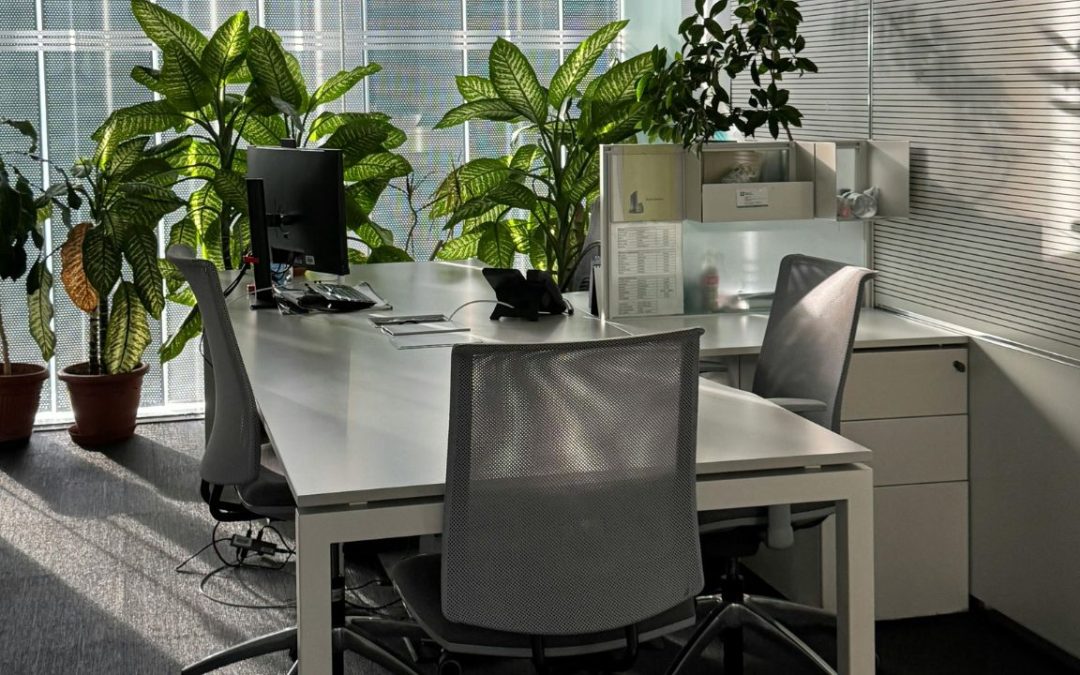
Interior plant design pricing varies widely based on service model, plant selection, container quality, and maintenance intensity. Most Orange County projects fall into three tiers: small recurring packages starting around USD 149 per month, mid-range customized designs with premium containers, and statement features like living walls costing USD 130–250 per square foot.
The difference between a few hundred dollars monthly and tens of thousands comes down to scope and customization. Entry-level interior planting design programs bundle plants, planters, and monthly care into predictable subscription pricing. Premium biophilic installations require infrastructure planning, off-site fabrication, irrigation systems, and ongoing monitoring.
Key Takeaways
- Small office packages in Southern California typically cost USD 149–249 per month, with separate installation fees of USD 150–250
- Living walls in Orange County range from USD 130–250 per square foot installed, with annual maintenance adding USD 6–18 per square foot
- Plant type accounts for 36.4% of purchase decisions, price 35.1%, and availability 28.4%
- Orange County’s median household income of USD 116,289 and 99.9% urban context drive stronger demand for professional interior greenery services
- Premium features like smart irrigation and pre-grown living wall systems increase upfront costs but reduce long-term water waste and plant replacement needs
What Is Interior Plant Design and Why Does It Matter?
Interior plant design combines horticulture, spatial planning, and facilities management to create functional greenery solutions. Professional services deliver benefits beyond aesthetics: improved air quality, reduced employee stress, enhanced brand perception, and stronger talent retention. Survey evidence shows 93% of millennials believe houseplants make them happier, while corporate buyers increasingly view greenery as an operational wellness tool.
Dense urban environments limit outdoor growing space, making interior greenery essential for biophilic connection. Orange County’s 99.9% urban context and median home value of USD 962,600 create strong demand for professionally managed solutions. Facilities managers facing return-to-office mandates use plant design to make workspaces more appealing.
How Does Interior Plant Design Relate to Landscaping and Biophilic Design?
Interior plant design sits at the intersection of landscaping services, the indoor plants market, and biophilic design facilities. The global landscaping services market reached USD 330.58 billion in 2024, growing at 6.7% annually through 2030. This benchmark represents design, installation, and maintenance revenue, while the USD 20.68 billion global indoor plants market captures procurement demand.
Landscaping services provide the stronger pricing proxy because they include labor, ongoing care, and project management. The indoor plants market measures product sales but excludes service fees, installation labor, and maintenance contracts.
Who Uses Interior Plant Design Services? Residential vs Commercial
Residential buyers accounted for 71.1% of indoor plant sales in 2025, dominating the product market. The commercial segment is growing faster at 6.05% annually, driven by offices, healthcare facilities, hospitality venues, and educational institutions. Residential demand centers on lifestyle and wellness, while commercial buyers prioritize brand image, employee retention, and measurable productivity outcomes.
Orange County’s high household income and competitive talent market support both segments. Residential maintenance runs USD 50–150 per month for basic care, while commercial contracts often reach USD 100–600 monthly depending on scope and visit frequency.
What Drives Market Pricing in Interior Plant Design?
Market pricing reflects supply-side service capacity and demand-side purchasing power. The global landscaping services market is projected to reach USD 484.79 billion by 2030. North America represents 47.55% of this market, with the U.S. accounting for 83.92% of North American revenue, which directly shapes labor costs and pricing norms in Orange County.
Demand-side factors include consumer willingness to pay, preference for customization, and sensitivity to sustainability claims. Plant type, price, and availability rank nearly equal in purchase decisions, meaning buyers evaluate design fit and budget simultaneously.
How Do Market Size and Growth Influence Pricing?
The global landscaping services market, valued at USD 330.58 billion in 2024, provides the primary benchmark for service-side revenue. The landscape and garden design segment is growing at 7.4% annually, slightly outpacing the broader market. This growth supports expanding capacity for design, installation, and maintenance contracts.
The global indoor plants market reached USD 20.68 billion in 2024 and is forecast to grow to USD 30.25 billion by 2032 at 4.87% annually. When plant availability tightens or rare species are specified, office plant design costs rise due to longer sourcing timelines and higher nursery pricing.
How Do Consumer Preferences Affect Quotes?
Plant type accounted for 36.4% of overall purchase decisions, price 35.1%, and availability 28.4% in a 2023 consumer study. These priorities directly map to the quote structure: plant type corresponds to design fit and light suitability, price reflects client budget, and availability influences lead times. When exposed to environmental-benefit messaging, the price moved to 37%, showing that sustainability does not eliminate cost sensitivity.
Providers offer tiered packages that separate plant selection, container quality, and maintenance frequency. Entry-level programs use readily available species in commercial-grade planters, while premium offerings feature rare specimens, designer containers, and more frequent care visits.
What Role Does Sustainability Play in Pricing Decisions?
Sustainability influences pricing through material choices, water efficiency, and maintenance inputs. Forty-six percent of consumers said minimizing a home’s environmental impact is important to personal wellness, but 80% view higher cost as a barrier to buying sustainable products.
Seventy-five percent of millennials expect to continue their plant hobby at the same level post-pandemic. Providers offer climate-appropriate plant palettes, drip irrigation, organic fertilizers, and pesticide-free maintenance as premium features. These options increase upfront cost but reduce long-term water waste, chemical exposure, and plant replacement frequency.
How Does Location Impact Interior Plant Design Costs?
Location shapes pricing through labor costs, real estate values, household income, and urban density. Orange County’s median household income of USD 116,289 exceeds California’s USD 99,122 statewide median, supporting stronger discretionary budgets. Median owner-occupied home value of USD 962,600 and median gross rent of USD 2,434 indicate a higher-cost lifestyle context.
Urban density drives demand because residents and workers have less yard access and greater reliance on indoor greenery. Orange County’s 99.9% non-rural population creates a highly urbanized market where containerized and interior solutions are often the only practical option. This concentration supports service efficiency, allowing providers to serve more clients per route.
What Unique Factors Shape Pricing in Orange County?
Orange County’s 2024 population of 3,170,435 and 1,082,960 households create substantial market scale. High broadband adoption of 95% supports digital discovery and online quote shopping, making pricing transparency important. Competitive service markets and affluent buyers raise expectations for quality, reliability, and aesthetic refinement.
High income, high home values, and dense living support premium service tiers. Homeowners and facilities managers often prioritize turnkey solutions, replacement guarantees, and consistent care over lowest-cost options. Providers respond with bundled packages, weekly or bi-weekly maintenance, and full plant replacement commitments.
How Do Urban and Suburban Contexts Influence Demand and Cost?
Orange County’s 1,082,960 households and only 4,315 rural residents demonstrate extreme urbanization. This density supports higher service volumes per technician route, which can lower per-client labor costs. Urban contexts also favor containerized design, shifting spending toward planters, soil amendments, and controlled irrigation.
Suburban office parks, mixed-use developments, and high-rise residential buildings dominate the built environment, creating demand for lobby greenery, coworking plant features, and rooftop installations. These settings often require access coordination, elevator logistics, and waterproofing considerations. Plant maintenance services in dense Orange County environments may carry higher installation fees but lower ongoing travel costs.
What Are the Main Components of Interior Plant Design Quotes?
Interior plant design quotes typically separate initial installation, ongoing maintenance, and plant replacement. Installation covers plant procurement, planter selection, soil preparation, delivery, and placement, often charged as a one-time fee of USD 150–250 for smaller programs. Maintenance includes scheduled visits for watering, pruning, fertilizing, and troubleshooting, structured as monthly or bi-weekly agreements.
Plant replacement policies vary widely and materially affect long-term cost. Some providers guarantee replacement for any plant that fails, absorbing the cost into higher monthly fees, while others charge separately or exclude certain failure causes.
How Does Plant Type and Design Fit Affect Costs?
Plant type corresponds closely to design fit, visual style, and light suitability, accounting for 36.4% of purchase decisions. Low-light-tolerant species like pothos and snake plants cost less to source and maintain than rare tropical specimens requiring specific humidity and lighting. Specialized plants also carry a higher replacement risk if site conditions prove unsuitable.
Price maps directly to client budget at 35.1%, while availability influences lead times at 28.4%. When clients specify uncommon plants or large specimens, sourcing complexity increases, and delivery timelines extend, raising labor and procurement costs.
What Is the Importance of Container Quality and Customization?
Container quality dramatically affects both upfront cost and long-term aesthetic performance. Commercial-grade plastic planters offer durability and cost efficiency, while designer ceramic, fiberglass, or custom rattan finishes can double or triple container costs. High-end containers also require careful handling during installation and maintenance.
Customization options include branded containers, architectural integration, and coordinated color palettes. These features shift pricing from commodity plant rental toward custom fabrication logic. Buyers seeking statement pieces should budget separately for container costs.
How Do Maintenance Frequency and Service Agreements Influence Pricing?
Maintenance frequency directly determines monthly cost, with weekly visits often costing twice as much as monthly care. Weekly service supports more sensitive plant palettes, higher aesthetic standards, and corporate environments where visible neglect damages brand perception.
Plant replacement rates of 5% to 15% annually affect long-term pricing. Providers offering comprehensive replacement coverage typically charge higher monthly fees but deliver greater predictability for clients managing fixed budgets. Service agreements also specify visit scheduling, emergency response, and seasonal adjustments.
How Are Interior Plant Design Services Segmented by Customer Need?
Interior plant design services segment into residential styling, small office packages, commercial full-service maintenance, and premium biophilic features. Residential buyers emphasize wellness and aesthetics, small offices seek predictable monthly costs, larger commercial accounts prioritize brand consistency and facilities simplification, and premium buyers invest in statement installations.
Pricing structures vary accordingly. Residential and small office programs often use subscription-style monthly fees with bundled installation, while larger commercial contracts may separate design fees, installation costs, and ongoing maintenance.
What Are Typical Pricing Tiers for Residential and Small Office Packages?
Small office packages in Southern California typically cost USD 149–249 per month, including plants, planters, and routine maintenance. Plantopia serves Orange County with USD 149, USD 199, and USD 249 monthly tiers, each paired with installation fees of USD 150, USD 195, and USD 250, respectively. These packages usually require one-year agreements.
Residential maintenance costs USD 50–150 per month for monthly care, USD 100–250 bi-weekly, and USD 200–400 weekly, depending on plant count and service intensity. Installation fees remain separate, typically matching one month of service.
How Do Premium Features Like Living Walls Affect Quotes?
Living walls represent a distinct pricing category, costing roughly USD 130–250 per square foot installed in Orange County. Custom living walls range from USD 85–250 per square foot, depending on system type, plant density, and integration complexity. These installations require structural support, waterproofing, irrigation systems, lighting, and often sensor-based monitoring.
Preserved moss walls offer a lower-maintenance alternative at approximately USD 90–120 per square foot installed. Annual maintenance for live walls adds USD 6–18 per square foot, covering plant replacement, system checks, and performance optimization.
What Are the Differences in Commercial Full-Service Maintenance Pricing?
Commercial full-service maintenance costs USD 100–600 monthly, depending on plant count, visit frequency, and service scope. Larger facilities with multiple floors, diverse plant palettes, and high-visibility areas require more technician hours and specialized care protocols.
Premium commercial programs add value engineering, sustainability reporting, and emergency response guarantees. Facilities managers facing multiple vendor relationships often prefer comprehensive contracts that consolidate plant procurement, maintenance, and replacement into a single monthly payment. This approach reduces administrative burden and provides clear accountability for the benefits of professional indoor plant services for Newport Beach businesses.
How Do Construction Methods and Technology Impact Pricing?
Construction methods significantly affect installation cost, project timelines, and long-term performance. Off-site fabrication of living wall panels, pre-grown plants, and modular planter systems reduces on-site labor but requires upfront investment in nursery time and logistics. Smart irrigation and sensor technology increase infrastructure cost but lower water waste, improve plant survival, and reduce emergency maintenance visits.
Providers using advanced methods often charge higher installation fees but deliver faster project completion and better long-term outcomes. Buyers should compare construction approach, not just total cost, because methods that appear expensive upfront may reduce lifecycle spending.
What Is the Role of Pre-Growing and Off-Site Fabrication?
SemperGreen pre-grows living wall panels for months before installation, shipping plants to job sites only after establishment. This method uses 72-cell plugs or 2-inch pots planted into vertical panels at partner nurseries. For a Los Angeles hotel project, about 90% of plants were pre-grown at a nursery in British Columbia before final completion.
Plants shipped after months of controlled growth exhibit higher survival rates and faster visual maturity. This approach increases nursery and logistics costs but reduces installation time, minimizes on-site plant stress, and lowers early replacement needs. Quotes for pre-grown systems typically run higher per square foot but deliver more predictable outcomes.
How Does Smart Irrigation and Sensor Technology Influence Costs?
Smart monitoring can increase upfront infrastructure cost but reduces water waste and improves plant survival. The Plant Care System monitors moisture, adjusts irrigation schedules, provides microbursts of nutrients through irrigation water, and sends alerts when inconsistencies arise. System installation adds technology expense and programming time, but ongoing water savings and reduced plant replacement can offset initial investment.
MWELO efficiency assumptions of 0.75 for spray irrigation and 0.81 for drip irrigation demonstrate why smart drip systems are favored in California commercial projects. Advanced irrigation controls reduce manual watering labor, lower utility costs, and support sustainability reporting requirements for LEED-certified buildings.
How Do Climate-Appropriate Plants and Organic Inputs Affect Quotes?
Climate-appropriate plants reduce long-term maintenance but may narrow supply and raise procurement complexity. Native or regionally adapted species often tolerate lower water and fertilizer inputs, making them cost-effective over time despite potentially higher sourcing expenses. Organic fertilizers and pesticide-free maintenance inputs typically cost more than conventional alternatives.
Providers offering organic maintenance programs may charge premium monthly fees to cover higher material costs and more frequent monitoring. These programs appeal to buyers managing employee wellness initiatives, LEED certification requirements, or brand commitments to environmental stewardship.
How Do Local Providers Structure Pricing and Service Offers?
Local Orange County providers typically structure pricing around bundled monthly packages, tiered service levels, and optional customization. Most offer free consultations and phone estimates for smaller jobs, with formal proposals required for larger commercial or hospitality projects. Value engineering through container selection, plant substitutions, and visit frequency adjustments allows providers to meet diverse budget requirements.
Replacement guarantees, pesticide-free maintenance, and decorative container options are common differentiators. Providers emphasizing reliability often absorb replacement costs into higher monthly fees, while budget-focused competitors charge separately for plant failures.
What Pricing Models Do Orange County Companies Use?
Orange County companies primarily use subscription-style monthly pricing for recurring programs and project-based quotes for custom installations. Subscription models bundle plants, planters, and maintenance into fixed monthly fees, typically requiring six-month or one-year agreements. Project quotes separate design fees, installation costs, and ongoing maintenance.
Some providers offer lease-style programs where plants and containers remain provider property, reducing client capital expense but requiring continuous monthly payments. Purchase programs transfer ownership after installation, eliminating ongoing fees but shifting maintenance responsibility and replacement risk to the buyer. Trends in commercial indoor plant design for 2025 increasingly favor bundled subscription models.
How Do Installation Fees and Replacement Guarantees Affect Overall Cost?
Installation fees typically cost USD 150–250 one time for small office packages, roughly matching one month of service. These fees cover plant procurement, planter delivery, soil preparation, initial placement, and client orientation. Larger commercial projects may separate design fees, installation labor, and material costs, with installation representing 30% to 50% of the first-year total cost.
Replacement guarantees materially affect long-term expense. Full guarantees cover any plant failure regardless of cause, while limited guarantees exclude client neglect, extreme temperature events, or vandalism. Buyers managing fixed budgets typically prefer full guarantees despite the higher monthly cost.
What Value Engineering or Customization Strategies Are Common?
Value engineering through commercial-grade plastic containers versus designer ceramic or rattan finishes can reduce project cost by 30% to 50%. Providers often present multiple container tiers during consultations, allowing buyers to allocate budget toward more plants or higher maintenance frequency. Plant substitutions using readily available species instead of rare specimens similarly lower procurement costs and reduce lead times.
Customization strategies include branded containers, seasonal color rotations, and architectural integration that elevate visual impact without increasing plant count. Facilities managers seeking the best hanging plants for open office spaces and cubicles may prioritize vertical solutions and trailing species that maximize greenery without consuming floor space.
Interior Plant Design Pricing: Key Factors Shaping Your Quote in Orange County
Interior plant design pricing in Orange County reflects multiple intersecting factors rather than a single per-plant rate. Service model, plant type, container quality, maintenance frequency, site access, and technology integration all shape final quotes. Entry-level recurring programs typically start around USD 149–249 per month with separate installation fees, while premium living walls run USD 130–250 per square foot installed.
Orange County’s high median income, dense urban context, and competitive talent market support strong demand for professionally managed greenery. Facilities managers facing employee satisfaction concerns and return-to-office mandates increasingly view interior plants as operational tools. Understanding how providers structure quotes helps buyers evaluate options, justify budget decisions, and select partners aligned with priorities.
Local providers succeed by offering tiered packages that separate plant selection, container quality, and maintenance frequency into clear choices. Free consultations, value engineering, and replacement guarantees further differentiate service offerings. Buyers should compare construction methods, lifecycle cost, and service reliability alongside initial pricing.
Professional interior plant design delivers measurable benefits, including improved air quality, reduced employee stress, and enhanced brand perception. For Orange County businesses and homeowners seeking turnkey greenery solutions, working with experienced providers ensures proper plant selection, reliable maintenance, and predictable budgets. Mr. Plant SoCal brings 38 years of expertise, uniformed professional technicians, and full plant guarantees to every project.
Get a Custom Interior Plant Design Quote from Mr. Plant SoCal
CTA Body: Mr. Plant SoCal has served 1,200+ commercial clients across Orange County for 38+ years. Our team handles everything — plant selection, installation, and ongoing maintenance — so you never have to think about it. All plants are backed by our health guarantee, and every visit is handled by a professional, uniformed technician.
Ready to see what your space could look like? Contact Mr. Plant SoCal today for a free quote tailored to your office.

