
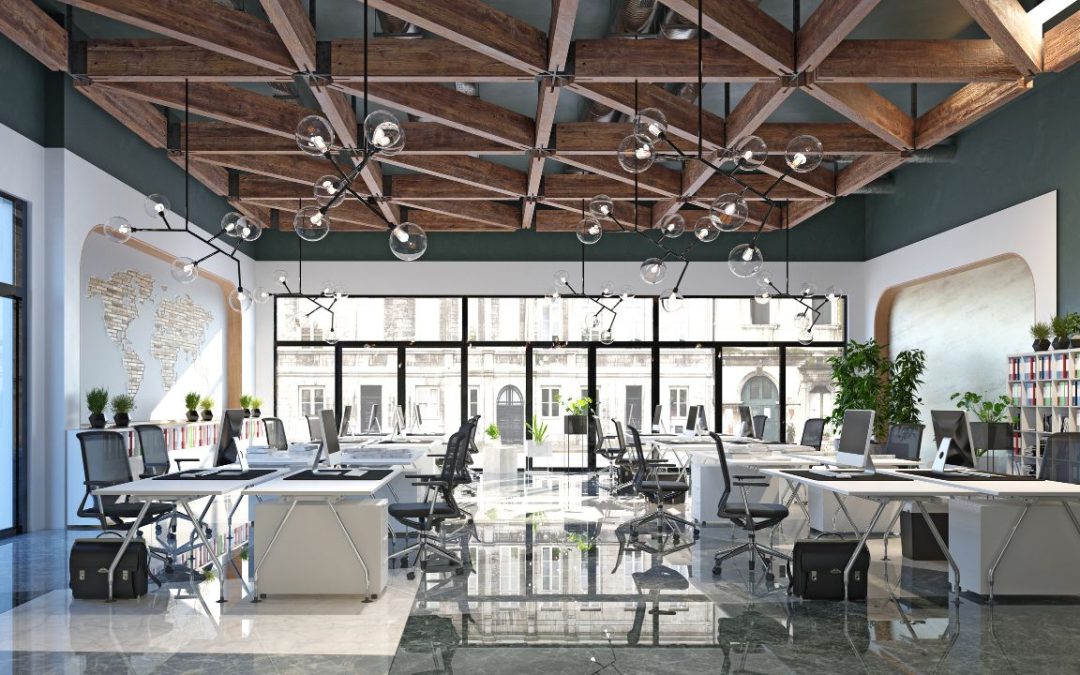
Modern office plants transform sterile workspaces into environments that support employee well-being and productivity. Selecting the right species for Southern California conditions requires balancing aesthetic impact with maintenance realities and regional climate challenges. Workers with access to natural elements in their offices report 15% higher well-being and 6% higher productivity. These measurable improvements make strategic plant selection a practical investment for facilities managers facing talent retention pressures.
Key Takeaways
- Workers in nature-rich offices report 15% higher well-being and 6% higher productivity
- Overwatering is the number one cause of office plant failure in Southern California’s dry climate
- Low-maintenance plants like snake plant, ZZ plant, and Pothos thrive in typical office conditions
- Preserved moss walls cost $40-$120 per square foot with no irrigation requirements
- Millennials show the highest preference for biophilic design at 80%, compared to 53% of Baby Boomers
What Defines Modern Office Design in Southern California?
Modern office design in Southern California prioritizes natural light, flexible layouts, and amenity-rich environments that compete with tech workspaces. Class A properties accounted for 62% of San Diego leasing activity in 2025, reflecting tenant preference for premium finishes and experiential quality. Trophy buildings with strong amenities attract higher occupancy despite overall vacancy rates of 15.4% in San Diego and 23.9% in Los Angeles. Average asking rents remain stable at $3.48 per square foot monthly in San Diego and $3.58 in Los Angeles.
How Does Biophilic Design Influence Workplace Experience?
Biophilic design delivers measurable improvements in employee performance and workplace satisfaction across multiple studies. Workers in offices with natural elements reported 15% higher creativity alongside their documented well-being and productivity gains. Nature views can save over $2,000 per employee per year through reduced absenteeism and improved focus. Productivity costs are 112 times greater than energy costs in workplace economics, making human-performance investments more valuable than operational savings.
What Are the Key Environmental Challenges for Indoor Plants in SoCal?
Hot, dry Southern California climate challenges indoor plant maintenance through low humidity and intense light exposure. Overwatering is the number one cause of office plant failure, particularly when facilities teams compensate for perceived dryness. Bright indirect light environments require species adapted to controlled interiors rather than full-sun outdoor conditions. Irregular office watering schedules during weekends and holidays further stress moisture-dependent plants.
Which Office Market Trends Affect Plant Selection and Placement?
Current office market dynamics favor modular, move-in-ready solutions over permanent build-outs in uncertain leasing environments. San Diego’s average asking rent of $3.48 per square foot monthly and Los Angeles’ rate of $3.58 support amenity investments in Class A properties. Tenants increasingly seek plug-and-play space that reduces occupancy timelines and capital commitments. Short lease terms and flexible layouts favor portable planting systems rather than integrated permanent installations.
Why Choose Plants for Biophilic Office Design Over Traditional Décor?
Plants outperform traditional décor by delivering measurable wellness and productivity improvements that justify facilities budgets. Workers in environments containing natural elements reported 15% higher well-being compared to those in sterile office settings. Nature-view workers processed calls 6%-7% faster with a 4-month payback period in one documented call-center study. These quantified outcomes provide facilities managers with defensible ROI arguments for leadership approval.
How Do Plants Impact Employee Well-Being and Productivity?
Live plants improve perceived workplace quality and reduce health-related complaints in controlled office studies. The documented 6% productivity increase and 15% creativity boost translate to meaningful competitive advantages in talent-sensitive markets. Reduced absenteeism and improved focus contribute additional value beyond aesthetic improvements. Well-maintained greenery signals employer investment in worker experience and environmental quality.
What Are Common Preferences and Perceptions About Office Greenery?
Natural light ranked as the most desired workplace element at 44%, followed by indoor plants at 20%. Currently, 42% of office workers have live plants in their office, while 58% lack natural greenery entirely. Overall, 68% of respondents said biophilic design is an important element of a space. Decorative plants received 33% favorable response, while wood elements drew 32% positive recognition from North American workers.
How Does Maintenance Affect Plant Success and Office Appeal?
Dead or unkempt plants actively damage workplace perception, with 32% of workers citing them as negative signals. This negative response matches the 32% favorable rating for well-maintained wood elements, demonstrating maintenance importance. Plant maintenance services eliminate the risk of neglected greenery damaging the employer brand. Professional care ensures consistent plant health without adding workload to internal facilities teams.
Which Plants Thrive Best in Southern California Office Environments?
Southern California office environments require plants adapted to bright indirect light, low humidity, and irregular watering schedules. Recommended species include Aglaonema, Dracaena, Pothos, snake plant, spider plant, philodendron, and ZZ plant for proven resilience. These selections tolerate the dry indoor air and temperature fluctuations common in commercial buildings. Drought-tolerant varieties reduce maintenance burden and survive weekend watering gaps without visible decline.
What Are the Low-Maintenance, Drought-Tolerant Office Plants?
Snake plants and ZZ plants are low-maintenance selections for SoCal offices due to exceptional drought tolerance. Both species survive weeks without water and thrive in typical fluorescent lighting conditions. Pothos and philodendron varieties offer trailing growth habits that soften hard architectural lines. Dracaena marginata provides vertical structure with minimal water requirements and a strong architectural presence.
Which Plants Perform Well Under Bright Indirect Light?
Aglaonema varieties tolerate lower light while displaying attractive variegated foliage patterns throughout the year. Spider plants handle bright indirect exposure common in perimeter offices and respond well to Southern California’s natural light. Low-light environments limit live plant options to shade-adapted species like snake plants and certain philodendrons. Facilities teams should match plant placement to measured light levels rather than visual assumptions.
What Statement Plants Add Visual Impact Without High Upkeep?
Large Dracaena marginata specimens create dramatic vertical elements in reception areas and lobbies without intensive care. Mature snake plants grouped in architectural planters deliver a strong geometric impact with minimal irrigation needs. Clustered Pothos arrangements soften meeting spaces while requiring only biweekly watering from professional technicians. ZZ plants tolerate neglect while maintaining glossy foliage that signals health and quality.
How Can Different Plant Formats Enhance Modern Offices?
Different plant formats serve distinct spatial and budgetary needs across modern office plant design projects. Plant maintenance programs provide recurring services that rotate plants with bundled care, typically costing $100-$600 monthly. Preserved moss walls offer dramatic visual impact without irrigation requirements at $40-$120 per square foot. Living walls require irrigation access and structural support, but deliver maximum biophilic branding at $85-$250+ per square foot installed.
What Are the Benefits of Plant Maintenance and Rental Programs?
Rental programs eliminate upfront plant investment while guaranteeing health through professional weekly or biweekly service. Rotating plant displays prevent visual stagnation and allow seasonal variation without purchasing new inventory. Predictable monthly costs simplify budget planning and avoid capital expenditure approval processes. Service agreements transfer maintenance responsibility to specialists, protecting against the 32% negative perception of unkempt plants.
When Are Living Walls or Preserved Moss Walls Appropriate?
Living walls require irrigation access and structural support that limit installation locations to prepared spaces. These vertical greenery systems deliver maximum visual impact in high-visibility lobbies and conference areas. Preserved moss walls provide acoustic benefits and natural aesthetics without irrigation or light requirements. Interior planting design increasingly incorporates preserved elements in low-light corridors where live plants fail.
How Do Natural-Material Surfaces Complement Plant Choices?
Wood elements received 32% favorable response in workplace preference surveys, matching decorative plant ratings. Natural-material accent walls cost $7.78-$11.55 per square foot installed, providing budget-friendly biophilic impact. These surfaces add warmth and acoustic absorption while reducing visual sterility in open office layouts. Combining wood finishes with live plants creates layered natural aesthetics without redundant irrigation infrastructure.
How Should Budget and Maintenance Influence Plant Selection?
Budget constraints and maintenance capacity determine whether offices pursue service programs, preserved installations, or premium living systems. Plant maintenance programs at $100-$600 monthly offer the lowest barrier to entry for testing biophilic strategies. Preserved moss walls eliminate ongoing irrigation costs while requiring $40-$120 per square foot upfront investment. Living walls demand both higher installation costs of $85-$250+ per square foot and annual maintenance of $6-$18 per square foot.
What Are the Cost Tiers for Office Planting Solutions in SoCal?
Budget plant programs start at $100-$600 per month for grouped planters with professional weekly maintenance. Mid-range preserved moss walls require $40-$120 per square foot with minimal ongoing costs beyond periodic dusting. Premium living walls range from $85 per square foot for felt-based systems to $250+ for custom architectural installations. Living wall maintenance adds $6-$18 per square foot annually, with an estimated 18-36 month payback period.
How Do Lease Terms and Office Layouts Affect Plant Choices?
Short lease terms favor modular plant programs over permanent installations that cannot relocate or recoup investment. Flexible layouts benefit from portable planter systems rather than integrated wall systems requiring structural modification. Open office environments accommodate grouped floor plants that define zones without fixed partitions. Private office corridors suit wall-mounted preserved moss that delivers impact in narrow circulation spaces.
What Are Practical Maintenance Considerations for SoCal Offices?
Southern California’s dry climate demands moisture monitoring to prevent the overwatering that causes most office plant failures. Weekend and holiday gaps in watering schedules require selecting drought-tolerant species over moisture-dependent tropicals. Professional services eliminate internal team burden while ensuring consistent plant health and seasonal rotation. Guaranteed plant replacement protects against the 32% negative perception associated with dead or declining greenery.
What Demographic and Location Factors Shape Planting Decisions?
Demographic preferences and location characteristics influence which biophilic strategies deliver the strongest tenant appeal. Millennials consider biophilic design important at 80%, compared to 74% of Gen Z, 63% of Gen X, and 53% of Baby Boomers. This generational preference gap makes plant investment particularly valuable in offices targeting younger knowledge workers. Urban and suburban locations face different environmental contexts that affect plant selection and installation approaches.
How Does Generational Preference Affect Biophilic Design Uptake?
Millennials show the strongest biophilic design preference at 80%, driving adoption in tech and creative sectors. Gen X follows at 63%, while Baby Boomers register 53%, indicating broad but age-graduated support. Offices competing for millennial talent gain a competitive advantage through visible modern office plants in shared spaces. This demographic pattern supports front-loading plant investment in high-visibility areas rather than individual workstations.
How Do Urban Vs. Suburban SoCal Offices Differ in Plant Needs?
Urban offices compensate for limited outdoor access through interior biophilic features that substitute for nature views. Suburban downtown offices can command 40%-80% rent premiums when combining workplace quality with outdoor green space proximity. High-rise urban locations face greater HVAC-driven humidity challenges requiring more resilient plant selections. Suburban campuses often integrate exterior landscaping with interior elements for cohesive environmental branding.
What Tenant Expectations Influence Amenity-Rich Office Spaces?
Current tenant expectations prioritize move-in-ready quality and experiential differentiation over purely functional space. Class A properties dominate leasing activity because tenants seek plug-and-play environments that reduce occupancy timelines. Amenity-rich buildings attract stronger occupancy despite higher rents by addressing hybrid work competition. Visible SoCal office decor elements signal landlord investment in tenant experience and environmental quality.
How Do Leading Brands and Services Support SoCal Office Planting?
Leading national and regional providers offer plant programs, living walls, and preserved installations across Southern California markets. Ambius operates 300+ local specialists across North America, delivering panel, tray, freestanding, and moss wall systems. Plant Solutions differentiates through design-forward moss wall applications and budget-accessible rental programs for desert markets. Hoffman Design Group provides standard office plant maintenance at $100-$600 monthly, establishing baseline service pricing.
Who Are the Key Providers of Plant Programs and Living Walls?
National providers like Ambius serve multi-location corporate accounts with standardized systems and regional technician networks. Specialist brands, including GSky Plant Systems and Biotecture, focus on premium vertical-greening installations for flagship projects. Regional competitors emphasize design customization and responsive service in concentrated Southern California markets. Service differentiation centers on maintenance reliability, plant guarantees, and aesthetic consultation rather than species selection alone.
What Differentiates Design-Focused Regional Competitors?
Regional providers offer faster response times and customized design consultation unavailable from national account-focused competitors. Locally-based teams understand Southern California’s specific climate challenges and proven species for commercial interiors. Design-forward positioning emphasizes branded moss wall installations and architectural integration over commodity planter services. Smaller operators compete through personalized account management and flexible contract terms matching shorter lease commitments.
How Is Pricing Structured Across National and Specialist Brands?
Plant Solutions quotes moss wall base pricing around $165 per square foot for branded custom installations. Felt-based living wall systems start at $85-$140 per square foot, representing entry-level vertical greenery options. Hydroponic tray systems range from $100-$180 per square foot, with easier plant replacement for ongoing maintenance. Modular panel systems cost $120-$200 per square foot, while custom architectural living walls reach $150-$250+ per square foot.
Integrating the Best Plants Into Modern Office Design in SoCal
Southern California offices achieve the strongest biophilic outcomes by matching plant formats to specific spatial needs and maintenance capacity. Low-maintenance species like snake plant, ZZ plant, and Pothos provide reliable performance under typical office conditions. Professional maintenance programs eliminate the risk of unkempt greenery damaging workplace perception while delivering guaranteed plant health. Strategic placement in high-visibility areas maximizes impact on the 68% of workers who value biophilic design.
Facilities managers should prioritize drought-tolerant selections that survive Southern California’s dry indoor air and irregular weekend watering. Preserved moss walls serve low-light corridors where live plants struggle, while grouped planters define zones in open layouts. Short lease terms favor modular rental programs over permanent living wall installations requiring structural modification. Mr. Plant SoCal’s 38 years of regional experience ensure species selection matches actual SoCal office conditions rather than generic recommendations.
Bring Your Orange County Office to Life with Mr. Plant SoCal
Dead plants and uninspired greenery quietly damage how employees and visitors see your office — 32% of workers say unkempt plants reflect poorly on the employer. Mr. Plant SoCal has prevented that problem for 38+ years across 1,200+ commercial clients, with uniformed technicians visiting weekly or biweekly and a full plant health guarantee on every installation.
We select species that actually thrive in SoCal’s dry indoor air, match them to your light levels and layout, and handle every part of the work — design, installation, watering, pruning, replacement. From low-maintenance snake plants and Pothos clusters to statement Dracaena pieces and preserved moss walls, your team never has to think about plant care.
Serving Orange County facilities managers who want a modern, plant-rich office without the upkeep burden. Ready to transform your Orange County office with professionally maintained plants that improve employee experience? Contact our team for a consultation on low-maintenance solutions backed by weekly service and full plant guarantees.

