
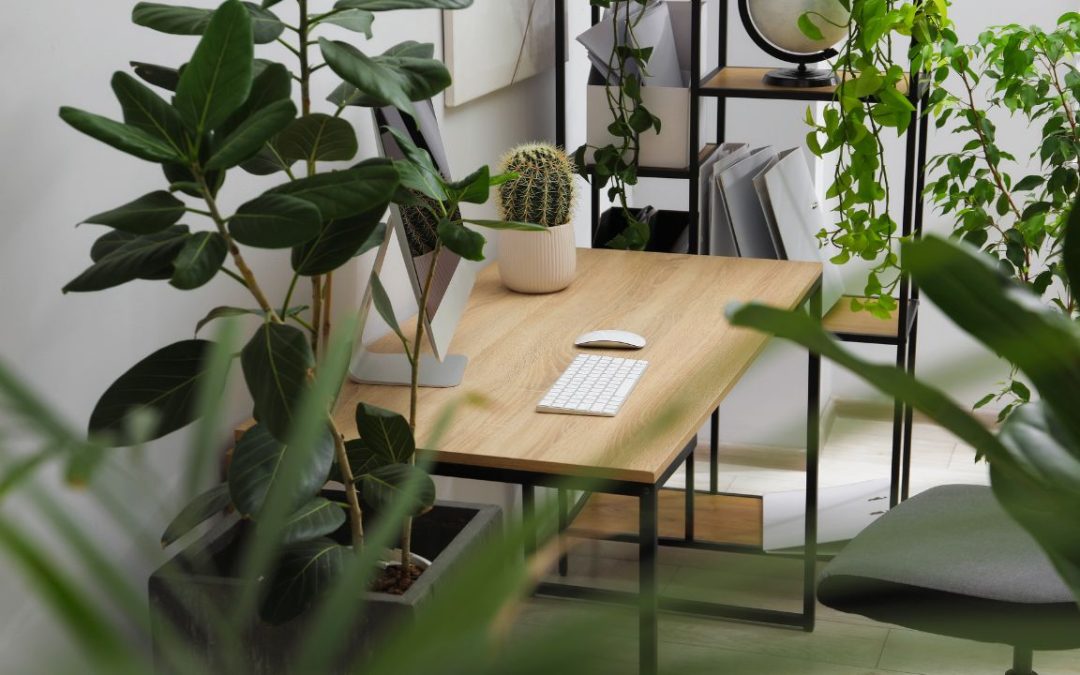
Office plant design shapes how employees, clients, and candidates perceive your organization. A poorly executed plant strategy communicates inattention to detail and sends mixed signals about company values. Research shows that 33% of workers say office design affects their decision to work at a company, while employees who like their workspace are 90% likely to feel proud of their employer, compared to just 47% of those disconnected from their environment. Office environments lacking natural elements fail to meet the expectations of the 44% of workers who prioritize natural light and the 20% who explicitly want indoor plants. These gaps matter because workspace quality directly influences recruitment outcomes, retention rates, and daily employee satisfaction.
The seven mistakes outlined below represent avoidable failures that undermine professional image and waste investment. Each mistake reflects a disconnect between employee expectations and actual workspace conditions, creating friction that competitors with better-designed environments exploit. Fixing these errors requires understanding that office plant design functions as infrastructure rather than decoration, supporting measurable business outcomes through improved air quality, noise reduction, and psychological wellbeing.
Key Takeaways
- Insufficient plant coverage fails to deliver the wellness benefits that 36% of workers prefer in greenery-enhanced workspaces
- Poor plant maintenance services signal organizational neglect and damage employer brand perception among 33% of employees
- Strategic placement in reception areas and collaboration zones maximizes visibility and supports the team interaction valued by 78% of Gen Z workers
- Proper light placement prevents plant failure and maintains the professional image critical to talent attraction
- Integrating plants into a wellness strategy captures measurable productivity gains rather than treating greenery as superficial décor
What Is Interior Plant Design and Why Does It Matter for Offices?
Interior plant design refers to the intentional selection, placement, and maintenance of living greenery within commercial spaces. Office plant design goes beyond decorative aesthetics to address functional goals, including air quality improvement, acoustic dampening, biophilic connection, and spatial definition. A comprehensive interior planting design strategy balances species selection with light availability, maintenance logistics, and visual impact across high-traffic zones.
The business case for interior planting design centers on employee wellbeing and organizational identity. Workers in greenery-enhanced environments report higher satisfaction, stronger company pride, and better focus than peers in sterile offices. Trends in commercial indoor plant design for 2025 emphasize wellness integration and maintenance-free systems that support hybrid work patterns.
How Does Interior Plant Design Influence Office Image?
Office plant design communicates organizational priorities through visible environmental cues that shape first impressions and daily experience. Greenery signals investment in employee quality of life, attention to environmental sustainability, and willingness to exceed baseline workspace standards. Research confirms that 36% of workers prefer workspaces enhanced with greenery, while 58% currently have no plants at all in their office. This gap represents a missed opportunity to differentiate your employer brand in competitive talent markets where workspace quality drives recruitment and retention decisions.
The influence extends beyond employee perception to client and candidate impressions during site visits. Reception areas and shared spaces lacking greenery appear institutional and generic, while thoughtfully designed plant installations convey sophistication and care. Studies show that 90% of employees who like their workspace feel proud to work for their company, compared to only 47% of those disconnected from their environment.
What Are the Key Elements of Effective Plant Integration?
Effective plant integration combines visible coverage, strategic placement, appropriate species selection, and reliable maintenance protocols. Key elements include potted plants in high-traffic areas, planter clusters defining collaboration zones, reception greenery establishing first impressions, moss features adding textural variety, seasonal rotations maintaining visual interest, and plant maintenance services ensuring sustained health. Each element serves functional and psychological purposes that generic décor cannot replicate.
Biophilic design principles expand plant integration into broader environmental strategies that maximize natural connection. Living walls deliver dramatic vertical impact, daylight maximization supports both plants and human circadian rhythm, natural materials reinforce organic aesthetics, outdoor views extend biophilic connection, landscape links blur interior-exterior boundaries, and outdoor work areas provide fresh-air alternatives. These elements work together to create environments that support the 44% of workers who prioritize natural light as their most important workplace feature.
The 7 Interior Plant Design Mistakes That Hurt Your Office Image
Mistake #1: Not Having Enough Plants to Make an Impact
Insufficient plant coverage represents the most common mistake in office environments. Research shows that 58% of employees have no greenery whatsoever in their workplace, creating sterile conditions that fail to deliver any biophilic benefit. Sparse plant placement communicates halfhearted effort rather than intentional design, signaling that leadership views greenery as optional rather than strategic.
Inadequate coverage fails to achieve the density needed for measurable air quality improvement or visual transformation. A single plant in a 3,000-square-foot open office creates no psychological impact and offers no functional benefit. Proper coverage requires distributing greenery across multiple sight lines and zones to ensure consistent visibility throughout the workday.
Mistake #2: Letting Plant Maintenance Slide
Neglected plants communicate organizational disregard more powerfully than empty space. Wilted foliage, brown leaves, dust accumulation, and dying specimens signal that management lacks follow-through and cuts corners on commitments. Plant maintenance services typically cost USD 100 to USD 600 per month, depending on coverage and visit frequency.
Consistent service schedules prevent the decline that damages professional image. Weekly or bi-weekly technician visits ensure watering accuracy, pest management, leaf cleaning, pruning, and immediate replacement of failing plants. Facilities managers without dedicated horticultural expertise should outsource maintenance rather than attempt in-house care that inevitably fails.
Mistake #3: Using Token or Mismatched Greenery
Token greenery appears performative rather than intentional when plant selections contradict overall design language. A single generic ficus in a modern minimalist reception area creates visual confusion rather than cohesion. Mismatched species, container styles, and scale choices signal that someone ordered plants without considering brand identity or spatial context.
Authentic integration requires aligning plant style with architectural vocabulary and company culture. Tech firms benefit from clean-lined planters with structural foliage, while creative agencies can deploy hanging plants for open office spaces and cubicles that add visual softness. Every species and container choice communicates something about organizational personality.
Mistake #4: Placing Plants in the Wrong Light Conditions
Poor light placement guarantees plant failure and wastes investment. Research shows that 47% of workers have no natural light in their workplace, rising to 64% in U.S. offices overall, creating challenging conditions for most plant species. Positioning light-demanding plants in interior zones without supplemental grow lighting ensures decline and reinforces the impression that management doesn’t understand basic environmental requirements.
Successful placement matches species tolerance to available light intensity. Low-light specialists thrive in interior zones far from windows, while high-light species require perimeter placement or artificial supplementation. Plant terrariums offer controlled environments for sensitive species in challenging locations.
Mistake #5: Ignoring High-Impact Zones – Reception, Shared Spaces, and Collaboration Areas
Reception areas form first impressions for clients, candidates, and new employees. Ignoring these high-visibility zones misses the opportunity to establish professionalism and environmental quality before any conversation begins. Shared spaces, including break rooms, conference areas, and collaboration zones, receive frequent use and benefit from greenery that supports informal interaction.
Strategic placement in collaboration areas aligns with the 78% of Gen Z workers who say workplace bonding is easier in the office and the 79% who feel more active in person. Plants in team zones soften acoustics, define boundaries, and create psychological comfort that supports the face-to-face learning younger employees value. Ignoring these zones wastes the chance to enhance spaces where culture and collaboration actually happen.
Mistake #6: Choosing Plants That Clash with Your Brand Identity
Plant selection communicates the company’s personality, whether intentional or not. Tropical species with bold foliage convey creativity and energy, while minimalist succulents signal precision and restraint. Choosing plants that contradict your employer brand creates visual dissonance that confuses visitors and employees alike.
Design coherence requires matching plant style, scale, and container finishes to existing architectural language. Financial services firms benefit from structured, symmetrical arrangements in neutral containers, while design studios can deploy eclectic species mixes in artisan planters. Every element should reinforce rather than contradict the cultural message you communicate through workspace design.
Mistake #7: Treating Plants as Décor Instead of Part of a Wellness Strategy
Superficial plant placement misses the measurable productivity and wellbeing benefits that justify investment. The wellness real estate market reached USD 438.2 billion in 2023 and grew 18.1% annually from 2019 to 2023, demonstrating that organizations increasingly tie environmental quality to business performance. Treating plants as decorative accessories rather than wellness infrastructure wastes the opportunity to capture documented benefits, including improved focus, reduced stress, and better air quality.
Effective integration embeds greenery into broader wellness narratives that connect workspace quality to recruitment, retention, and daily performance. Plants should appear in employee communications, facility tours, and employer brand messaging as evidence of organizational commitment to wellbeing. Failing to integrate plants into a cohesive wellness strategy leaves money on the table and undermines the investment you’ve already made.
What Are the Benefits of Getting These 7 Things Right?
Avoiding these mistakes transforms office plant design from a liability into a competitive advantage. Proper coverage delivers the biophilic connection that 36% of workers actively prefer and the natural elements that 44% prioritize in workspace selection. Consistent maintenance prevents the negative impressions created by neglected greenery while demonstrating organizational follow-through on environmental commitments.
Strategic placement maximizes visibility in high-impact zones where clients, candidates, and employees form lasting impressions. Appropriate species selection ensures plant health while reinforcing brand identity through design coherence. Integrating greenery into wellness strategy captures measurable outcomes, including the 15% productivity gains documented in biophilic research and the employer brand strength reflected in 90% pride levels among employees who like their workspace.
How Avoiding These Interior Plant Design Mistakes Enhances Your Office Image
Correcting plant design failures strengthens your competitive position in talent markets where workspace quality influences employment decisions. The 33% of workers who cite office design as an employer-choice factor evaluate greenery as a signal of organizational values and employee investment. Facilities managers who implement comprehensive plant strategies report improved employee satisfaction scores, stronger retention metrics, and enhanced recruitment outcomes in competitive Orange County markets.
Professional execution eliminates the risk of failed DIY approaches and vendor inconsistency. Organizations with 38 years of experience and proven maintenance protocols deliver the reliability that protects professional image while supporting the 65% of workers who now prioritize work-life balance and environmental quality. Avoiding the seven mistakes outlined above positions your office as an employer of choice rather than an also-ran in the competition for top talent.
Getting office plant design right requires understanding that greenery functions as business infrastructure rather than optional decoration. The difference between success and failure lies in execution quality, maintenance consistency, and strategic integration with broader wellness initiatives. Organizations that treat plants as a measurable investment in employee environment capture tangible returns through improved satisfaction, stronger employer brand, and competitive differentiation in markets where workspace quality drives talent decisions. Mr. Plant SoCal has been helping Orange County businesses avoid these common mistakes since 1980, delivering proven results through guaranteed service.
Stop Making These Mistakes – Mr. Plant SoCal Handles It All
Most offices don’t fix their plant strategy until employees have already noticed. Mr. Plant SoCal has served Orange County commercial clients since 1980, designing and maintaining interior plant programs that stay healthy, look intentional, and reinforce your employer brand year-round. With 1,200+ satisfied commercial clients and a plant health guarantee, you get a proven service — not a guessing game.
Our uniformed technicians handle selection, installation, and ongoing maintenance on a weekly or bi-weekly schedule. You won’t need to manage it, and your plants won’t die. Partner with experienced professionals who understand the connection between plant health and business outcomes.

