
Key Takeaways
- Light is the limiting factor: Crotons need 10,764 lux minimum, standard office lighting provides only 300-1,000 lux, requiring dedicated LED grow lights (PPFD 150-300 µmol/m²/s) in windowless areas.
- Watering by feel, not schedule: Check that the top 1-2 inches of soil dry completely before watering; soil wet >7 days indicates drainage failure and imminent root rot.
- HVAC creates multiple failure points: Position plants in stable 18-29°C zones away from vents and doors, temperature swings and drafts cause rapid leaf drop within 24-48 hours.
- Toxicity requires workplace protocols: Croton sap irritates skin and is toxic if ingested; OSHA General Duty Clause requires clear labeling, handler training, and exclusion from childcare areas.
- Professional maintenance outperforms employee care: Standardized weekly checklists, escalation triggers, and vendor accountability reduce failure rates and protect plant investments long-term.
Croton Petra plants deliver unmatched visual impact in corporate environments, but only when facilities managers understand their non-negotiable care requirements. Typical workspaces provide just 3-10% of the minimum light these plants require, while HVAC systems create humidity deficits and temperature fluctuations that trigger immediate leaf drop.
This guide translates complex horticultural requirements into actionable protocols for Irvine corporate facilities, covering lighting thresholds, watering standards, safety compliance, pest management, and troubleshooting workflows that prevent common failures.
What Is A Croton Plant, And Is It A Good Fit For Corporate Interiors?
Croton Petra (Codiaeum variegatum ‘Petra’) delivers dramatic visual impact but demands specific conditions most offices don’t naturally provide. Successful interior planting design requires understanding both the plant’s capabilities and its limitations.
Why Crotons Are “High-Impact Color” Plants In Offices (And The Maintenance Tradeoffs)
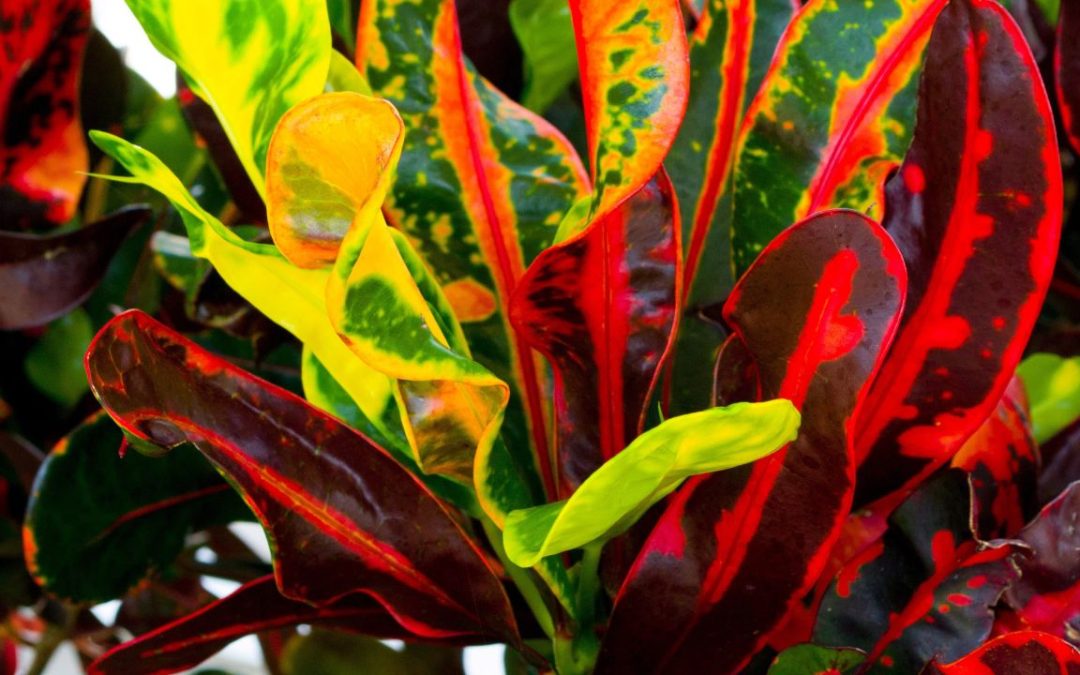
Croton Petra features broad, leathery leaves with vivid yellow, fiery red, and rich orange splashes over deep green. Indoor specimens reach 0.9-1.8 meters (3-6 feet) with medium to slow growth. The plant excels in Industrial, Biophilic, and Modern Minimalist designs, working as lobby statement pieces, open-office dividers, or conference room accents. The critical tradeoff: color intensity directly correlates with light exposure. Inadequate light causes vibrant patterns to fade to unremarkable green.
When an Office Should Not Choose Crotons
Skip crotons if your facility has: low-light environments (standard offices provide 300-1,000 lux; crotons need 10,764 lux); no windows or weak LEDs; “no-maintenance” expectations; heavy HVAC drafts; pet-friendly policies (toxic if ingested); childcare areas (sap toxic to humans); high-touch zones (sap causes contact dermatitis); or no defined plant owner (employee self-care has significantly higher failure rates).
What Light Levels Do Crotons Need To Maintain Strong Leaf Color Indoors?
Light is the single most critical factor. Most corporate environments require supplemental horticultural lighting to meet minimum thresholds, a reality that should be factored into any office plant design proposal.
Why Crotons Lose Variegation And Shift Greener Indoors
Standard office lighting provides only 3-10% of crotons’ minimum light requirement. Fading symptoms appear in sequence: loss of red, yellow, and orange pigments; weak, elongated stems (“legginess”); and progressive leaf drop as the plant conserves energy.
Placement Rules For Bright Light Without Heat Stress
Maintain 18-29°C (65-85°F). Avoid drafts from vents and doorways, sudden temperature drops cause immediate leaf drop. Keep plants away from radiators and hot or cold window glass. Rotate each plant 1/4 turn every 2-4 weeks for even light exposure.
Office LEDs: Success Conditions And Practical Placement Guidance
| Scenario | Requirements | Color Outcome | Duration |
| Near window | Within 1-2 meters of bright window | Strong variegation | 10-12 hrs |
| LED-only | PPFD 150-300 µmol/m²/s; DLI 10-16 mol/m²/d | Moderate color | 10-12 hrs on timer |
| Standard fluorescent | Not viable | Severe loss, green only | N/A |
How Should You Water Crotons In Offices To Avoid Leaf Drop And Root Problems?
Overwatering kills more crotons than underwatering. Professional plant maintenance services typically include moisture monitoring as a core protocol.
Moisture-Check Method That Prevents Overwatering And “Bone Dry” Cycles
Check that the top 1-2 inches of soil dry completely before watering. Use the weight test: a heavy pot equals wet soil, a light pot signals dry. Water until runoff drains from holes, then empty saucers immediately. Southern California’s dry air may increase watering frequency, but the “dry-to-touch” rule is paramount. Reduce frequency in fall and winter when growth slows.
Containers and Drainage Standards for Corporate Planters
| Container Type | Drainage | Best Use | Red Flags |
| Modern planters | Mandatory holes; empty saucer after watering | Desk/office | Standing water; mushy stems |
| Natural (terracotta, wood) | Holes required despite porous material | Lobby pieces | Fungus gnats; soil wet >7 days |
| Floor planters | Large holes; heavy-duty saucer | Lobbies, conference | Sour soil smell; water pooling |
Adjusting Watering Under Constant HVAC and Seasonal Changes
Winter heating requires more frequent checks despite dormancy. Summer AC follows the standard dry-to-touch rule. Year-round HVAC typically increases watering frequency, but avoid overcompensating. Essential humidity support includes grouping plants, pebble trays, or humidifiers year-round.
What Temperature Range Keeps Crotons Stable In Buildings With HVAC?
Crotons tolerate typical office temperatures but fail rapidly when exposed to drafts, door blasts, or aggressive HVAC cycling.
Temperature Bands And What Crotons Do In Each Range
| Band | Response | Common Cause | Correction |
| 18-29°C (65-85°F) | Healthy growth | Well-regulated HVAC | Maintain |
| Below 18°C | Sudden leaf drop | Nighttime setback; exterior doors | Relocate; adjust thermostat |
| Above 29°C | Wilting; leaf scorch | West windows; heat sources | Relocate; increase watering |
| Rapid ±5°C swings | Leaf drop; yellowing | Aggressive HVAC cycling | Find stable location |
Why Drafts And Rapid Shifts Trigger Leaf Drop
Vent blasts create direct airflow, causing leaf drop at contact points. Door drafts introduce outdoor air temperature shock. Nighttime thermostat setbacks produce rapid cooling that forces leaf shedding. Window glass generates micro-climate zones where leaves touching the glass drop first.
Safe Placement Zones That Avoid HVAC And Entryway Stress
DO: Interior stable locations; minimum 1 meter from exterior doors.
DON’T: Under or near supply/return vents; near exterior doors; corridors with gusts; “dead zones” with no light.
What Humidity Range Do Crotons Prefer, And How Can Offices Hit It Practically?
HVAC systems create persistently dry air, typically 30-40% relative humidity, well below crotons’ preferred 60-80% range.
Humidity Levels And Symptoms You’ll See At Each Level
| Band | Symptoms | Office Reality | Fix |
| 60-80% [Preferred] | Glossy, vibrant leaves | Rare, HVAC creates dry air | Humidifier or extensive grouping |
| 40-60% | Slight browning possible | Achievable with grouped plants | Grouping; pebble trays |
| Below 40% [Typical] | Brown, crispy edges; leaf drop | Standard HVAC | Essential intervention |
| Below 30% | Severe necrosis; rapid drop | Winter heating | Urgent action needed |
Office-Friendly Humidity Tactics That Won’t Create Mess Or Mold Risk
Grouping plants creates localized microclimates without equipment. Micro-humidifiers provide controlled moisture. Pebble trays, a pot elevated on pebbles above water, work if cleaned regularly. Moving plants from vents reduces drying force. Avoid misting: creates slip hazards and water damage.
Quick Differential Diagnosis: Dry-Air Stress vs Watering Issues
| Symptom | More Likely Humidity | More Likely Watering | Check |
| Brown, crispy edges | ✓ (uniform dry/brittle) | Severe underwatering | Both soil AND humidity |
| Leaf drop (multiple) | Chronic stress | ✓ (over/under extremes) | Soil, smell, roots |
| Wilting | Less likely | ✓ (either extreme) | Immediate soil check |
| Yellowing | Unlikely | ✓ (overwatering/root rot) | Smell; wet >5 days |
What Soil, Fertilizer, And Grooming Standards Keep Crotons “Corporate-Ready”?
Consistent maintenance prevents a gradual decline that makes crotons look shabby.
Soil Mix Characteristics That Balance Drainage And Moisture Retention
Drainage: Excess water exits freely. Aeration: Oxygen reaches roots. Moisture retention: Holds enough between waterings. Avoid: Soil that stays wet >7 days creates root death.
Fertilizing Cadence That Supports Consistent Growth and Appearance
| Phase | Frequency | Type | Issue Signs |
| Spring/Summer | Every 2-4 weeks | Balanced liquid (20-20-20 NPK) | Over: Salt crust, brown tips. Under: Slow growth, pale leaves |
| Fall/Winter | Do not fertilize | N/A | Over: Root burn, leaf drop |
Pruning + Rotation Rules To Maintain Symmetry And Presentation
Remove a maximum 1/3 plant mass at once. Rotate 1/4 turn every 2-4 weeks for even growth. Stop rotation if leaf drop, temperature shock, pests, or root problems are present.
Leaf Cleaning Standards For Glossy Foliage Without Damage
DO: Microfiber cloth with lukewarm water monthly; gentle wiping only.
DON’T: Leaf shine products (clog pores); rough scrubbing; allow floor drips.
What Safety Risks Do Crotons Create In Workplaces, And How Do You Reduce Them?
Croton sap contains diterpene esters, toxic if ingested, irritating to the skin. OSHA’s General Duty Clause requires employers to address recognized hazards.
Handling Protocol For Sap Irritation Risk
Wear gloves when pruning. Never touch your face or eyes until your hands are washed. Wipe tools after use. Train staff that sap causes contact dermatitis in sensitive individuals.
If Someone Chews Or Ingests Plant Material: What To Do First (Office-Safe Guidance)
Rinse mouth (don’t swallow rinse water). Wash affected skin; flush eyes for 15 minutes if contacted. Call poison control immediately.
Escalate if: vomiting, diarrhea, or breathing difficulty occurs. Document the incident per workplace protocol.
Where Crotons Should Not Be Placed (Risk-Based Siting Guidance)
| Area | Why Risky | Safer Location | Policy |
| Cafeteria | Food contamination; ingestion risk | Adjacent hallway | General Duty Clause |
| Childcare | Toxic if ingested | Use non-toxic plants only | Mandatory exclusion |
| Pet-friendly | Toxic to pets | Pet-restricted zones | Clear communication |
| High-traffic | Skin irritant; contact risk | 1 meter from walkways | Toxicity warnings |
Standard PPE And Cleanup Kit For Plant Care In Offices
Gloves, wipes, tarp, absorbent pads, soap, trash bags, “wet floor” signage, spare saucers.
How Do You Standardize Croton Care Across A Corporate Office So Results Are Consistent?
Without documented protocols, plant care becomes inconsistent. Standardized checklists, escalation triggers, and clear responsibility assignment prevent silent failures.
Weekly Care Checklist Used By Facilities Or Vendors
| Task | How-To | Pass/Fail | Time |
| Soil check | Finger 1-2″ into soil | Top 1-2″ dry before watering | 2-3 min |
| Pest inspection | Check leaf undersides, stems | No pests, webbing, damage | 3-5 min |
| Leaf condition | Examine for browning, color loss | Vibrant colors; minimal browning | 2-3 min |
| Rotation | 1/4 turn | Symmetrical growth | 1 min |
Monthly Standards For Grooming, Rotation, And Feeding (Low Disruption)
Fertilize with balanced 20-20-20 liquid every 2-4 weeks Spring/Summer only. Clean leaves monthly with a microfiber and water using drop cloths. Prune dead leaves (max 1/3 mass) wearing gloves. Schedule during low-occupancy periods and notify employees.
Escalation Triggers And Responsibility Mapping (So Plants Don’t Silently Fail)
| Signal | Severity | Action | Timeline |
| Significant color loss | Medium | Assess/adjust lighting | 48 hours |
| Multiple leaves dropping | High | Check temperature, drafts, watering | 24 hours |
| Pest infestation | High | Isolate; treatment | Immediate |
| Soil wet >7 days | High | Check drainage; root rot | 24 hours |
New Plant Quarantine Procedure To Prevent Pest Spread
Isolate new plants for 2 weeks minimum. Inspect on days 1, 7, and 14. If pests are detected, treat and extend quarantine for 2 weeks. Final inspection required before introduction to main office areas.
When Crotons Look Bad, What Are The Fastest Root-Cause Diagnoses That Work In Offices?
Visual decline signals specific failures in care protocol. Systematic triage resolves 80% of issues without expensive interventions.
Leaf Drop Triage: The First Checks That Solve Most Cases
- Drafts/moves: Check for vents, doors, or recent relocation.
- Watering extremes: Assess soil moisture and watering pattern.
- Light change: Verify lighting levels unchanged.
- Temperature swings: Assess HVAC cycling and door access.
- Pests: Inspect leaf undersides and stems.
- Root smell: A sour or musty odor indicates rot.
Color Fading Triage: Fix Light Before Changing Other Variables
Measure current light; crotons need 10,764 lux minimum. Reposition closer to windows or brighter locations. Ensure regular 1/4-turn rotation continues. Install horticultural LEDs if needed (PPFD 150-300 µmol/m²/s, 10-12 hours daily). After 4-6 weeks of adequate light, evaluate the feeding and soil if color hasn’t returned.
Symptom-To-Cause Mapping For Curling, Crisping, Spotting
| Symptom | Cause | Quick Fix | Escalate When |
| Curling | Temperature stress or severe underwatering | Water if dry; relocate from drafts | Persists or widespread drop |
| Crispy edges | Low humidity (HVAC dry air) | Grouping, trays, humidifier | Continues after intervention |
| Yellowing | Overwatering/root rot | Reduce watering; ensure drainage | Spreads or sour smell, repot |
| Spots | Fungal/bacterial from overwatering | Improve circulation; avoid misting | Spreads despite improvement |
| Legginess | Insufficient light | Relocate or add LEDs | Prune once light adequate |
Repot vs Adjust-In-Place Decision Rules
Repot if: Roots visible at drainage holes; soil stays wet >7 days; slow growth despite proper care; salt crust on soil surface.
Guidelines: Increase pot size only 2-4 inches; don’t fertilize for 4-6 weeks post-repot.
What Pests Hit Office Crotons Most Often, And How Do You Control Them With Low Disruption?
Indoor pests spread rapidly in clustered plants. Early detection and immediate isolation prevent facility-wide infestations.
Pest ID And Early Warning Signs For Common Office Infestations
| Pest | Signs | Where | First Response |
| Spider mites | Webbing; stippling | Leaf undersides | Isolate; increase humidity |
| Mealybugs | White cottony masses | Leaf axils; stems | Isolate; alcohol swab |
| Scale | Brown bumps; sticky honeydew | Stems; undersides | Isolate; scrape off |
| Fungus gnats | Small black flies | Soil surface | Dry soil; Bt treatment |
Isolation and Containment Steps That Protect Other Interior Plants
Bag plant during transport. Isolate 3 meters minimum from other plants. Wipe nearby surfaces. Inspect adjacent plants every 3 days for 2 weeks. Reintroduce only after pest-free status is confirmed 2 weeks post-treatment.
Office-Compatible Treatment Options And When To Use Each
| Approach | When | Workplace Notes |
| Insecticidal soap | Light-moderate infestations | During hours; minimal odor |
| Neem oil | Moderate; broad-spectrum pests | After hours; odor dissipates 4-6 hrs |
| Manual removal | Very light; spot treatment | During hours; minimal disruption |
| Yellow sticky traps | Gnats, thrips; monitoring | Discreet; replace every 2-4 weeks |
How Should Crotons Be Placed And Spec’d To Reduce Trip Hazards And Maintenance Issues?
Poor placement creates liability exposure and maintenance burdens.
Minimum Container Specs That Reduce Tipping And Floor Damage
| Feature | Minimum Spec | Notes |
| Base stability | Width 60-70% of plant height | Saucer required |
| Drainage | Holes mandatory; empty saucer after watering | Check weekly |
| Floor protection | Felt pads; waterproof saucer | Replace pads as worn |
Clearance Guidance For Walkways And Door Swings
Maintain a minimum 1 meter clearance from walkways, doors, and traffic paths. Never position the door swing pinch points. Keep away from coat racks and filing cabinets. Tall specimens require heavy, stable bases to prevent tipping.
Placement Rules That Keep Crotons Vibrant Without Becoming A Cleaning Burden
DO: Position for 10,764 lux light access; use saucers and empty within 30 minutes; ensure all sides are accessible for rotation. DON’T: Place in spill zones (kitchens, coffee stations); heavy-traffic corridors; directly beneath HVAC vents.
What Are The Best Croton Alternatives For Low-Light Offices Or Stricter Safety Requirements?
When light infrastructure or safety policies preclude crotons, alternatives exist. For better understanding your options on indoor plant design, explore Ficus as an indoor office plant.
Color-Forward Alternatives That Tolerate Lower Light Than Crotons
| Plant | Light Tolerance | Visual Effect | Safety |
| Aglaonema | 750-1,500 lux | Pink, red, silver variegation | Mildly toxic |
| Calathea | 1,000-2,500 lux | Purple, pink, white patterns | Non-toxic to pets |
| Dracaena ‘Tricolor’ | 1,500-3,000 lux | Pink, cream, green stripes | Toxic to pets |
Lower-Irritant, Lower-Contact Options For Stricter Workplace Policies
| Plant | Irritant Risk | Pet Safe | Best Location |
| Spider Plant | Non-toxic | Safe | Reception, break rooms, childcare |
| Boston Fern | Non-toxic | Safe | All zones |
| Bamboo Palm | Non-toxic | Safe | Anywhere pets/children present |
Frequently Asked Questions
These recurring questions reveal persistent gaps between croton requirements and typical office conditions.
Desk With No Window: What’s Realistic and What Compromises Are Required
Standard office lighting (300-1,000 lux) provides only 3-10% of crotons’ 10,764 lux requirement. Realistic outcome: significant color loss, fading to green. Workaround: Install dedicated LED grow lights (PPFD 150-300 µmol/m²/s, 10-12 hours daily). Expect moderate color retention at best. If lighting installation is not possible: Choose true low-light plants, Pothos (500-1,000 lux), ZZ Plant (200 lux), Snake Plant (200-750 lux).
Misting at Work: When It Helps and When It Creates Problems
Avoid misting, as it creates slip hazards, fungal leaf issues, a temporary humidity boost only (15-30 minutes), and overspray damage. Safer alternatives: Group plants for microclimate; use pebble trays; deploy small humidifiers; relocate away from HVAC vents.
Growth and Sizing: How to Prevent Crotons From Outgrowing the Space
Crotons reach 0.9-1.8 meters over several years with medium-slow growth. Pruning: Remove a maximum 1/3 of the mass at once during spring/summer; wear gloves. Repot when: Roots emerge from drainage holes or soil stays wet >7 days; increase pot size only 2-4 inches. Rotation: 1/4 turn every 2-4 weeks maintains compact form.
The Simplest Rule Set for Year-Round Success in Offices
Bright light: 10,764 lux minimum, window placement or dedicated LEDs. Stable placement: Avoid moving; drafts cause immediate leaf drop. Moisture-check: Top 1-2 inches dry before watering. Drainage: Holes required; empty saucers immediately. Humidity: Group plants, pebble trays, or a humidifier. Rotate: 1/4 turn every 2-4 weeks. Inspect pests: Weekly checks; isolate if found. Clean leaves: Monthly with a microfiber cloth. Safe handling: Gloves required; wash hands after contact. Document owner: Assign a specific person or vendor responsible.
What Are The Top Non-Negotiables For Crotons In Corporate Spaces?
Croton failures trace to five predictable causes: inadequate light, watering extremes, HVAC stress, improper handling, and uncontrolled pest introduction. Standardizing protocols across these variables prevents 90% of plant decline.
“Do This, Not That” Rules That Prevent Most Failures
Light: DO install dedicated LEDs (PPFD 150-300 µmol/m²/s, 10-12 hours) in windowless areas; DON’T rely on standard office lighting (provides only 3-10% of the requirement). Watering: DO check that the top 1-2 inches is dry before watering; DON’T water on fixed schedules or allow soil to stay wet >5-7 days. HVAC: DO position in stable temperature zones (18-29°C) away from vents and doors; DON’T place near supply/return vents or entryways. Handling: DO wear gloves when pruning or handling damaged foliage; DON’T allow sap contact with bare skin. Pests: DO quarantine new plants for 2 weeks minimum; DON’T introduce directly to main office areas.
What to Standardize Today to Reduce Failure Rates Across the Office
Placement map: Document all croton locations with measured light levels; verify 10,764 lux minimum or supplemental grow light installation. Weekly checklist: Soil moisture check, pest inspection, leaf condition assessment, 1/4-turn rotation. Escalation triggers: Significant color loss (48-hour response), multiple leaves dropping (24-hour response), pest detection (immediate isolation), soil wet >7 days (24-hour drainage check). Training: Inform all plant handlers that sap is a skin irritant and toxic if ingested. Safety policy: Prohibit placement in childcare areas; maintain 1-meter clearance from walkways; apply visible toxicity labels to all planters.
Need professional plant consulting for your Irvine office? Contact Mr. Plant SoCal for expert installation, maintenance, and plant selection tailored to Southern California corporate spaces.

