
Key Takeaways:
- A 2015 study by Lee and colleagues found active interaction with plants led to a 6.49 mmHg drop in diastolic blood pressure and suppressed sympathetic nervous system activity compared to computer tasks.
- ZZ plants score highest among office plants in low-maintenance requirements, requiring watering only every 2-3 weeks due to water-storing rhizomes that tolerate extended dry periods.
- Most ZZ plant failures result from overwatering rather than neglect, as their natural drought tolerance makes them susceptible to root rot from excess moisture or constantly moist soil conditions.
- ZZ plants tolerate low to moderate artificial lighting with fluorescent and LED office lighting proving sufficient, making placement flexible throughout office spaces regardless of window access.
- A 2022 meta-analysis by Han synthesizing 42 studies found indoor plants increase positive emotions and reduce negative feelings while providing measurable physiological stress reduction benefits in work environments.
Office stress stems from multiple sources. Environmental factors, visual clutter, and poor air quality all contribute to workplace tension. The ZZ plant addresses these challenges through consistent performance and minimal maintenance demands.
Anaheim offices face specific indoor conditions that affect plant performance. Sealed buildings, controlled temperatures, and artificial lighting create unique environments. ZZ plants thrive in these exact conditions.
This article examines the ZZ plant’s role in stress reduction and office wellness. We’ll explore its characteristics, maintenance requirements, and strategic implementation in Anaheim commercial spaces.
What Is the ZZ Plant in Commercial Interior Office Environments?
The ZZ plant serves as a foundational species for workplace wellness programs. Its performance characteristics align perfectly with commercial interior demands.
What defines the ZZ plant as an interior plant for offices and workspaces?
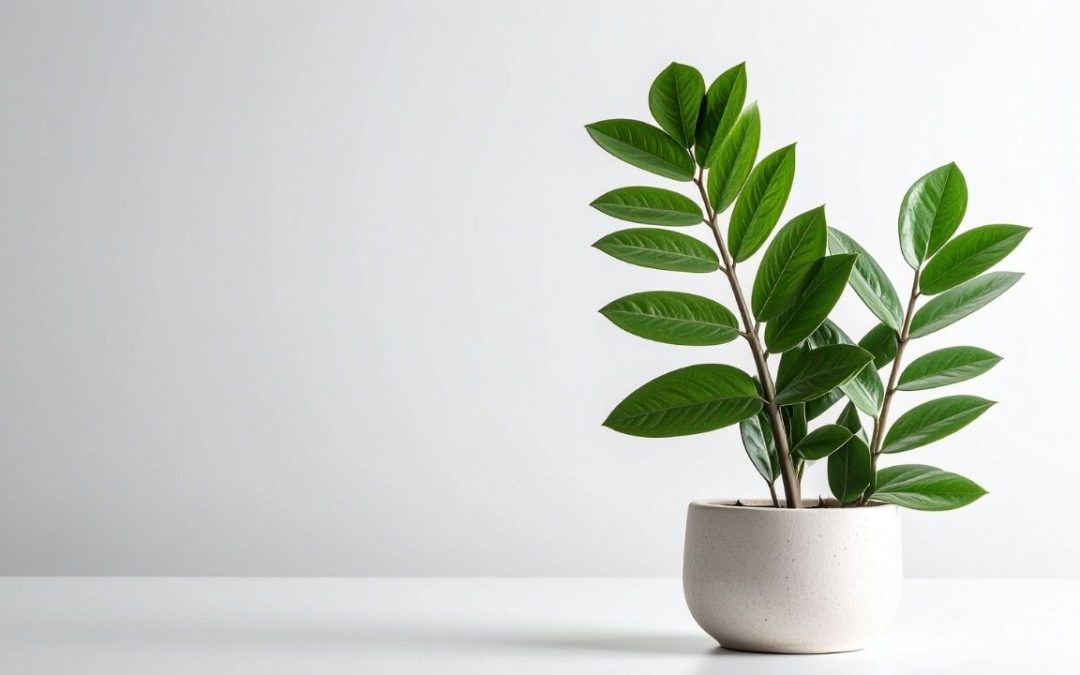
Zamioculcas zamiifolia represents one of the most suitable plants for Southern California and Anaheim-based businesses. This species excels in low maintenance requirements, scoring highest among office plants on professional evaluation scales. Its African origins gave it drought tolerance and adaptability that translate directly to modern office success.
Why is the ZZ plant widely used in commercial interiors?
The ZZ plant offers unparalleled low-maintenance resilience compared to alternatives. It functions as a stress-free option for any office environment, requiring minimal intervention while maintaining professional appearance. This makes it ideal for facilities with limited plant care resources or staff.
Commercial designers value plants that perform predictably. The ZZ plant delivers consistent results without demanding attention. Low-maintenance plants like these reduce operational burden while supporting wellness goals.
What characteristics make the ZZ plant suitable for long-term office placement?
ZZ plants tolerate neglect and inconsistent care exceptionally well. They adapt to various lighting conditions common in commercial spaces, from dim interior offices to moderately bright reception areas. Long-term durability reduces replacement frequency significantly.
Predictable growth patterns support consistent visual presentation over years. The plant doesn’t suddenly drop leaves, change color dramatically, or require frequent pruning. This stability matters in professional environments where appearance affects perception.
What Is the ZZ Plant Flower, and Why Is It Uncommon Indoors?
ZZ plant flowering represents an unusual occurrence in commercial settings. Understanding why helps set appropriate expectations.
What does a ZZ plant flower look like when it appears?
ZZ plants can produce flowers indoors though rarely under typical office conditions. The bloom appears as a spadix similar to peace lily flowers but less prominent. The flower emerges from the plant base with a subtle cream color that doesn’t create a dramatic visual impact.
Why do ZZ plants rarely flower in office environments?
Flowering requires optimal conditions not commonly present in offices. Indoor lighting typically proves insufficient to trigger reproductive cycles. Controlled office temperatures may not provide seasonal variation many plants need for flowering.
Focus on foliage performance rather than flowering in commercial use makes biological sense. The plant allocates energy to leaves and rhizomes instead. This results in a more consistent appearance without the resource drain flowers require.
What does flowering indicate about plant health and conditions?
Flowering signals the plant has achieved optimal health status. It indicates proper placement with adequate light and appropriate care routines. However, flowering is not necessary for plants to deliver workplace benefits.
When flowering occurs, it reinforces that environmental conditions suit the plant’s needs perfectly. Think of it as confirmation rather than objective. The plant performs its air quality and wellness functions equally well without ever producing flowers.
Why Do Office Environments Focus on Stress Reduction and Visual Stability?
Modern workplaces recognize the connection between environment and performance. Strategic design elements support rather than hinder productivity.
What environmental factors commonly contribute to workplace stress?
Mental work and cognitive load elevate sympathetic nervous system activity. This “fight-or-flight” response remains constantly engaged during focused computer work. Lack of natural elements in sealed office environments compounds this physiological stress response. Dry air-conditioned environments cause physical discomfort including eye irritation and respiratory issues.
How do plants influence comfort and perceived calm in offices?
Research demonstrates multiple pathways through which plants affect wellness. The Biophilia Hypothesis describes humans’ innate tendency to connect with nature. Stress Reduction Theory explains how natural environments facilitate recovery from mental fatigue. Attention Restoration Theory describes how nature restores capacity for directed attention.
A 2022 meta-analysis by Han and colleagues synthesized 42 studies on indoor plants. The research provided robust evidence for physiological benefits including measurable blood pressure reduction. Plants work through both psychological perception and actual biological mechanisms.
Why are low-disruption design elements prioritized in professional spaces?
Natural visual stimuli provide micro-restorative breaks during work. These brief moments help employees recover from cognitive load without requiring active engagement or time away from tasks. The effect is passive but measurable.
Maintaining professional appearance while delivering wellness benefits requires subtle interventions. Plants support productivity without demanding attention or creating visual chaos. This balance proves essential in focused work environments.
How Do ZZ Plants Support a Calm and Predictable Office Atmosphere?
Consistency matters more than drama in workplace design. ZZ plants excel at providing steady, reliable benefits.
How does consistent greenery affect mood and focus?
A 2015 study by Lee and colleagues found active interaction with plants led to a 6.49 mmHg drop in diastolic blood pressure compared to computer tasks. The research measured actual physiological changes, not just reported feelings. Plant interaction suppressed sympathetic nervous system activity measurably.
Participants felt significantly more comfortable, soothed, and natural after plant interaction. The Han meta-analysis found the primary psychological benefits are increased positive emotions and reduced negative feelings. These effects accumulate with regular exposure throughout workdays.
Why do subtle plant features work better than high-contrast displays in offices?
Predictable, consistent appearance reduces visual disruption in focused work zones. Low-maintenance plants avoid the stress of watching specimens decline. Workers don’t need to worry about plant health when species are appropriately matched to conditions.
Steady visual presence supports rather than demands attention. Professional environments benefit from understated natural elements that enhance without overwhelming. The ZZ plant’s dark green foliage provides calm consistency rather than seasonal drama.
How does predictable plant behavior reduce visual distraction?
ZZ plants maintain a consistent appearance with minimal intervention. Slow growth rate prevents the need for frequent pruning that creates temporary visual gaps. Reliable foliage quality avoids browning or dropping leaves that signal decline.
Stability in appearance supports focused work environments. Employees don’t subconsciously monitor plant health when plants demonstrate obvious resilience. This removes a subtle stressor from the workplace environment.
What Role Do ZZ Plants Play in Indoor Air Quality for Offices?
Plants contribute to air quality through multiple mechanisms. Understanding realistic expectations prevents overselling benefits.
How do ZZ plants interact with indoor air pollutants?
Plants function as natural air purifiers filtering volatile organic compounds. They produce oxygen through photosynthesis during daylight hours. The process improves air quality continuously without requiring energy inputs or maintenance.
ZZ plants participate in these processes like other species. Their contribution to VOC removal depends on plant size, leaf surface area, and growth rate. Larger, healthier plants process more air volume.
What realistic air-related benefits should offices expect from plants?
Through transpiration, plants increase ambient humidity levels. This can alleviate dry eyes, skin irritation, and respiratory discomfort associated with dry, air-conditioned office air. The humidity increase is modest but measurable in properly planted spaces.
Optimal humidity provided by plants supports employee comfort without creating dampness. Benefits complement existing mechanical systems rather than replacing them. Expect supplemental improvement, not transformation of air quality through plants alone.
Why are interior plants considered a complementary solution to HVAC systems?
Plants work alongside existing mechanical systems providing benefits HVAC cannot replicate. They address humidity and VOC concerns mechanical systems may not handle effectively. Together, they create a multi-layered approach to indoor air quality.
No responsible professional claims plants replace proper ventilation. Instead, plants fill gaps in what mechanical systems do well. This complementary role suits modern integrated building design approaches.
Why Are ZZ Plants Well-Suited for Anaheim Office Conditions?
Local climate and building characteristics affect plant performance significantly. ZZ plants match Anaheim’s specific conditions exceptionally well.
How do Anaheim commercial buildings influence indoor plant performance?
Southern California office buildings maintain specific climate control characteristics. Modern commercial construction creates sealed environments with stable year-round conditions. These controlled settings benefit certain plant species while challenging others.
Indoor conditions in Anaheim differ dramatically from natural outdoor environments. Plants selected for commercial interiors must thrive in artificial conditions rather than fighting them. ZZ plants evolved for stable environments making them naturally suited to modern office buildings.
Why do stable indoor temperatures favor ZZ plants?
ZZ plants thrive in consistent temperature environments without seasonal variation. Commercial HVAC systems provide stable conditions ideal for this species’ growth patterns. Temperature consistency prevents stress that causes visible plant decline.
Year-round predictable temperatures support long-term plant health without intervention. Most plant problems stem from temperature fluctuations or extremes. Eliminating this variable removes a major failure point for office plants.
How does controlled lighting support long-term ZZ plant health?
ZZ plants tolerate low to moderate artificial lighting without decline. Fluorescent and LED office lighting proves sufficient for plant health and growth. This adaptability makes placement flexible throughout office spaces regardless of window access.
Consistent light schedules support steady growth without forcing or stunting plants. Many species struggle with artificial light’s different spectrum and intensity. ZZ plants adapted to low-light understory conditions translate this tolerance to office settings effectively.
When Does the ZZ Plant Flower Become Relevant in Office Design Decisions?
Flowering represents a minor consideration in commercial plant selection. Understanding its role prevents misplaced focus.
Why flowering should be viewed as a byproduct rather than a goal
Primary value comes from consistent foliage and air quality contributions. Flowering is unpredictable and not necessary for the plant’s office function. Focus remains on stress reduction and visual stability rather than occasional blooms.
Foliage provides year-round benefits flowers cannot match. The leaf surface area processes air, the consistent green color provides visual calm, and the predictable appearance supports professional environments. Flowers add nothing to these core functions.
How does flowering reinforce correct placement and care
If flowering occurs, it confirms optimal environmental conditions. The bloom signals proper light levels and watering practices without requiring flowering as a target. This validates placement decisions retrospectively.
Flowering demonstrates plant health without being an objective to pursue. It’s similar to an athlete’s personal record—nice when it happens but not the reason for training. Standard practices prove sufficient for both flowering and non-flowering plants.
Why flowering does not change maintenance requirements
Care routines remain consistent whether plants flower or not. Maintenance focuses on foliage health and appearance primarily. Flowering adds no additional care burden or special requirements.
Standard watering, occasional dusting, and monitoring suffice regardless of flowering status. This simplicity keeps plants from becoming burdens. Predictable care requirements matter more than occasional flowering events.
How Should Anaheim Offices Plan ZZ Plant Placement Effectively?
Strategic placement maximizes wellness benefits from any plant investment. Understanding placement principles ensures success.
Where do ZZ plants perform best in office layouts?
Strategic positioning maximizes stress reduction benefits for employees. ZZ plants excel on desks for personal focus and immediate visual access. They work well in areas with limited natural light where other species struggle. Interior office spaces away from windows suit ZZ plants perfectly.
How does foot traffic influence placement decisions?
High-traffic areas require durable placement solutions that withstand incidental contact. ZZ plants’ sturdy structure tolerates occasional bumps without damage. However, position plants away from direct pathways to prevent repeated impacts.
Consider visibility without impeding workflow or creating navigation obstacles. Reception areas, hallway alcoves, and office corners provide visibility with protection. Balance aesthetic impact with practical circulation needs.
Why container choice affects durability and appearance
Professional planters enhance aesthetic consistency across facilities. Proper containers prevent water damage to surfaces through adequate drainage and catch basins. These practical considerations prevent property damage from normal plant care.
Container size affects long-term plant health and stability significantly. Too-small containers restrict root growth and create top-heavy instability. Appropriate sizing reduces maintenance burden and extends plant lifespan between repottings.
What Maintenance Factors Influence ZZ Plant Health Over Time?
Proper care practices determine long-term success. Understanding ZZ plant-specific needs prevents common failures.
How should watering be handled in office environments?
ZZ plants require infrequent watering due to water-storing rhizomes underground. Typical watering schedules run every 2-3 weeks in office conditions, far less frequent than most office plants. Check soil dryness before watering rather than following rigid schedules. Soil should dry completely between waterings.
Why overwatering causes more issues than under-watering
Overwatering leads to root rot and plant death rapidly. ZZ plants’ natural drought tolerance makes them susceptible to excess moisture damage. Soggy soil proves more dangerous than dry soil for this species consistently.
Most ZZ plant failures result from overwatering, not neglect. The rhizomes store sufficient water to survive extended dry periods. However, they cannot survive standing water or constantly moist conditions. This reverses typical plant care instincts.
How routine inspections maintain appearance without disruption
Periodic checks identify issues before they become visible problems. Dust accumulation on leaves reduces photosynthetic efficiency gradually. Simple wiping maintains both appearance and function.
Yellowing leaves indicate watering problems requiring adjustment. Early intervention prevents decline and maintains professional appearance. Monthly visual inspections suffice for catching issues early.
When Should ZZ Plants Be Replaced or Rotated in Offices?
Plant lifecycle management maintains consistent quality. Understanding replacement timing prevents obvious decline.
What signs indicate decline or reduced visual value?
Yellowing leaves beyond normal lower leaf loss signal problems. Stunted growth or failure to produce new shoots indicates declining health. Persistent pest issues despite treatment suggest the plant has weakened beyond recovery.
Physical damage affecting overall appearance warrants replacement even if the plant remains viable. Professional environments cannot afford obviously damaged specimens. Appearance standards exceed mere survival.
How proactive replacement supports consistent presentation
Regular assessment identifies plants needing replacement before visible decline becomes obvious to visitors. Scheduled rotation maintains uniform appearance across office locations. This prevents some areas looking well-maintained while others show neglect.
Preventive replacement costs less than emergency corrections when plants fail suddenly. Continuous coverage ensures a professional environment without gaps or obvious problems. Planning replacement cycles into budgets prevents surprise expenses.
Why rotation helps maintain uniform plant performance
Rotating plants between locations ensures even light exposure across specimens. This prevents some plants from declining while others thrive in better spots. Distribution of wear from environmental stressors maintains the entire collection rather than sacrificing some plants.
Consistent quality across all displayed specimens creates a professional impression. Rotation also allows temporary removal for more intensive care without creating visible gaps. This flexibility supports better long-term outcomes.
Which Anaheim Businesses Benefit Most From ZZ Plants?
Certain business types see greater returns from plant investments. Understanding ideal use cases guides decisions.
Why professional offices are ideal environments
Controlled indoor climates suit ZZ plant requirements perfectly. Corporate environments prioritize low-maintenance solutions that deliver without demanding attention. Professional appearance standards align with plant characteristics naturally.
Employee density maximizes stress reduction benefits across organizations. Open floor plans allow plant benefits to reach multiple workers from single specimens. Cost per employee affected decreases as density increases.
How healthcare and corporate campuses use ZZ plants differently
Healthcare facilities require low-allergen, low-maintenance plants that won’t create care burdens for medical staff. ZZ plants meet these requirements while providing patient and staff wellness benefits. Placement focuses on waiting areas and staff spaces rather than patient rooms.
Corporate campuses use plants for spatial definition and wayfinding in large open layouts. Different placement strategies emerge based on space function and traffic patterns. Varying density recommendations depend on specific use cases and goals.
Why property and facility managers value predictable plant behavior
Consistent appearance supports budget planning without surprise costs. Minimal care requirements reduce labor expenses significantly. Long-term durability provides better return on investment than short-lived alternatives.
Predictable performance simplifies multi-site management for property groups. Standardized care protocols work across locations. This consistency allows efficient training and reduced management oversight.
How Can Anaheim Offices Add ZZ Plants Without Adding Staff Responsibility?
Professional services eliminate internal burden. Strategic partnerships deliver benefits without operational complications.
Why professional evaluation prevents placement mistakes
Expert assessment ensures appropriate species selection for specific conditions. Professional placement maximizes benefits from initial installation. This eliminates costly trial-and-error approaches that waste time and resources.
Specialists understand both plant needs and office requirements simultaneously. They balance horticultural factors with operational considerations. This dual expertise prevents common mistakes that compromise results.
How structured installation avoids workplace disruption
Coordinated scheduling minimizes operational impact during installation. Efficient processes reduce installation time to hours rather than days. Professional handling protects both facilities and plants during placement.
After-hours options accommodate sensitive environments where daytime disruption proves unacceptable. Professional plant services coordinate with facility schedules rather than dictating timing. This flexibility supports business operations first.
Why scheduled maintenance keeps plants reliable long-term
Regular service maintains plant health and appearance without internal staff time. Professional care prevents common mistakes like overwatering that kill plants. Scheduled visits ensure consistent quality across all specimens and locations.
This removes the burden from internal staff entirely. Facilities managers monitor results rather than performing work. Plants remain assets rather than becoming maintenance tasks competing for staff attention.
Final Thoughts: Using ZZ Plants to Support Stress-Free Anaheim Offices
Research demonstrates measurable benefits from office plants. ZZ plants deliver these benefits with minimal complexity or risk.
Why simplicity leads to better long-term outcomes
Low-maintenance approaches reduce stress on facilities staff while delivering wellness benefits to employees. Simple care requirements increase long-term success rates dramatically. Focus on proven performers like ZZ plants ensures results without experimentation.
Uncomplicated solutions deliver sustained benefits over years. Complexity introduces failure points and increases costs. The simplest approach that achieves goals proves superior to elaborate alternatives requiring constant attention.
How consistent care protects visual and functional value
Regular maintenance preserves both appearance and air quality contributions. Professional care ensures plants remain assets rather than liabilities requiring attention. Consistent service provides predictable outcomes supporting budget planning.
Long-term approaches protect initial investments through sustained performance. Plants that decline create negative impressions outweighing their previous benefits. Preventing decline through proper care maintains positive workplace perception continuously.
What the next step looks like for Anaheim offices considering ZZ plants
Start with assessment of the current office environment and specific wellness needs. Professional consultation addresses placement and density planning based on layout and goals. Implementation with structured maintenance programs ensures long-term success.
Phased approaches allow measurement of impact before broader rollout. Start with pilot areas to demonstrate value. Contact professional services to begin planning your workplace wellness program.
Create Stress-Free Workspaces With Expert Plant Solutions
Your employees deserve environments supporting their health and productivity. Mr. PlantSoCal specializes in designing and maintaining interior plant systems for Anaheim offices. Our team handles everything from initial assessment through ongoing care, ensuring ZZ plants deliver consistent benefits without adding to your workload.
Ready to reduce workplace stress naturally? Contact Mr. PlantSoCal today for a consultation. We’ll evaluate your space, recommend optimal ZZ plant placement for your specific conditions, and create a maintenance plan keeping your office calm, professional, and wellness-focused year-round.

