
Key Takeaways
- Jade plants are tough, low-maintenance succulents that support wellness, branding, and comfort in Irvine workplaces while keeping annual care costs low.
- Understanding jade plant biology and matching containers, soil, and light levels to Irvine building conditions prevents most watering, root, and placement issues.
- A short weekly routine of visual inspections, light and moisture checks, leaf cleaning, and basic documentation keeps jade plants healthy and presentable.
- Strategic pruning, periodic dusting, occasional repotting, and prompt responses to overwatering, pests, or toxicity risks help facilities avoid emergency plant replacements.
- Clear task ownership, simple SOPs, mapping, and partnering with professional services like Mr. PlantSoCal make jade plant care seamless across single or multi-site portfolios.
Jade plants are one of the easiest wins an Irvine facility team can make. They look polished and professional in lobbies, reception areas, and shared spaces, yet ask for far less attention than most traditional office plants. Because they store water in their leaves and stems, they fit naturally into buildings where staff are busy, vendor visits are scheduled, and no one has time to fuss over daily watering or frequent repotting.
For Irvine workplaces, the local climate and common building conditions actually work in jade plants’ favor. Bright windows, dry indoor air from HVAC systems, and stable temperatures all mirror the environment these succulents evolved to handle. When facility managers pair that natural resilience with smart container choices, well-draining soil, and thoughtful placement, jade plant care becomes simple, predictable, and budget-friendly.
This guide walks Irvine facility teams through exactly how to set jade plants up for success from day one, what quick weekly checks keep them looking sharp, how to prune and repot them with minimal disruption, and how to troubleshoot common issues before they turn into eyesores. It also shows how to embed plant care into everyday workflows—and when to lean on professional partners like Mr. PlantSoCal to handle installation and ongoing maintenance across multiple sites.
How Do Jade Plants Support Wellness, Branding, and Comfort in Irvine Workplaces?
Jade plants deliver measurable benefits beyond decoration. They reduce maintenance costs, improve workspace perception, and align with wellness initiatives—all while requiring minimal attention from busy facility teams.
Why Are Jade Plants a Good Fit for Busy Irvine Facility Teams?
Jade plant office care demands little time and even less expertise. These succulents need watering only 1.5 times per month on average, with an estimated annual maintenance cost of just $180—the lowest among comparable office plants. They’re notoriously difficult to kill, tolerate neglect, and grow slowly enough that they won’t demand frequent pruning or replacement.
As water-storing succulents, jade plants hold moisture in their leaves, eliminating daily watering routines. This makes them ideal for facilities using Irvine plant services that visit weekly or biweekly. Commercial plant maintenance teams can service multiple sites efficiently when low-maintenance office plants like jade don’t require emergency interventions between scheduled visits.
How Can Jade Plants Enhance Lobbies, Reception Areas, and Shared Spaces?
Jade plants scale to fit any space. While they can reach 5-6 feet in optimal conditions, their compact habit and slow growth make them equally suitable for desks, counters, and reception areas. They won’t overtake a room or block sightlines.
Their aesthetic works across design styles. Thick, oval-shaped leaves with a shiny green finish look clean and modern. The neat, structured form integrates into everything from minimalist lobbies to living walls. Many facilities value their cultural symbolism—jade plants are called “money plants” in feng shui and are thought to bring good fortune. Placing one near an entrance or meeting room adds a subtle branding element that visitors notice.
How Do Jade Plants Contribute to Employee Mood and Perceived Air Quality?
A peer-reviewed field study across nine Dutch organizations found significant workplace improvements after introducing plants. Employees reported fewer complaints about dry air, higher workspace attractiveness, greater overall satisfaction, and fewer health-related complaints at work. These effects persisted at the four-month follow-up measurement, proving durability beyond initial novelty.
Jade plants support air purification by absorbing carbon dioxide and releasing oxygen—particularly valuable in buildings where windows rarely open. They help manage humidity levels, counteracting the drying effects of HVAC systems. For Irvine facilities focused on employee wellness, succulent care at work offers measurable returns with minimal investment.
What Should Irvine Facilities Know About Jade Plants as Indoor Succulents?
Understanding jade plant biology helps facility teams prevent problems before they start. These South African natives thrive in conditions most Irvine offices already provide.
What Basic Traits Define a Jade Plant Used in Office Settings?
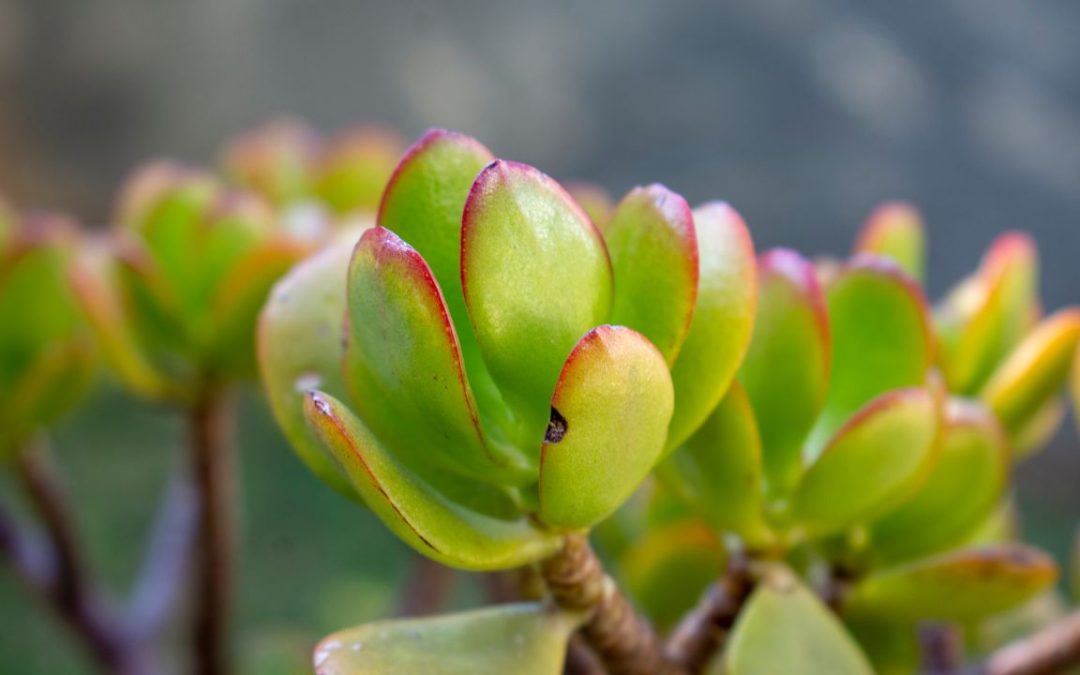
Crassula ovata goes by several common names—friendship tree, lucky plant, money tree—but it’s the physical characteristics that make jade plant office care predictable. This succulent stores water in its leaves, stems, and roots, creating built-in drought insurance. Smooth, glossy, egg-shaped leaves (1 to 3½ inches long) grow on short, thick branches attached to a gnarled-looking trunk that suggests age even in young specimens.
Healthy jade plants display green fleshy leaves edged or tinged with red when light is sufficient. New stems start green and succulent, becoming brown and woody as they mature. This structural progression is normal—not a sign of stress. The compact growth habit and distinctive appearance make jade plants instantly recognizable, even to employees with no plant knowledge.
What Light, Temperature, and Humidity Levels Do Jade Plants Prefer Indoors?
Jade plants perform best with four or more hours of direct sun daily. They’ll survive in bright, indirect light but may develop deep green leaves and drooping stems—visual indicators of inadequate light rather than actual health problems. Full sun produces the most compact, vibrant specimens.
Temperature flexibility makes succulent care at work simpler. Jade plants prefer daytime temperatures between 65-75°F and tolerate nighttime drops to 50-55°F. They handle a wide range of humidity levels and actually prefer the warm, dry conditions common in climate-controlled buildings. No humidifiers or misting required.
How Do Common Irvine Building Conditions (HVAC, Low Humidity, Window Tinting) Affect Jade Plants?
Irvine’s climate works in your favor. Jade plants are perfectly adapted to Southern California’s dry, warm environment. Orange County offices typically feature abundant natural light from large windows and extended sunny days—conditions that stress many tropical office plants but suit jade plants perfectly.
Standard HVAC systems that create low humidity? That’s ideal for low-maintenance office plants from arid regions. Even window tinting rarely poses problems unless it blocks four-plus hours of direct light. If your building maintains temperatures between 65-75°F during business hours, you’ve already met the core requirements for successful jade plant office care.
How Can Irvine Facility Managers Set Up Jade Plants for Success from Day One?
Proper setup eliminates most jade plant problems before they occur. Focus on drainage, appropriate containers, and soil composition—decisions that determine whether commercial plant maintenance stays routine or becomes reactive.
How Should Facilities Choose Jade Plant Sizes, Varieties, and Quantities for Each Space?
Jade plants thrive in restricted root space and can remain in the same containers for years, even when root-bound. This container adaptability means you won’t need frequent repotting—a significant advantage for multi-site facilities. Plants can grow for years while root-bound without health penalties, though top-heavy specimens may eventually require larger bases for stability.
Start with sizes appropriate to your space function. Smaller 6-8-inch pots suit individual desks and counters. Larger 14-18-inch containers work for lobbies and reception areas where mature plants create a visual impact. Order quantities based on maintenance visit frequency—Irvine plant services can efficiently care for concentrated groupings rather than isolated specimens scattered across floors.
What Pots, Liners, and Drainage Setups Work Best for Office Jade Plants?
Drainage determines survival. Jade plants need well-drained conditions and should never sit in water. Overwatering is the most dangerous mistake in jade plant office care—excess pooling must be poured off immediately.
Use containers with drainage holes and high-porosity potting mixes designed for succulents or cacti. If your facility requires decorative cache pots without drainage, use removable liners that allow you to water plants away from their display location, then return them only after excess water has drained. This extra step prevents the root rot that kills more office jade plants than any other factor.
What Soil Mix and Initial Placement Decisions Prevent Early Plant Stress?
Jade plants survive in sandy soils but perform best in heavier sand that anchors their short root systems. The ideal mix combines sand, peat moss, and organic matter to allow water drainage while providing root stability. If you’re using standard potting mix, amend it with extra perlite or sharp sand to increase drainage.
Place new plants in locations that receive four or more hours of direct sun. Near windows facing south or west works well in most Irvine buildings. Avoid spots where HVAC vents blow directly on plants or where foot traffic might knock over top-heavy specimens. For succulent care at work, initial placement matters more than frequent relocation—jade plants adapt better when they stay put.
What Simple Weekly Checks Keep Jade Plants Healthy and Presentable in Irvine Workplaces?
Weekly monitoring catches problems early when they’re easiest to fix. A five-minute inspection routine prevents emergency replacements and keeps jade plant office care predictable.
What Quick Visual Checks Reveal Early Signs of Stress, Pests, or Disease?
Learn to distinguish normal from abnormal changes. Lower leaves dropping slowly is natural aging—not a problem requiring intervention. Damaged leaves from sunburn, insecticide exposure, or frost will die and fall off, but new leaves will sprout to replace them.
Look for sudden changes instead: multiple leaves dropping simultaneously, soft or mushy stems, white cottony deposits (mealybugs), or fine webbing (spider mites). These indicate problems requiring action. Gradual, individual leaf loss at the bottom of the plant is part of normal growth and doesn’t need correcting.
Which Light, Moisture, and Cleanliness Checks Belong on a Weekly Task List?
Keep the checklist minimal. Wipe down leaves periodically to remove dust—this improves both appearance and the plant’s ability to photosynthesize. Check soil moisture by inserting a finger one inch deep; if it’s dry, schedule watering.
Verify that plants still receive adequate light—office reconfigurations, new furniture, or seasonal sun angle changes can create shade where there was none. For succulent care at work, consistency matters more than intensive intervention. A simple weekly walk-through takes minutes but prevents the neglect that leads to decline.
How Can Staff Document Issues and Escalate Problems Before Plants Decline?
While research doesn’t provide specific protocols, practical commercial plant maintenance requires a communication system. Create a simple digital log (shared spreadsheet or facility management app) where staff note observations: date, location, plant condition, and any actions taken.
Establish clear escalation triggers: pests on more than one plant, soil that won’t dry between waterings, or plants showing stress despite proper care. Assign one person as the point of contact for Irvine plant services so vendor communication doesn’t fall through the cracks. For low-maintenance office plants like jade, most issues are preventable—but only if someone notices them early and knows who to tell.
How Should Pruning, Cleaning, and Repotting Be Handled for Office Jade Plants?
Strategic pruning and timely repotting keep jade plants safe, compact, and visually appealing. These tasks occur infrequently but require proper timing and technique to avoid damaging plants.
When and How Should Jade Plants Be Pruned to Stay Compact and Safe in Shared Spaces?
Prune during spring or summer when jade plants are actively growing. Cut stems back to lateral branches, removing up to one-third of the plant’s height—never cut into the main branch. Pruning keeps plants compact, encourages trunk development to support heavy leaves and stems, and stimulates root growth.
Cuts heal over within a few days, and new growth sprouts within a few weeks. The main risk is bacterial infection at trimmed locations, so use clean, sharp tools and avoid pruning during humid weather. For jade plant office care in shared spaces, regular pruning prevents plants from becoming top-heavy hazards. Most Irvine plant services include pruning in maintenance contracts, timing interventions to coincide with active growth periods.
How Often Should Jade Plants Be Dusted, Cleaned, and Rotated in Workplace Settings?
Dust jade plants weekly or biweekly, depending on office air quality. A damp cloth removes dust buildup that blocks light absorption and makes plants look dingy. This takes seconds per plant and significantly improves appearance.
Rotation frequency isn’t specified in research, but practical succulent care at work suggests quarterly quarter-turns to ensure even light exposure and balanced growth. Plants positioned in corners or against walls may lean toward light sources if never rotated. For low-maintenance office plants in high-visibility areas, consistent cleaning matters more than intensive but sporadic attention.
When Is It Time to Repot a Jade Plant, and How Can Facilities Do This With Minimal Mess?
Repot every 2-3 years or when plants become top-heavy and tip easily. The best time is when new growth starts in spring. If keeping the same container size, prune roots during repotting. Cut back stems simultaneously to maintain shape and encourage thick trunk development.
Handle repotting in a maintenance area rather than at the plant’s display location. Use tarps or trays to contain soil, and water sparingly until plants establish in new containers—overwatering freshly repotted succulents causes root rot. For commercial plant maintenance teams managing multiple sites, batch repotting during spring visits is more efficient than addressing individual plants as problems arise. Most facilities prefer to contract repotting to Irvine plant services rather than assign the task to untrained staff.
How Can Irvine Workplaces Troubleshoot Common Jade Plant Problems?
Most jade plant problems stem from watering errors or pests. Quick identification and targeted responses prevent minor issues from becoming plant replacements.
What Do Soft, Yellowing, or Dropping Leaves Usually Mean in an Office Jade Plant?
Soft, yellowing leaves typically signal overwatering—the most common jade plant office care mistake. If the soil feels wet or the stems feel mushy, stop watering immediately and allow the soil to dry completely. Root rot may already be established if stems are soft at the soil line.
Dropping leaves can indicate either extreme: too much water (if accompanied by soft stems) or too little (if leaves are shriveled and dry). Check soil moisture before diagnosing. For succulent care at work, err on the side of underwatering—jade plants recover from drought much more easily than from root rot.
How Should Facilities Respond to Pests, Mold, or Root Rot on Jade Plants Indoors?
Mealybugs are the most common pest, white, fluffy insects that appear like cotton and deform new growth. Wipe them off with cotton swabs dipped in rubbing alcohol. Plants need frequent cleaning for several days or weeks until all pests are eliminated, as eggs hatch in cycles.
Spider mites occasionally infest jade plants, draining fluid from leaves and causing discoloration. Treat with the same alcohol method. Avoid conventional insecticides—succulent leaves are prone to phytotoxicity (chemical damage) from sprays. For widespread infestations across multiple plants, consult Irvine plant services before attempting chemical treatments.
Important safety note: Jadee plants are highly poisonous to dogs, cats, and horses, causing vomiting, depression, incoordination, slowed heart rate, and lethargy. In pet-friendly offices, display plants at heights animals can’t reach. Jade plants are mildly poisonous to humans and should not be consumed.
When Is It Better to Relocate, Rehabilitate, or Replace a Struggling Jade Plant?
Relocate if light is inadequate or HVAC airflow is damaging plants. Jade plants tolerate moves better than frequent interventions.
Rehabilitate if the problem is correctable: adjust watering, treat pests, or repot if root-bound. Most low-maintenance office plants recover within 4-6 weeks once conditions improve.
Replace if stems are mushy from advanced root rot, if more than 50% of leaves have dropped, or if pests persist despite treatment. Commercial plant maintenance costs less when struggling plants are replaced promptly rather than nursed through extended decline. Calculate whether rehabilitation time and risk justify the cost versus purchasing a healthy replacement. For high-visibility locations like lobbies, replacement is often the faster path to professional appearance.
How Can Jade Plant Care Fit Smoothly Into Irvine Facility Workflows and Vendor Relationships?
Integrating jade plant office care into existing operations requires clear task ownership, documented procedures, and knowing when to outsource. The right structure prevents gaps without creating unnecessary overhead.
Who Should Own Daily and Weekly Plant Tasks Within the Facilities Team?
Assign one primary contact per building or floor to own jade plant monitoring. This person doesn’t need horticultural expertise—just consistency. They check soil moisture weekly, dust leaves biweekly, and report problems to facilities management.
For multi-site portfolios, designate a facilities coordinator who tracks all locations and maintains vendor relationships. This centralized approach prevents duplicate work and ensures Irvine plant services receive consistent information across properties. Daily tasks are minimal for low-maintenance office plants—most work happens during scheduled vendor visits. Internal staff handle monitoring and emergency response; vendors handle pruning, repotting, and pest treatment.
How Can Simple SOPs, Labels, and Route Maps Streamline Jade Plant Care Across Sites?
Create one-page care sheets for each location showing watering schedules, light requirements, and escalation contacts. Laminate these and attach to nearby walls or keep in maintenance binders. Label each plant with the install date and last service date—this helps track maintenance intervals.
Map plant locations digitally so new staff or vendors can locate every jade plant without a walkthrough. Include notes on which plants receive direct sun versus ambient light, and flag any with special needs. For succulent care at work across multiple buildings, standardized documentation prevents the knowledge loss that occurs during staff turnover. Simple systems work better than complex tracking apps that no one maintains.
When Should Irvine Facilities Partner With Professional Plant Services or Landscapers?
Partner with commercial plant maintenance services when you manage more than 20 plants, operate multiple sites, or lack internal horticultural knowledge. Jade plants’ low-maintenance nature makes them cost-effective for professional services—providers like Mr. PlantSoCal offer installation and year-round maintenance specifically designed for Orange County offices.
Professional Irvine plant services deliver consistent quality across locations, handle seasonal adjustments automatically, and replace failing plants before they become eyesores. They also carry insurance for plant-related damage. For facilities managing 5-10 jade plants in a single location, internal care may suffice. Beyond that threshold, outsourcing typically costs less than the staff time required for proper succulent care at work. Most providers offer monthly or biweekly visits with emergency response options.
How Can Mr. PlantSoCal Make Jade Plant Care Effortless for Your Irvine Workplace?
Jade plants can be a low-stress, high-impact upgrade for your Irvine workplace when they’re set up correctly and checked regularly. With smart placement, good drainage, and a simple weekly routine, they quietly support wellness, branding, and comfort without demanding much from your team.
At Mr. PlantSoCal, we handle everything—from selecting the right jade plants and containers to ongoing maintenance, troubleshooting, and discreet replacements—so your spaces always look polished and professional. If you’re ready to simplify plant care and elevate your workplace, contact us at Mr. PlantSoCal and let us design a jade plant program that works seamlessly for your Irvine facilities.

