
Key Takeaways
- Calatheas are ideal for corporate spaces due to their bold patterns, low-light tolerance, and air-purifying qualities.
- These plants thrive in medium to low light and need consistent watering with filtered water to maintain vibrant leaf patterns.
- Humidity is crucial for calatheas; use a humidifier, misting, or plant grouping to maintain the required moisture levels in dry office environments.
- Place calatheas strategically away from HVAC vents and high-traffic areas to avoid stress from temperature fluctuations and air drafts.
- Professional plant services can simplify care routines, ensuring calatheas remain healthy and vibrant in busy office settings.
Calatheas are among the most popular indoor plants in corporate spaces for their stunning foliage and ability to thrive in low light. These tropical beauties, native to Brazilian rainforests, adapt well to office environments, offering both aesthetic appeal and practical benefits. However, to keep calatheas vibrant and healthy in busy workspaces, proper care routines are essential.
This includes ensuring they receive the right balance of light, moisture, and humidity. In this article, we will explore easy and effective ways to keep calatheas thriving in corporate spaces, offering straightforward tips on watering, lighting, and humidity care. With the right routine, businesses can enjoy the benefits of these low-maintenance yet striking plants while enhancing employee well-being and workplace atmosphere.
What Makes Calatheas a Smart Choice for Corporate Spaces?
Calatheas deliver visual impact with practical benefits. Their bold patterns and low-light tolerance make calathea office care straightforward for busy workplaces. These rainforest natives adapt well to indoor conditions while improving air quality and employee comfort.
What Are Calatheas and What Makes Them Unique in Office Design?
Calatheas belong to the Marantaceae family, which includes over 600 species native to Brazilian tropical rainforests. Approximately 40 varieties exist, each displaying distinctive leaf patterns. Their natural habitat—shaded forest floors—makes them ideal for offices with limited natural light.
These plants exhibit phototropism, turning their leaves toward available light throughout the day. This subtle movement adds visual interest without requiring active maintenance. Calatheas are non-toxic to cats and dogs, making them safe for pet-friendly workplaces. Their adaptation to low-light conditions means they thrive where other plants struggle.
How Do Calatheas Support Wellness, Branding, and Employee Experience?
Field studies across multiple Dutch organizations measured tangible improvements after introducing plants. Employees reported fewer complaints about dry air, a higher sense of privacy, and greater workspace attractiveness. Overall workspace satisfaction increased, and health-related complaints decreased, particularly during work hours.
Calatheas purify air through absorption, dilution, precipitation, and filtration. They remove carbon dioxide, volatile organic compounds (VOCs), particulate matter, and ozone without special equipment. Plants modulate indoor humidity above 30%—the optimal 40-60% range decreases virus viability. This matters for corporate plant maintenance strategies focused on employee health. Indoor plants also improve cognitive functions, including creativity and working memory, directly supporting productivity goals.
Which Calathea Varieties Work Best in Corporate Environments?
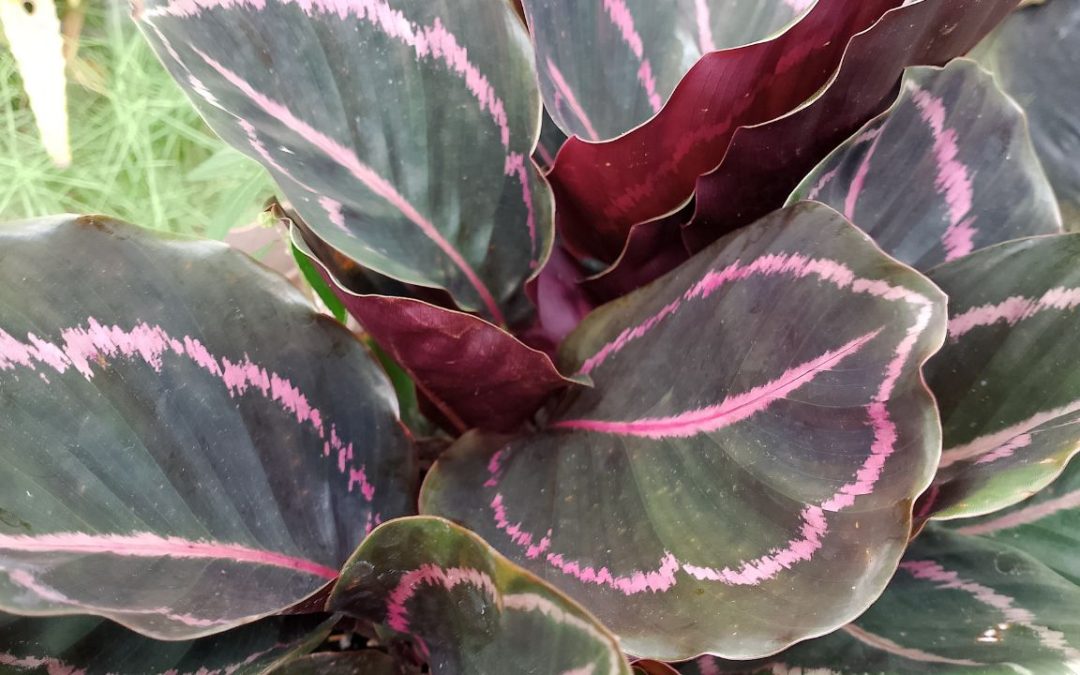
Calathea Orbifolia features wide striped leaves with unique patterns on each leaf. Calathea Roseopicta ‘Medallion’ offers extra-large variegated leaves mixing dark green, reds, pinks, silvers, and greens with dark purple undersides. Calathea Lancifolia ‘Rattlesnake Plant’ displays fresh green leaves with darker stripes and burgundy undersides. Calathea White Fusion shows marbled white and green leaves with purple undersides. Each variety brings a distinct visual character while maintaining similar care requirements for streamlined corporate plant maintenance.
What Environmental Challenges Do Calatheas Face in Busy Offices?
Office environments differ significantly from calatheas’ native rainforest floors. Understanding these gaps helps facilities teams address humidity and light for calathea maintenance effectively. Most challenges stem from artificial climate control, inconsistent care routines, and standard office lighting.
How Do Typical Office Light Levels Differ from Calatheas’ Natural Habitat?
Calatheas naturally grow on forest floors receiving filtered light through dense canopy layers. Modern offices provide 300-500 lux under standard illuminance, far below natural outdoor conditions. Scientific research shows shade-tolerant plants sustain growth with just 6.8 μmol m⁻² s⁻¹ white LED light for 9 hours daily—matching minimal office conditions without daylight access.
Plants adapt by increasing their specific leaf area (SLA) to maximize photosynthesis efficiency under low light. Light compensation points for similar shade-tolerant species range from 0.50 to 1.00 mol m⁻² day⁻¹. This adaptation capacity makes calatheas viable for interior offices and windowless spaces where other plants fail.
How Do HVAC Systems, Drafts, and Temperature Swings Stress Calatheas?
Calatheas require stable temperatures between 16-24°C (61-75°F). Rooms with temperature fluctuations prevent plants from settling and maintaining consistent growth. Direct airflow from HVAC vents causes immediate stress through rapid moisture loss and temperature shock.
Draft sensitivity is critical—even minor air currents from doors, windows, or ventilation systems damage leaf health. Place calatheas away from air conditioning units, heating vents, and high-traffic areas where doors open frequently. Temperature stability matters more than achieving perfect ranges.
How Do Irregular Watering and Busy Schedules Affect Calathea Color and Leaf Health?
Calatheas prefer evenly moist soil with minimal dry periods between waterings. Busy office schedules often result in forgotten watering or compensatory overwatering—both harmful. Overwatering causes root rot, the primary killer of indoor calatheas.
Tap water creates additional problems. Chlorine, salts, and fluoride accumulate in soil over time, causing brown leaf edges and faded patterns. This water quality issue compounds when watering schedules become irregular. An indoor plant watering schedule using filtered or distilled water prevents these cumulative damage patterns.
What Watering, Light, and Humidity Routine Helps Calatheas Keep Color and Shape in Busy Corporate Spaces?
Successful calathea office care depends on three fundamentals: consistent watering, appropriate light placement, and adequate humidity. These elements work together—neglecting one undermines the others. A structured routine prevents common failures and maintains vibrant leaf patterns.
How Much and How Often Should Calatheas Be Watered in Corporate Settings?
Water calatheas approximately every 8 days on average. Check the top couple of inches of soil before watering—water only when this layer has dried out. This tactile method prevents both underwatering and overwatering.
Use filtered water or rainwater exclusively. Tap water contains chlorine, salts, and fluoride that accumulate in soil and cause brown leaf edges. Reduce watering frequency during winter months when growth slows and evaporation decreases. Never let plants sit in standing water—root rot kills calatheas faster than drought. An indoor plant watering schedule with calendar reminders ensures consistency across busy workweeks.
What Kind of Light Helps Calatheas Stay Vibrant Without Burning or Fading?
Calatheas thrive in medium light with bright, indirect sunlight. Direct sunlight burns leaves, creating brown patches and faded patterns. Place plants near windows with sheer curtains or in well-lit areas receiving reflected light.
For enhanced growth, elevate light levels to 20.1 μmol m⁻² s⁻¹ and extend exposure to 18 hours daily using supplemental LED lighting. This approach suits lobbies and reception areas where faster growth creates visual impact. Most offices succeed with ambient lighting alone—proper humidity and light for calathea maintenance matters more than intensity.
What Humidity Range Do Calatheas Need in Air-Conditioned or Heated Offices?
Humidity is the most critical component of calathea care. These plants demand high moisture levels that air-conditioned and heated offices rarely provide naturally. Three methods address this need: daily misting, grouping multiple plants together so transpiration benefits neighboring plants, or using a small adjustable humidifier.
Humidifiers offer the most reliable solution for corporate plant maintenance. Position calatheas in naturally humid areas like break rooms near coffee stations or wellness rooms with water features when possible. Consistent humidity prevents leaf curling and maintains the bold patterns that make calatheas visually distinctive.
How Can Teams Build a Simple Weekly Calathea Care Checklist That Staff Can Follow?
Create a one-page checklist designating specific responsibilities. Monday: Check soil moisture and water if needed using filtered water. Wednesday: Mist leaves and verify humidifier function. Friday: Inspect for brown edges, dust buildup, or pest activity. Document observations to identify patterns.
Assign plant care to specific team members or rotate weekly responsibilities. Include calathea locations, watering amounts, and contact information for Orange County plant services if professional backup is needed. Laminate checklists and attach them near plant clusters. Simple systems succeed where complex protocols fail.
How Should Businesses Place and Style Calatheas in Different Corporate Areas?
Strategic placement maximizes calatheas’ visual impact while meeting their care requirements. Consider light levels, foot traffic, and humidity when selecting locations. Proper positioning reduces maintenance demands and extends plant lifespan across corporate environments.
Where Should Calatheas Be Placed in Lobbies and Reception Areas?
Position calatheas near windows with filtered light or under bright ambient lighting in lobbies. Avoid direct sun exposure and HVAC vents that create temperature fluctuations. Floor-standing arrangements work well in corners and beside seating areas where they won’t obstruct movement.
Reception desks benefit from smaller calathea varieties like Medallion or White Fusion on elevated stands. These spots typically offer stable temperatures and consistent lighting. Group multiple plants together to boost humidity through transpiration, reducing individual care needs. High-traffic areas require sturdy containers and placement away from doorways where drafts compromise plant health.
How Can Calatheas Soften Conference Rooms, Private Offices, and Open-Plan Spaces?
Indoor plants increase workplace satisfaction and enhance perceived productivity across corporate settings. Conference rooms suit medium-sized calatheas on credenzas or side tables, where they add visual interest without dominating space. Private offices accommodate larger floor plants that create focal points near windows with indirect light.
Open-plan spaces gain significant benefits from strategic calathea placement. Plants provide a higher sense of privacy between workstations without permanent barriers. Position calatheas on desk dividers or low shelving units to define zones while maintaining sightlines. This approach supports Calatheaa’s office care goals while addressing employee comfort needs.
How Can Calatheas Be Used in Break Rooms, Corridors, and Wellness Zones?
Break rooms offer ideal conditions—naturally higher humidity from coffee makers and sinks, plus consistent foot traffic for monitoring. Place calatheas on counters or corner stands away from appliances generating heat. These locations simplify an indoor plant watering schedule since staff notice and report issues quickly.
Corridors require careful placement to avoid drafts from doors and HVAC systems. Use wall-mounted planters or narrow floor stands that don’t impede traffic flow. Wellness zones and meditation rooms benefit from clustered arrangements, creating immersive greenery. These quiet spaces allow calatheas to thrive with minimal disturbance while supporting employee wellbeing initiatives.
Should Calatheas Be Used as Floor Plants, on Stands, or in Plant Walls for Best Impact?
Floor plants work best for varieties like Orbifolia with wide leaves requiring space to spread. Elevate containers on low stands (6-12 inches) to improve drainage and visibility while keeping plants accessible for maintenance. This height prevents water damage to the flooring and allows air circulation beneath containers.
Tabletop and desk stands suit smaller varieties in 6-8 inch pots, bringing foliage to eye level where patterns are most visible. Plant walls present challenges—calatheas need consistent moisture and humidity that vertical systems struggle to provide uniformly. Reserve plant walls for professional corporate plant maintenance teams with irrigation systems. For most businesses, grouped floor plants and elevated arrangements deliver better results with simpler care requirements.
How Can Office Teams Troubleshoot Common Calathea Problems Quickly?
Early problem detection prevents permanent damage and reduces replacement costs. Most calathea issues signal specific care gaps with visible symptoms. Quick identification and correction restore plant health within days to weeks.
What Does Browning or Crispy Leaf Edges Usually Tell You About Care Mistakes?
Brown edges rank as the most common issue in calatheas and the broader Marantaceae family. Tap water chemicals—chlorine, salts, and fluoride—accumulate in soil and burn leaf margins over time. This damage appears gradually, starting as slight discoloration before progressing to crispy brown edges.
Switch immediately to filtered water or rainwater to stop further damage. Trim affected leaf portions with clean scissors to maintain appearance. Verify plants aren’t receiving direct sunlight, which compounds browning through heat stress. This issue rarely resolves without changing water sources—an essential element of any indoor plant watering schedule.
Why Are Calatheas Leaves Curling, Folding, or Drooping During the Workweek?
Leaf curling indicates insufficient humidity or inconsistent watering. Check soil moisture first—if the top two inches feel dry, water thoroughly with filtered water. If the soil is adequately moist, humidity is the problem. Increase misting frequency, add a humidifier, or group plants closer together.
Drooping suggests temperature stress or severe underwatering. Verify plants aren’t near HVAC vents creating drafts or temperature swings outside the 16-24°C (61-75°F) range. Folded leaves at night are normal behavior; persistent daytime folding signals distress. Addressing humidity and light for calathea simultaneously often resolves multiple symptoms together since these factors interconnect.
What Should You Do When Calatheas Lose Color or Their Patterns Start to Fade?
Faded patterns indicate insufficient light exposure. Move plants closer to windows with indirect light or supplement with LED grow lights. Calatheas require medium light levels—too little causes dull, washed-out patterns and slower growth.
Avoid overcorrecting by placing plants in direct sunlight, which burns leaves and creates new problems. Gradually adjust positioning over several days, monitoring leaf response. If color doesn’t improve within two weeks of increased light, evaluate overall plant health. Severe fading combined with other symptoms may require professional assessment through Orange County plant services for a complete diagnosis.
How Can You Spot and Manage Pests on Calatheas in Indoor Corporate Spaces?
Inspect leaf undersides and stems weekly for spider mites, mealybugs, and scale insects. Spider mites create fine webbing and stippled leaves. Mealybugs appear as white cottony clusters in leaf joints. Scale insects look like small brown bumps on stems.
Address infestations immediately through isolation, manual removal with alcohol-soaked cotton swabs, and insecticidal soap applications. Spider mites thrive in low humidity—increasing moisture levels prevents recurrence. Quarantine affected plants away from healthy ones for at least two weeks. Severe or recurring pest problems warrant professional corporate plant maintenance intervention to prevent spread across office plant collections.
When Should Businesses Rely on Professional Plant Services for Calatheas?
Professional corporate plant maintenance makes sense when internal resources can’t sustain consistent care. Multiple locations, high plant volumes, or a lack of trained staff justify outsourcing. Services provide expertise, guaranteed replacements, and scheduled maintenance that busy teams struggle to maintain on their own.
How Can a Professional Maintenance Service Simplify Calathea Care Routines?
Professional services eliminate guesswork and reduce staff burden. Technicians assess lighting conditions, install humidifiers where needed, and establish watering protocols using proper filtered water. They bring specialized tools, soil amendments, and replacement plants to maintain a consistent appearance.
Services handle the complete humidity and light for calathea equation—measuring light levels, adjusting placement seasonally, and troubleshooting problems before they become visible. This expertise prevents the trial-and-error period that costs businesses money in dead plants and disappointed employees. Technicians also train designated staff members on basic monitoring between visits, creating a hybrid approach that balances professional care with internal oversight.
What Service Schedule Works Best for the Most Busy Corporate Environments?
Weekly visits suit high-profile locations like lobbies and executive floors where appearance matters most. Bi-weekly service works for standard office environments with moderate plant collections. Monthly maintenance suffices only when internal staff handle watering and basic monitoring between professional visits.
Most Orange County plant services recommend bi-weekly schedules as the optimal balance between cost and plant health. This frequency allows technicians to adjust watering based on seasonal changes, rotate plants for even growth, and catch problems early. Include monthly deep-cleaning sessions where technicians wipe leaves, inspect root health, and refresh the soil’s top layers. Quarterly reviews assess overall collection health and identify plants needing replacement before decline becomes obvious.
What Questions Should You Ask a Provider About Calathea Care, Replacements, and Guarantees?
Ask providers about their experience with calatheas specifically—these plants require different care than standard office varieties. Request details on water quality protocols, humidity maintenance methods, and lighting assessment procedures. Clarify whether they use filtered water or bring their own supply.
Understand replacement policies completely. Do they guarantee plant health? How quickly do they replace declining specimens? What conditions void guarantees—neglect by staff, environmental factors beyond their control, or pest infestations? Request references from similar corporate clients and ask about response times for emergency issues. Verify whether the indoor plant watering schedule remains flexible for holidays and building closures. Clear service agreements prevent disputes and ensure calatheas receive consistent professional attention year-round.
How Can Businesses Turn Calatheas Into a Lasting, Vibrant Feature of Their Workspace?
Long-term success requires integration with design standards, measurable outcomes, and systematic implementation. Calatheas become strategic assets rather than decorative afterthoughts when aligned with brand identity and wellness goals. This approach justifies investment and sustains executive support.
How Can You Align Calathea Placement With Brand Colors and Design Standards?
Select calathea varieties matching existing color palettes. Calathea Medallion’s reds, pinks, and silvers complement warm brand schemes. Calathea Orbifolia’s green and cream stripes suit neutral, minimalist aesthetics. Calathea Rattlesnake’s burgundy undersides add depth to traditional office environments, while White Fusion’s marbled patterns work with contemporary, high-contrast designs.
Coordinate container finishes with furniture and fixtures—matte black planters for modern spaces, natural wood for biophilic designs, or metallic finishes for executive areas. Maintain consistent container styles within visible sightlines to create cohesive design language. Work with interior designers or Orange County plant services to develop placement maps showing variety selection, container specifications, and maintenance zones. This documentation ensures replacements match the original design intent.
How Do You Measure the Impact of Healthy Calatheas on Employee Satisfaction and Client Impressions?
Research methodology using pre-measurement and post-measurement assessments evaluated 18 different outcome variables across multiple organizations. First effects—reduced dry air complaints, increased privacy perception, and higher workspace attractiveness ratings—appeared at initial post-measurement. Delayed effects, including workspace satisfaction and fewer health complaints, have only emerged in analyses including two post-measurements.
Implement similar assessment protocols internally. Survey employees before plant installation, then at 30 days and 90 days post-installation. Track specific metrics: workspace attractiveness ratings, perceived air quality, privacy satisfaction, and overall workspace comfort. Compare sick day trends and employee satisfaction scores year-over-year. For client-facing spaces, monitor reception feedback forms and informal comments during tours. Quantifiable data justifies continued investment in calathea office care and informs expansion decisions.
What Simple Next Steps Should Businesses Take to Implement a Calathea Care Strategy Now?
Start with a pilot program in one high-visibility area—lobby, main conference room, or break room. Select three to five calatheas suited to that space’s light conditions. Establish an indoor plant watering schedule using filtered water and assign care responsibilities to specific team members. Install a small humidifier if needed.
Document results over 60-90 days, noting maintenance time required, plant health observations, and employee feedback. Use this data to refine protocols before expanding. Contact professional corporate plant maintenance providers for quotes on scaling beyond pilot areas. Develop a three-year plan including initial installation, ongoing care costs, and seasonal adjustments. Budget for humidity and light for calathea equipment—humidifiers, LED grow lights, and filtered water systems. Simple, staged implementation succeeds where ambitious company-wide rollouts often fail due to inadequate preparation.
Ready to Transform Your Workspace with Calatheas?
Maintaining calatheas in corporate spaces is easier than it seems with the right knowledge and care strategies. By understanding their light, water, and humidity needs, you can ensure these stunning plants continue to thrive and add life to your office. Whether you’re looking to improve air quality, enhance employee satisfaction, or simply bring more greenery into the workplace, calatheas are a perfect fit. If you’re ready to create a thriving, vibrant environment in your corporate space, get in touch with us at Mr. PlantSoCal. We specialize in providing professional plant care services that will keep your office plants healthy and your workspace looking its best.

