
Key Takeaways:
- Bromeliads perform CAM photosynthesis, absorbing CO₂ and releasing oxygen at night to provide 24/7 air purification that complements daytime-active office plants.
- NASA’s 1989 Clean Air Study demonstrated plants remove toxic VOCs through root-soil-microbe ecosystems, though achieving ventilation-comparable rates requires 10-1,000 plants per square meter.
- Irvine’s coastal proximity creates slightly higher ambient humidity that allows bromeliads to flourish naturally without artificial humidity supplementation or additional equipment.
- Bromeliads’ long-lasting blooms persist for months without replacement, providing sustained visual impact and cost-effectiveness compared to flowering plants requiring frequent rotation.
- Strategic plant placement near workstations and HVAC airflow patterns maximizes effectiveness more than quantity alone, with three well-placed plants outperforming six poorly positioned specimens.
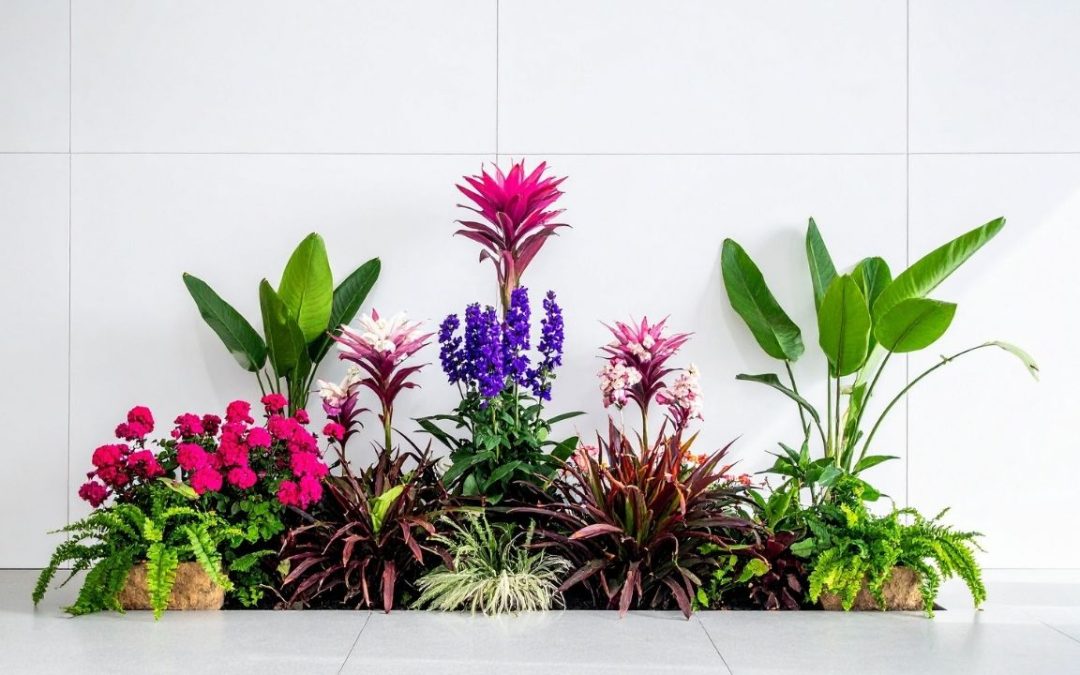
Bromeliads offer a unique combination of visual appeal and functional air quality benefits. These tropical plants bring color to professional spaces while working around the clock to improve indoor environments. Unlike typical office plants that rest at night, bromeliads continue their air purification cycle during evening hours. Their distinctive characteristics make them particularly well-suited for Irvine’s coastal office conditions.
Commercial environments face ongoing challenges with indoor air quality. Sealed buildings trap volatile organic compounds that accumulate over time. Traditional HVAC systems circulate air but don’t eliminate chemical contaminants. Bromeliads address this gap through biological processes that complement mechanical systems.
This article examines why bromeliads excel in commercial settings. We’ll explore their air purification capabilities, maintenance requirements, and strategic implementation in Irvine workspaces. Understanding these factors ensures successful long-term results.
What Are Bromeliads in the Context of Commercial Interior Plants?
Bromeliads belong to the Bromeliaceae family of tropical plants. They function differently from typical office plants in meaningful ways.
What defines bromeliads as interior plants for offices?
Bromeliads perform Crassulacean Acid Metabolism photosynthesis. This CAM process sets them apart from most other plants fundamentally. They absorb carbon dioxide and release oxygen at night. Most plants do the opposite, working only during daylight hours. This makes bromeliads a 24/7 air-purifying solution that never stops working.
Research consistently ranks them among the most effective office plants for air quality improvement. Their colorful, long-lasting blooms add months of visual impact without replacement. This combination of continuous function and sustained aesthetics makes them particularly valuable for professional environments. The economic value extends beyond initial purchase cost.
Which physical and growth traits make bromeliads suitable indoors?
The CAM photosynthetic process provides continuous air purification throughout 24-hour cycles. While other plants rest at night, bromeliads continue their metabolic activity. This complementary cycle maximizes air quality improvements when combined with standard office plants. The combined effect exceeds what either plant type achieves alone.
Vibrant colors enhance workplace aesthetics naturally without artificial interventions. Blooms persist for months without replacement or decline. The central cup structure stores water efficiently, creating self-regulating moisture systems. These traits reduce maintenance demands while maintaining professional appearance consistently. Facilities managers appreciate plants that perform without constant attention.
Why are bromeliads commonly used in professional plant design?
Bromeliads remove a broad range of volatile organic compounds effectively. Their unique day-night oxygen production complements other plant types. Indoor plants like bromeliads excel in spaces requiring continuous air purification and visual impact.
Long-lasting blooms provide extended value compared to flowering plants needing frequent replacement. Professional designers value this sustained performance. The combination of color, air quality benefits, and low replacement frequency creates cost-effective solutions.
Why Do Businesses Use Plants to Support Indoor Air Quality?
Plants address indoor air quality through proven biological processes. Commercial environments face specific air quality challenges that plants help mitigate.
What indoor air quality challenges exist in office environments?
Indoor plants improve air quality through scientifically validated phytoremediation processes. This biological approach uses plants and associated soil microbes to remove volatile organic compounds from air effectively. Common VOCs include formaldehyde from furniture, benzene from plastics, and trichloroethylene from adhesives. These chemicals appear in virtually every office environment.
These chemicals accumulate in sealed, climate-controlled buildings over time. Concentrations build as materials continue off-gassing for months after installation. Standard HVAC systems circulate but don’t eliminate chemical contaminants. Biological air treatment addresses pollutants mechanical systems miss entirely.
How do interior plants interact with airborne particles and VOCs?
Small pores on leaves called stomata absorb VOCs from surrounding air continuously. These openings function like biological filters operating during metabolic activity. Plants transport these compounds to roots through internal vascular pathways. This translocation process moves toxins away from leaves to root zones where microbes work.
Microorganisms in soil surrounding roots break down VOCs through rhizodegradation processes. This biological breakdown converts toxic compounds into harmless components plants use as nutrients. The complete cycle creates sustainable air purification requiring no external inputs. Root-soil-microbe ecosystems drive the primary mechanism for pollutant removal. This three-part system works more effectively than any single component alone.
What role do plants play alongside mechanical air systems?
Plants provide measurable air quality improvements mechanical systems cannot replicate. Through photosynthesis, plants absorb carbon dioxide and release oxygen continuously. This refreshes indoor air naturally.
Plants release water vapor through transpiration, increasing indoor humidity. This natural air purification delivers wellness benefits beyond mechanical filtration. The combination creates more complete indoor air quality solutions.
What Does Research Say About Plants and Indoor Air Quality?
Decades of scientific research validate plant-based air purification. However, laboratory findings require context for real-world application.
What did early indoor air quality studies conclude about plants?
The NASA Clean Air Study in 1989 first conclusively demonstrated common indoor plants remove toxic VOCs from sealed environments. NASA researchers sought solutions for space station air quality concerns where mechanical filtration alone proved insufficient. They tested formaldehyde, benzene, and trichloroethylene removal rates across multiple plant species systematically. The study concluded the plant’s root-soil-microbe ecosystem drives purification rather than leaves alone.
A 2015 study by Lee and colleagues confirmed effectiveness at removing volatile organic compounds in controlled settings. Multiple independent research efforts validated the biological mechanisms across different plant species. This established plants as viable air quality tools for indoor environments beyond simple oxygen production.
What limitations apply when translating studies to real offices?
A 2019 review by Cummings and Waring noted important context. VOC removal capability is real, but practical impact in typical ventilated offices differs from sealed chambers. Achieving air cleaning rates comparable to building ventilation requires 10 to 1,000 plants per square meter.
Most offices cannot support such high densities. However, the review confirmed plants still provide measurable improvements. Wellness benefits remain significant even at practical plant densities.
Why are plants considered a supporting, not standalone, solution?
Despite density limitations, plant presence delivers measurable air quality improvements. Plants offer significant wellness benefits mechanical systems cannot provide. Psychological and environmental factors work together.
Plants supplement rather than replace HVAC systems. The combined approach addresses both mechanical and biological air treatment needs. This integration creates healthier work environments overall.
Why Are Bromeliads Relevant for Irvine Workspaces Specifically?
Local climate significantly affects plant performance indoors. Irvine’s coastal conditions create ideal environments for specific plant types.
How do Irvine office conditions affect indoor plant performance?
Irvine’s proximity to the coast results in slightly higher ambient humidity compared to inland areas. Ocean influence moderates temperature extremes while maintaining elevated moisture levels. This creates environments where bromeliads flourish naturally without artificial humidity supplementation. Coastal conditions differ meaningfully from inland Anaheim environments just miles away.
Higher humidity levels support bromeliad health without additional intervention or equipment. Natural conditions align with plant requirements inherited from tropical origins. This reduces maintenance demands while maximizing performance outcomes. Plants thrive rather than merely survive in appropriate conditions.
Why do bromeliads adapt well to controlled commercial interiors?
CAM photosynthesis allows oxygen production at night, complementing other plants’ daytime activity. This provides around-the-clock air purification. Bromeliads help balance indoor humidity, preventing air from becoming excessively dry or damp.
They thrive in stable temperatures commercial HVAC systems provide. Controlled interior conditions suit their tropical origins. The combination creates reliable year-round performance.
How do lighting and temperature stability influence bromeliad health?
Stable temperatures from commercial HVAC systems support consistent growth. Temperature fluctuations stress plants and reduce effectiveness. Controlled environments eliminate this variable.
Bromeliads adapt to consistent office lighting conditions. They tolerate moderate indirect light common in commercial spaces. This flexibility allows placement throughout diverse office layouts.
How Do Bromeliads Contribute Beyond Air Quality in Offices?
Plants provide multiple workplace benefits beyond pollutant removal. These additional effects significantly impact employee experience and space perception.
How does color influence perception and workspace experience?
Vibrant colors enhance workplace aesthetics naturally. Bromeliads’ long-lasting blooms provide sustained visual impact for months. This creates positive psychological effects without constant replacement.
Research by Largo-Wight and colleagues in 2011 found nature contact at work affects employee stress and health. A 2000 study by Fjeld demonstrated indoor planting influences health and discomfort among workers. Color and natural elements work together to support workplace wellness.
Why are bromeliads effective in reception and meeting areas?
Colorful appearance creates positive first impressions immediately. Reception areas benefit from plants that maintain professional appearance consistently. Long-lasting blooms eliminate the gap between replacements.
Meeting areas gain natural elements that soften formal business settings. High-visibility spaces require plants that deliver reliable visual quality. Bromeliads meet these demands effectively.
How do plants support visual consistency in professional spaces?
Natural elements support professional aesthetic standards across entire facilities. Consistent plant selection ensures uniform appearance. This reinforces brand identity and attention to detail.
Plants contribute to overall workspace quality perception. Professional environments require predictable, maintained appearances. Interior plant design addresses these considerations systematically.
When Do Interior Plants Provide Meaningful Value in Offices?
Implementation strategy determines actual results. Proper planning maximizes plant effectiveness in commercial settings.
What office sizes and layouts benefit most from plants?
All office sizes gain wellness benefits from appropriate plant implementation. Both open and private office configurations see improvements. Effectiveness depends on achieving adequate plant density relative to available space.
Larger offices require more specimens to achieve noticeable effects. Smaller spaces see benefits with fewer plants. The key is matching plant count to space characteristics.
How does plant density affect visual and functional impact?
Research shows 10 to 1,000 plants per square meter would match mechanical ventilation rates for VOC removal. This density proves impractical for most commercial spaces available. A 1,000 square foot office would need 930 to 93,000 plants at these densities. Floor space and maintenance requirements make this unfeasible for normal operations.
Practical implementations use lower densities successfully with measurable benefits. Even modest plant presence provides wellness improvements employees notice. Visual impact and perceived air quality improve at achievable densities of one plant per 100-150 square feet. The goal is enhancement rather than replacement of mechanical systems. Supplemental benefits matter even when complete replacement proves impractical.
Why does placement matter more than plant quantity alone?
Strategic positioning maximizes effectiveness significantly beyond simple presence. Location affects both visual impact and functional air quality benefits. Three well-placed plants outperform six poorly positioned specimens consistently. Research confirms placement matters more than quantity alone.
Proper placement enhances employee exposure to both visual and air quality benefits. Consider sightlines from workstations and traffic patterns through spaces. Account for environmental conditions like light exposure and airflow patterns. Smart positioning delivers better results than simply increasing plant numbers without strategy.
How Should Bromeliads Be Planned for Commercial Office Layouts?
Successful implementation requires upfront assessment. Professional evaluation prevents common mistakes that reduce effectiveness.
What factors should be assessed before selecting bromeliads?
Evaluate available space and current layout configurations thoroughly. Assess lighting conditions from both natural and artificial sources. Review HVAC characteristics and airflow patterns.
Consider maintenance capacity and service provider access. Define desired aesthetic outcomes and specific wellness goals. These factors guide appropriate plant selection and placement strategies.
How do foot traffic and space use affect placement decisions?
High-traffic areas require durable placement solutions. Plants need visibility without impeding workflow. Balance aesthetic impact with operational functionality.
Consider accessibility for maintenance activities. Service providers need reasonable access without disrupting operations. Placement should support both plant health and workplace efficiency.
Why professional evaluation reduces plant failure risk?
Expert assessment ensures climate-appropriate species selection for Irvine conditions. Professional design integration supports aesthetic consistency from installation. This eliminates trial-and-error approaches.
Specialists understand both horticultural requirements and office functionality. They balance these considerations during planning stages. This prevents expensive mistakes and replacement costs.
How Should Bromeliads Be Placed Within Irvine Offices?
Proper placement requires understanding both plant needs and office dynamics. Strategic positioning ensures maximum benefit with minimal disruption.
Where do bromeliads perform best inside office environments?
Reception areas provide maximum visual impact for visitors and staff. Meeting rooms gain collaborative space enhancement through natural elements. Common areas with higher ambient humidity support bromeliad health naturally.
Position plants near but not directly in HVAC airflow paths. Direct vent exposure stresses plants unnecessarily. Indirect airflow provides circulation without temperature extremes.
How do containers and mounting choices affect longevity?
Proper container selection supports healthy root-soil-microbe ecosystems. Container choice impacts water retention and drainage balance. Professional planters enhance aesthetic consistency while supporting plant health.
Quality containers prevent water damage to floors and furniture. They allow easier maintenance access and plant rotation. Size matters for long-term health and reduced repotting frequency.
What placement mistakes commonly reduce plant lifespan?
Direct exposure to heating or cooling vents causes temperature stress. Insufficient natural or artificial light weakens plants over time. Areas with extreme temperature fluctuations accelerate decline.
Locations that impede maintenance access lead to neglect. Poor drainage causes root rot and premature failure. Professional plant services avoid these common errors through proper planning.
What Maintenance Requirements Do Bromeliads Have in Offices?
Sustained plant performance requires consistent care. Understanding specific requirements ensures long-term success.
How does watering differ for bromeliads in indoor settings?
Bromeliads have unique water requirements compared to other office plants. The central cup or tank requires regular filling with fresh water. This reservoir provides sustained moisture to the plant.
Soil should remain slightly moist but never waterlogged. Overwatering causes root rot and plant failure. Water quality affects plant health significantly. Avoid heavily chlorinated or softened water when possible.
Why routine cleaning and pruning matter in workplaces?
Dust accumulation on leaves reduces photosynthetic effectiveness. Regular cleaning maintains optimal plant performance. Dead foliage detracts from professional appearance immediately.
Cleaning preserves aesthetic value in professional settings. Remove spent blooms and yellowed leaves promptly. This directs energy to healthy growth and maintains visual standards.
How is pest management handled without disrupting staff?
Professional services schedule pest control during off-hours. This prevents workplace disruption during business operations. Preventive treatments reduce pest occurrence significantly.
Early detection prevents infestations from spreading. Non-disruptive treatment methods protect workplace operations. Integrated pest management approaches minimize chemical use while maintaining plant health.
When Should Bromeliads Be Replaced or Rotated?
Plant lifecycle affects long-term appearance and value. Strategic replacement maintains consistent visual quality.
What lifecycle stages affect bromeliad appearance?
Bromeliads bloom once then gradually decline over months. Pups or offsets develop at the base but take time to mature. The post-bloom period can last months before replacement becomes necessary.
Mother plants lose vigor after blooming. While not immediately unattractive, they no longer provide peak visual impact. Timely replacement maintains consistent quality standards.
How do proactive replacements maintain visual standards?
Regular assessment identifies plants needing attention before visible decline. Scheduled rotation prevents gaps in aesthetic coverage. Professional services handle replacement timing systematically.
Proactive replacement costs less than emergency corrections. Planning maintains budgets and prevents surprise expenses. Continuous coverage ensures professional appearance year-round.
Why do seasonal adjustments matter in commercial interiors?
Lighting changes seasonally even in controlled environments. Window exposure varies throughout the year. Temperature variations near windows affect plant performance.
Proactive adjustments maintain consistent appearance regardless of season. Plants may need repositioning as conditions change. Professional monitoring identifies these needs before problems develop.
Which Irvine Businesses Are Best Suited for Bromeliads?
Certain business types see greater returns from bromeliad investments. Industry-specific factors affect implementation success rates.
Why offices and corporate environments are ideal fits
Controlled indoor climates suit bromeliad requirements perfectly. Stable conditions support optimal plant performance year-round. Professional appearance aligns naturally with corporate aesthetic standards.
Employee density maximizes wellness benefit reach across organizations. Open floor plans allow plants to impact multiple workers simultaneously. Corporate budgets typically accommodate ongoing maintenance needs effectively.
How healthcare and hospitality spaces use bromeliads differently
Healthcare facilities face infection control considerations affecting plant selection. Strict cleaning protocols complicate plant care requirements. Patient safety concerns may limit plant placement options.
Hospitality settings prioritize guest-facing visual impact over employee wellness. Different maintenance protocols serve public-facing environments. Aesthetic expectations vary from corporate office standards.
Why property managers value predictable plant programs
Consistent appearance across multiple properties reinforces brand identity. Standardized maintenance protocols reduce management burden significantly. Predictable costs support accurate budget planning.
Professional services provide reliable long-term solutions. This eliminates variability in plant performance between locations. Multi-site organizations appreciate uniform approaches and outcomes.
How Can Irvine Offices Add Bromeliads Without Added Work?
Professional services eliminate internal resource demands. Strategic partnerships deliver benefits without operational burden.
Why professional plant design simplifies decision-making
Expert selection ensures climate-appropriate species for Irvine’s coastal conditions. Design integration supports aesthetic consistency throughout entire facilities. Professional assessment maximizes placement effectiveness from initial installation.
Specialists eliminate trial-and-error approaches to plant selection. They understand both horticultural requirements and office functionality. This balanced approach prevents expensive mistakes.
How installation planning avoids workplace disruption
Coordinated scheduling minimizes impact on daily operations. Efficient installation processes reduce time requirements significantly. Professional handling protects both plants and existing facilities.
Minimal employee disruption during implementation maintains productivity. After-hours installation options eliminate daytime interruptions. Systematic approaches ensure smooth transitions.
Why ongoing maintenance keeps plants an asset, not a task
Regular care maintains plant health and air purification capability continuously. Professional services ensure consistent quality without internal effort. Scheduled maintenance prevents decline in both appearance and performance.
Service providers handle watering, pruning, pest control, and replacement. This removes the burden from facilities management entirely. Plants remain assets rather than becoming tasks.
Using Bromeliads to Support Professional Irvine Workspaces
Scientific evidence supports plant benefits when properly maintained. Success requires appropriate species selection and strategic placement. Initial planning investment pays dividends in sustained performance.
Why thoughtful planning delivers better long-term results
Proper species selection for local climate conditions ensures viability. Strategic placement maximizes impact on air quality and employee wellness. Professional planning addresses these factors comprehensively.
DIY approaches often miss critical considerations. Expert guidance prevents common failures. Long-term success depends on informed initial decisions.
How consistent care protects appearance and plant health
Regular maintenance ensures optimal plant health year-round. Consistent service maintains both appearance and effectiveness reliably. Professional providers handle replacement and troubleshooting proactively.
This eliminates variability in plant performance. Offices receive predictable benefits without internal resource allocation. Sustained quality requires sustained attention.
What the next step looks like for Irvine businesses considering bromeliads
Start with an assessment of the current office environment and specific needs. Schedule design consultation for plant selection and placement planning. Implement maintenance plans for long-term success and sustained benefits.
Contact professional services to begin the process. Expert guidance ensures optimal outcomes from initial planning through ongoing maintenance.
Transform Your Irvine Office With Bromeliad Expertise
Your workspace deserves plants that deliver both beauty and function. Mr. PlantSoCal specializes in designing and maintaining interior plant systems for Irvine offices. Our team handles everything from initial assessment through ongoing care, ensuring bromeliads deliver consistent benefits without adding to your facilities workload.
Ready to enhance your office environment? Contact Mr. PlantSoCal today for a consultation. We’ll evaluate your space, recommend ideal bromeliad varieties for your specific conditions, and create a maintenance plan that keeps your office looking professional and your air quality optimized year-round.

